
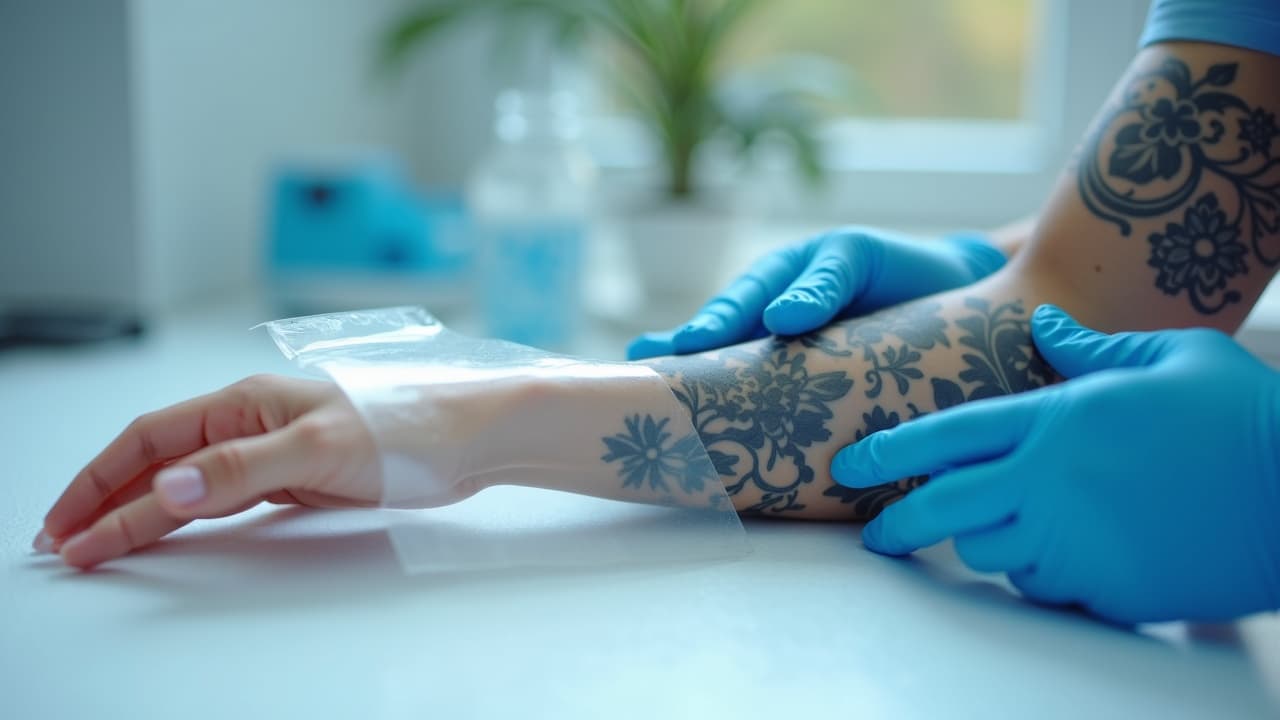
Second-skin films work when they balance two things, sealing plasma in long enough to protect the tattoo and breathing enough to let moisture vapor escape. Saniderm, 3M Tegaderm, and Recovery Derm Shield all hit that target differently because of their adhesive chemistry, film thickness, and edge design.
Film Tech 101, What These Dressings Are Made Of and Why It Matters
All three products are transparent polyurethane films coated with a pressure‑sensitive acrylate adhesive. The film blocks liquid water and bacteria, the adhesive anchors the sheet to intact skin. Breathability is measured by MVTR, moisture vapor transmission rate, usually reported in grams per square meter per 24 hours using methods like ASTM International’s E96. Higher MVTR means more vapor can vent out, which helps reduce skin whitening and pruning under the patch. Too low, and you macerate. Too high, and thin exudate can dry into flakes that break the seal early.
Polyurethane film is thin and stretchy, generally under a human hair in thickness. Stretch helps the sheet move with your body, but it also matters where the stretch happens. Stiffer films resist tenting on joints, very soft films conform to curves but can wrinkle if you apply them with tension. Edge adhesion is critical. A strong border controls tunneling, which is how leaks start. Some sheets include a slightly thicker or more aggressive adhesive ring to lock down the perimeter.
3M engineered Tegaderm for medical wounds first, then artists adopted it for tattoos. You can read general material claims on 3M’s Tegaderm Film Dressing pages, which emphasize waterproof, breathable performance and conformability. Tattoo‑market films like Saniderm and Recovery Derm Shield tweak adhesive tack and thickness for longer wear across moving skin. The differences sound small on paper, but they play out clearly in ooze control, comfort, and how reliably the edges stay stuck.
Saniderm vs Tegaderm vs Derm Shield, The Head‑to‑Head You Can Use
Here is how these three behave in the chair and in real aftercare. Pricing varies by size and pack count, so consider this a working range for common 6x8 to 8x10 inch sheets.
- Saniderm , Tattoo‑specific polyurethane film with a medium‑firm acrylate adhesive. Feels moderately thick and forgiving during application, good edge adhesion on flat to gently curved areas. Typical use 8‑24 hours for the first patch, then 2‑5 days. Cost, roughly $12–$20 per 10‑pack.
- 3M Tegaderm , Medical transparent film, very thin and highly conformable with a clean acrylic adhesive. Excellent breathability for its class and great on small to medium tattoos. Edges can lift early on high‑motion joints unless you round corners and anchor well. Cost, roughly $1–$2 per sheet when bought in bulk boxes.
- Recovery Derm Shield (and SecondSkin‑type films) , Tattoo‑market films similar to Saniderm, often with a slightly heavier feel and grippier edge. Many artists find they hold better on elbows, knees, and shoulders compared with pure medical films. Typical use mirrors Saniderm, 8‑24 hours initial, then 3–5 days. Cost, roughly $12–$18 per 10‑pack.
Comfort and breathability, Tegaderm usually feels the least noticeable because it is so thin. Saniderm and Derm Shield feel more substantial, which some clients prefer because the sheet is easier to control and less likely to crease during application. Edge adhesion, Derm Shield and Saniderm often win on high‑movement placements. On flatter placements like outer forearm or calf, all three perform similarly if you size the sheet right.
Leak behavior, Tunnels form when you stretch the film during application or when a sharp corner lifts. Thicker, slightly stiffer films like many Derm Shield batches resist corner lift a bit longer. Thin films like Tegaderm conform beautifully but demand cleaner technique on joints. Breathability, all three are film dressings with meaningful MVTR. Exact numbers vary by product and humidity gradient, so compare by feel and outcome rather than marketing copy. The test method matters too, which is why manufacturers reference standards like ASTM International. If your skin turns white and wrinkly in under 24 hours, your seal is too tight or you used too many layers of ointment before application.
Wear Time, Ooze Management, and Avoiding Maceration
Your plasma output, placement, and session length decide wear time more than the logo on the box. Here is a schedule that works for most healed‑clean, shop‑wrapped pieces.
- First patch , 8–24 hours. This is the sacrificial sheet that collects the bulk of the weeping. If the film pools a dark tea of plasma and ink quickly, swap earlier rather than later.
- Second patch , 48–72 hours. Reapply on clean, dry skin with no ointment underneath. This window keeps friction and lint off while the surface closes. If you ooze heavily, change at 24–48 hours.
- Total time sealed , 3–5 days for most clients, up to 7 days max if edges are perfect and the skin underneath looks healthy. If you see whitening, wrinkling, or a sour smell, remove and switch to dry heal.
- When to switch to dry heal , when exudate slows to a light haze and the skin under the film looks pink, not pale and soggy. Usually day 2–3 after a medium tattoo.
Maceration looks like soggy, white, wrinkled skin that may itch or burn. It happens when vapor cannot escape fast enough or when you trap a lake of serum. The fix is not more film. It is a gentle wash, a full dry, then either a fresh patch on truly dry skin or a switch to dry heal with a thin layer of Aquaphor or Bepanthen applied sparingly 2–3 times daily. If the skin looks waterlogged, take a film holiday for 12–24 hours before deciding to re‑seal.
Placement, Size, and Activity, Picking the Right Film for the Job
Large flats like outer forearm, calf, upper arm, and upper outer thigh are easy wins for any of the three films. Saniderm and Derm Shield are my first picks for shoulders, elbows, knees, and ribs because their edge adhesion is more forgiving over curves. Tegaderm shines on small to medium pieces where flexibility and low profile comfort matter, like inner forearm bands or upper back script.
- Sizing rule , oversize the sheet by 1–2 inches past the tattoo on all sides. Round the corners with scissors to reduce lift. Use two overlapping pieces rather than stretching one.
- Workouts , wait 24 hours before light cardio. Sweat, heat, and high‑motion joints increase tunnel risk and shorten wear time. Heavy lifting or hot yoga, wait 48–72 hours or switch to dry heal earlier.
- Showers , fine after 12 hours, keep them short and lukewarm. Pat the film dry with a clean towel, then let edges air dry. Do not blast it with hot water or steam.
- Swimming and soaking , still a no. Pools, hot tubs, lakes, and ocean water force liquid under the edges and seed bacteria. The CDC advises people with wounds to avoid salt or brackish water exposure to lower infection risk, see CDC Vibrio guidance.
If you work in a sweaty environment or wear tight uniforms, lean toward Derm Shield or Saniderm and plan on earlier changes. For office life or low‑sweat daily routines, Tegaderm is perfectly adequate and often the most comfortable, especially on smaller tattoos.
Application Setup That Prevents Tunnels and Leaks
- Clip, do not shave if possible. If you must shave, do it at the end of the appointment with a fresh disposable and warm water. Micro‑nicks increase sting and dermatitis risk.
- Degrease the perimeter with 70 percent isopropyl alcohol, then let it air dry fully. Do not apply thick ointments under film. A whisper of Aquaphor only if your artist insists.
- Pre‑round corners on the film. Sharp factory corners are the first thing to lift against clothing lines and bedsheets.
- Position with zero tension. Lay the center first, then smooth outward with the backing frame still on. Remove the frame once you have a glassy seal.
- Overlap pieces by at least one inch and keep seams off flexion lines like the elbow ditch or wrist crease.
- Anchor edges with firm pressure for 30–60 seconds. Warm hands improve adhesion. If needed, use medical tape on the edges, applied to intact skin only.
- Avoid lotions, oils, or sunscreen anywhere near the adhesive during wear. Oils will creep under the edge and break the seal.
Removal and Mid‑Course Fixes Without Lifting Ink
Proper removal will not pull ink. The pigment sits in the dermis, not the epidermis where the adhesive grabs. Go low and slow, stretch the skin, and use water or oil to break the adhesive bond.
- Warm shower or oil, loosen the adhesive in a warm shower or use sterile saline, mineral oil, or coconut oil along one edge.
- Low‑angle peel, pull the film back over itself at a 10–20 degree angle while keeping the skin taut. Do not rip up at 90 degrees.
- If serum pools, do not stab a hole. Remove, wash with gentle soap, pat dry, air dry 10–20 minutes, then reapply a fresh patch or switch to dry heal.
- If a corner leaks, replace the whole sheet. Patching a failed edge traps contamination. If you cannot re‑seal immediately, dry heal until you can.
Tattoo fluid under bandage looks scary, but it is just plasma, lymph, and dispersed pigment. If it sloshes, change the first patch early. A bubble the size of a quarter can be fine if the rest of the edge is perfect, but larger pools soften the skin and increase infection risk. When in doubt, remove, clean, dry, and re‑seal once the skin is dry to the touch and not tacky.
Adhesive Dermatitis vs Infection, Plus Options for Sensitive Clients
Acrylate adhesives can irritate some clients. Classic allergic contact dermatitis shows as red, itchy, coin‑shaped patches that match the adhesive border, often appearing after day 2–3. It can burn or itch more than it hurts. This is different from infection, which usually brings increasing heat, swelling, thick yellow pus, and fever or chills. If you are unsure, contact your artist and a clinician. Allergic reactions to medical adhesives are well documented in dermatology literature, see JAMA Dermatology for reviews and case series.
- If you react, stop the film. Wash, dry, then switch to dry heal with a thin layer of Aquaphor or Bepanthen 2–3 times a day. Avoid re‑exposure to the same adhesive.
- Consider silicone adhesives, 3M Kind Removal Silicone Tape with a sterile nonstick pad is a low‑tack alternative for short periods, changed daily. It is not waterproof like films but is kinder to reactive skin.
- Test first, place a 1x2 inch strip of the film on the inner forearm for 48 hours a week before your session if you have a history of adhesive reactions.
- Skip antibiotic ointments, products with neomycin are common sensitizers and increase allergic reactions. Reported contact allergy rates are notable in clinical literature, see Wikipedia on Neomycin for an overview and references.
If signs point to infection, increased pain after day 3, expanding redness, warmth, swelling, thick discharge, or fever, stop the film, wash, and seek medical care quickly. Films are barriers, not treatments. Do not try to trap an infection under a waterproof patch.
Quick Decision Tree and a Proven First 72‑Hour Protocol
Decision tree, pick by placement and lifestyle. Flat, low‑motion area and light activity this week, Tegaderm or Saniderm, your choice. Curved or high‑motion area or you sweat a lot, Recovery Derm Shield or Saniderm tends to hold better. Very sensitive skin or known adhesive issues, avoid films or use silicone tape with daily nonstick pads.
- Hour 0–1 at the studio , your artist wraps you. Keep it on as directed for the trip home. Ask which film they used and get a spare if possible.
- Hour 8–24, change the first patch , wash hands, remove the film low and slow in the shower, clean with a gentle soap, pat dry, then air dry 10–20 minutes until the skin is not tacky.
- Reapply the second patch , apply with zero ointment underneath on clean, dry skin. Oversize by 1–2 inches and round corners. Anchor the edges firmly for 30–60 seconds.
- Day 2–3, check the seal twice a day , if a large pool forms or an edge lifts, remove, wash, fully dry, and either re‑seal with a new sheet or switch to dry heal if ooze is minimal.
- Day 3–5, transition to dry heal , when exudate slows to a haze and the skin looks pink, stop the film. Wash gently morning and night. Apply a thin layer of Aquaphor or Bepanthen if tightness or itching bother you.
- Sun and sweat control , avoid hot tubs, pools, and ocean for at least 2 weeks. Keep workouts light for 48–72 hours. Once peeled, start sunscreen protection outside, see our sunscreen guide.
If pain is steering your placement choice, read our pain chart guide. For a step‑by‑step recovery overview beyond films, save our complete aftercare guide. Tight plan, clean hands, and zero stretching during application beat brand loyalty every time.
Test your placement before you commit. Use AI for Tattoo to generate your design, then preview it true to size with our virtual try‑on. Start in minutes, create at [Create](/create) or try it on at [Try‑On](/try-on).
Try AI for Tattoo Free