
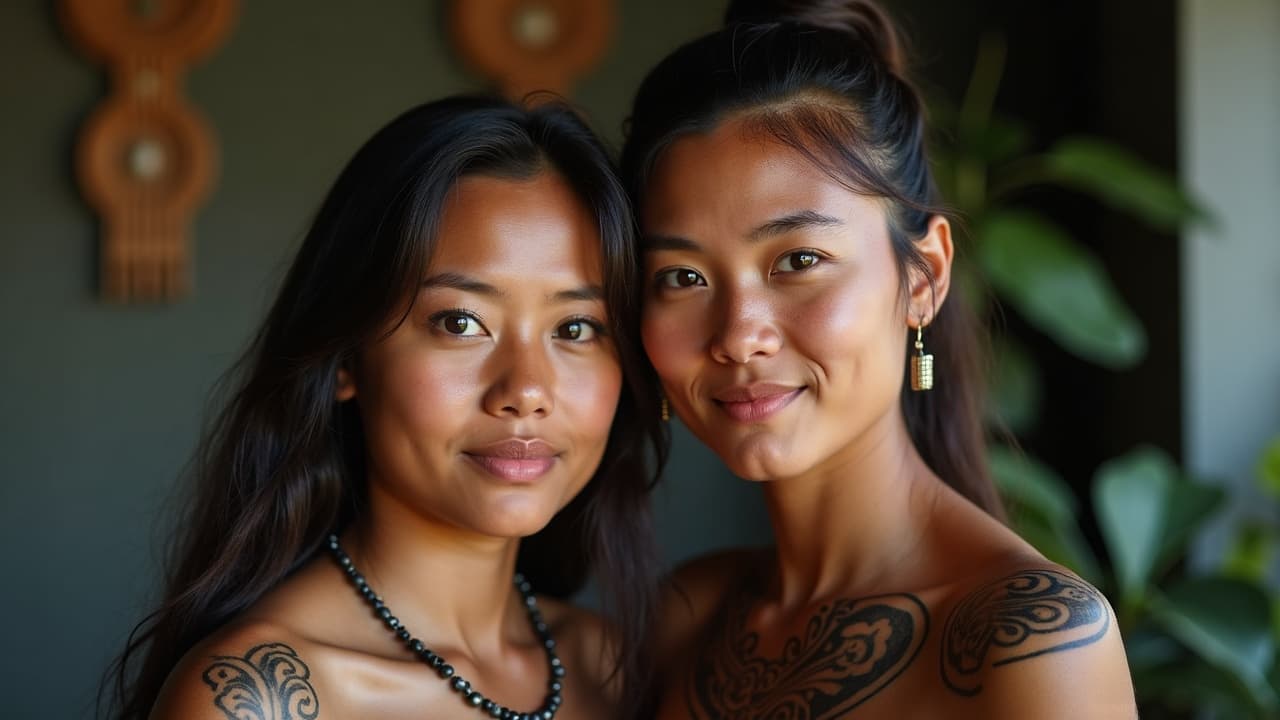
Tā moko is genealogy carved into skin. Kirituhi is pattern work inspired by Māori art that can be worn by anyone, when it is created and placed with care. Confusing the two leads to appropriation, not appreciation. If you have Māori whakapapa, tā moko is designed for you through kōrero with a tohunga or experienced moko artist. If you do not, your respectful path is kirituhi created by a Māori artist who understands tikanga. Facial moko is tapu and reserved. Copying someone’s moko pattern, or asking for “tribal” filler lifted from Google, is not acceptable. This guide spells out the differences, the motifs and their meanings, who is eligible, placement rules, pricing and sessions, and exactly how to commission a piece the right way.
What Tā Moko Is, And Why It Isn’t Generic “Tribal”
Tā moko is a living record of identity, ancestry, and life stages. Historically produced with uhi (chisels) that cut and inserted pigment, it carries status, affiliations, and personal achievements. The patterns are not decorative wallpaper. They are composed to speak about a specific person’s whakapapa and journey, which is why direct copying is a breach of tikanga. For a clear cultural overview, see the Ministry for Culture and Heritage’s encyclopedia entry on tā moko at Te Ara and the national museum’s resource at Te Papa. In Aotearoa, respected practitioners like Sir Derek Lardelli have led the revival, re-centering kōrero (conversation) and consent. If you have Māori lineage, a tā moko process begins with a deep consultation to understand your iwi, hapū, and personal milestones. The resulting design belongs to you, and should not be replicated on another person’s body.
Kirituhi, The Accessible Path For Non‑Māori
Kirituhi translates roughly as “skin art.” It uses Māori visual language without claiming to encode whakapapa. Kirituhi is the ethical route for non‑Māori who admire the flow, symmetry, and nature symbolism of Māori design, and it can be created for Māori as well when genealogy is not being recorded. A Māori artist will adapt koru-based flow, negative space, and line rhythm to your body, then build meaning through shared stories like your relationship to the ocean, parenthood, or a place that matters. That meaning is personal, but it is not genealogical coding like tā moko. Expect the artist to decline elements that verge into restricted forms, especially facial placement or designs that read as kauae or mataora shapes. Respect that boundary. If your goal is to honor Māori culture without claiming it, commissioning kirituhi from a Māori practitioner is the right move.
Core Māori Motifs And Meanings, Used Responsibly
Understanding common forms helps you brief your artist without overstepping. Ask for kirituhi that uses these motifs as grammar, not as exact copies of anyone’s moko. Meanings shift by region and artist, but these are widely recognized anchors.
- Koru, Unfurling fern frond that symbolizes new life, growth, and balance. Frequently used to create flow and to transition between elements. See the background at Wikipedia’s koru page.
- Pakati, Dog-tooth or notched herringbone line that can indicate warrior strength, courage, and lineage. Often used as a structural border or to create rhythm and emphasis.
- Unaunahi, Fish-scale patterns tied to abundance, sustenance, and connection to the moana. Used to fill curved spaces and create depth through repetition and contrast.
- Manaia, A guardian being often shown in profile with beak and elongated body, associated with protection and balance. Treated respectfully and not mixed with cartoonish tiki motifs.
- Rauponga and Haehae, Parallel and notched lines that build texture and cadence. These are compositional tools that must follow the body’s flow rather than fight it.
Motifs are not stickers. Their scale, spacing, and direction carry intent. An experienced Māori artist will adjust line weights, negative space, and transitions so the design breathes and reads correctly from primary viewpoints. That is why Pinterest-style cut-and-paste approaches feel wrong. Trust your practitioner to place and sequence patterns appropriately.
Placement Rules, Tapu Areas, And Facial Moko
Placement is not arbitrary. Facial moko is sacred and communicates identity at first sight. Moko kauae (chin and jaw of wāhine) and mataora (male facial moko) are reserved. Non‑Māori should not request any facial design or a shape that reads as kauae or mataora on other body parts. For context on the cultural significance and revival of women’s chin moko, see Wikipedia’s moko kauae entry. Hands, throat, and head are also treated with higher tapu by many artists. If you are commissioning kirituhi, choose placements like upper arm, shoulder-to-chest, calf, thigh, or back panels where the design can move with muscle groups and joints without imitating reserved forms. To plan placement comfort, check our pain chart guide and remember that ribs, sternum, and knees are 8–9 out of 10 for many clients. Before you book, preview scale and orientation on your body using our virtual try-on guide so your artist can design to a true-to-size template.
Whakapapa, Consent, And Storytelling Protocols
If you have Māori whakapapa and you are seeking tā moko, prepare to share your iwi, hapū, key whānau names, and kaupapa that anchor your life. Many artists will open with karakia or a grounding kōrero, then design directly on skin with marker before tattooing. The design is co-authored, but the artist leads placement and structure so your story reads correctly. If you are commissioning kirituhi as a non‑Māori client, your story matters too, but you are not encoding genealogy. Focus on values, enviro connections, or milestones that you are comfortable sharing. Do not pressure the artist to reveal private meanings from another client’s moko, and do not ask them to replicate a celebrity’s facial moko on your arm. Ask permission before photographing design drafts, and confirm what aspects of your story can be shared on social media. A respectful process prioritizes consent at every step, including whether the artist tags you or posts healed photos.
How To Vet And Commission A Māori Artist Ethically
Choose a practitioner who is rooted in tikanga, not a tourist-trap vendor selling “tribal bands.” Look for portfolios with healed photos, strong flow around joints, and clear differentiation between tā moko and kirituhi. Affiliations with kaupapa Māori arts groups and references from whānau carry weight. If you are outside Aotearoa, ask who mentored them and how they maintain cultural practice in their studio. Our step-by-step on portfolios and red flags in how to find the right tattoo artist applies here, with added emphasis on cultural grounding.
- What to say in your first inquiry, Share who you are, where you are based, whether you have Māori whakapapa, and whether you seek tā moko or kirituhi. Include desired placement and rough size.
- How to frame your story, Offer 3–5 anchors such as family roles, connection to ocean or land, or meaningful journeys. Avoid dictating exact motifs or copying reference images.
- Questions to ask, Can we meet for kōrero first, what are your boundaries on placement, how many sessions, estimated price range, deposit policy, and whether I can bring support.
- Protocols to acknowledge, Use correct macrons and names, be on time, arrive sober, and follow aftercare. Read our etiquette guide before you message.
If a non‑Māori artist markets “tā moko for anyone,” that is a red flag. Ethical non‑Māori artists will describe their work as Polynesian or pattern-inspired and will decline to imitate reserved forms. When in doubt, wait and find a Māori practitioner for kirituhi.
Pricing, Sessions, And Aftercare Expectations
Rates vary by artist, city, and demand. Expect experienced Māori practitioners to charge per half-day or day. In Aotearoa and Australia, day rates commonly range from NZD 1,000 to 1,800 or AUD 1,000 to 1,600. In North America and Europe, similar work often runs USD 800 to 1,500 per day. Medium upper-arm kirituhi panels typically take 3–6 hours. Larger shoulder-to-chest wraps or half sleeves may take 2–3 sessions. Deposits are standard, usually USD 100–300 or local equivalent, and are nonrefundable toward your booking. For broader benchmarks and how artists structure quotes, see our tattoo cost and pricing guide.
Pain is placement-dependent. Expect 3–6 out of 10 on outer arm or calf, 7–9 out of 10 on ribs, sternum, and knee. Eat beforehand, avoid alcohol for 24 hours, and discuss numbing cream use if you are sensitive. Healing follows a usual timeline, with surface flaking days 4–10 and deeper settling over several months. Many artists prefer second-skin bandages for 3–5 days, then unscented moisturizer. If yours recommends a specific product, follow that protocol. Book your follow-up to review healing and line crispness, especially on high-movement areas like shoulders.
Red Flags To Avoid And Safer Alternatives
- Generic “tribal” requests, Asking for a Pinterest tribal sleeve or armband is a quick way to get declined. Replace with a kirituhi brief anchored in your story and a chosen body flow.
- Facial lookalikes, Decline any design that imitates moko kauae or mataora shapes on cheeks, chin, or as negative-space cutouts elsewhere. Keep kirituhi to arms, legs, torso, or back.
- Style mash-ups, Do not mix Māori, Samoan pe‘a, Marquesan, or Hawaiian motifs in one piece. Choose one tradition and one qualified practitioner to keep the language coherent.
- Copycatting, Never copy photos of someone’s tā moko. Share them only as examples of flow, density, or placement, not as a stencil to trace.
- Tourist traps, Avoid walk-in shops advertising fast “Maori tribal” flash. Seek artists who use correct kupu, explain tikanga, and show original freehand work over bodies like yours.
Why AI And Generators Get It Wrong, And How To Brief Better
Most AI training data lumps all Polynesian styles into one folder, then spits out symmetric wallpaper patterns with random tiki heads and repeated kauae-like shapes. That is how you end up with motifs in the wrong scale, mirrored in ways that break meaning, or a facial layout pasted on a bicep. Treat AI outputs as moodboards for rhythm and flow, not as finished designs, and never as tā moko. If you are non‑Māori, your target is a kirituhi concept, then a Māori artist turns it into a proper piece.
- Safer AI brief, Use terms like “kirituhi-inspired pattern flow with koru-based curves, unaunahi textures, and strong negative space, designed for outer upper arm, no facial moko shapes, no tiki.”
- Avoid prompts that say, “tā moko face tattoo,” “moko kauae,” or “mataora.” Those are off-limits. Ask for body-specific flow instead, and keep the request cultural-neutral where needed.
- Bring a printed mockup to your consultation, then invite your Māori artist to redraw everything freehand. Confirm they will change motifs to align with tikanga and your body’s anatomy.
- For prompt craft that translates to skin, read our AI prompts guide and how to turn digital ideas into stencils in our design-to-stencil guide.
If you want deeper reading from authoritative cultural sources, Te Ara’s summary of tā moko practice at Te Ara and Te Papa’s overview at Te Papa are the right starting points. They outline history, tools, and the contemporary revival without collapsing distinct Polynesian traditions into one style.
Ready to explore a respectful kirituhi concept sized to your body? Use AI for Tattoo to generate ideas, then preview placement at true scale with Create and Try-On. Bring your mockups to a Māori artist to co-design the final piece.
Try AI for Tattoo Free