
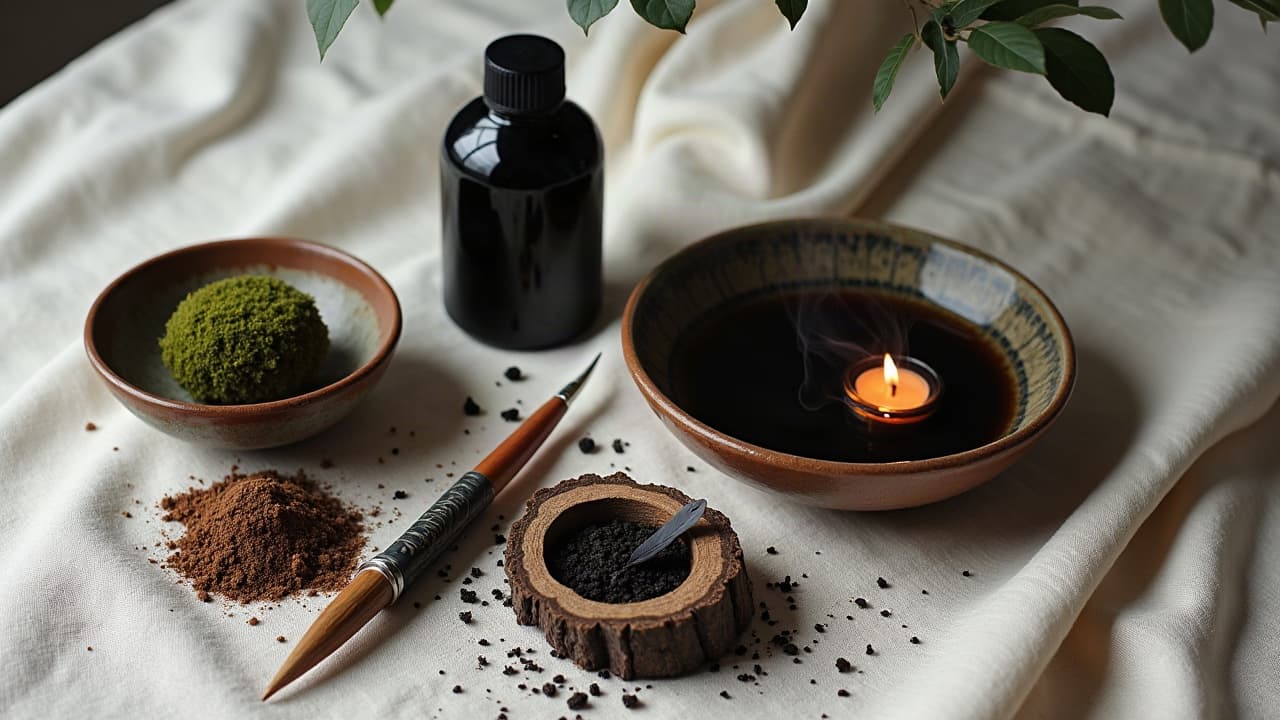
Across the portfolios I audit, nature tattoos reliably account for roughly 30–40% of first consults. Clients reach for elements when they need a symbol that speaks without shouting. Earth, water, air, and fire are old languages, simple shapes with deep roots. They read fast on skin, they age well when executed with intent, and they can be styled from minimalist linework to full color realism.
Earth: roots, resilience, and the weight of the real
Earth motifs signal grounding, responsibility, and endurance. Earth tattoos often lean into texture, contrast, and silhouette. Think tree rings, mountain ranges, stones, mushrooms, or the Yggdrasil tree of life. In many European traditions, the tree ties worlds together, a fit for people honoring family lines or recovery milestones. Japanese irezumi places mountains as anchors in landscape sleeves, balancing dynamic subjects like tigers or dragons with stillness.
- Styling cues: dotwork for soil and bark, black and grey for timelessness, negative space to carve stone edges, and lineweight shifts to separate foreground roots from background hills.
- Placements that read well: forearm wraps for mountain horizons, calves for vertical trees, shoulder blade for boulders or monoliths that need stable mass and minimal warping.
- Palette ideas: moss greens, slate greys, muted ochres. Keep saturation conservative so texture carries the read even when ink softens over years.
Water: change, flow, and emotional depth
If earth is stillness, water tattoos say movement and adaptation. Waves in Japanese ukiyo-e profiles, koi for perseverance, and minimalist currents for grief or rebirth all live here. Sailor traditions used swallows and anchors to mark distance traveled and safe return. Modern watercolor styles use loose color edges to mimic spray, but you can create flow without committing to high-fade palettes.
- Motifs with story: Great Wave contours for courage in chaos, koi ascending a waterfall for ambition, tidal pools for cycles and patience, rain lines for cleansing after tough seasons.
- Technical approach: color realism for glassy surfaces, or fine-line contour currents for minimalists. Add white highlights sparingly since white ages to cream on many skin tones.
- Placement logic: ribs for long swell lines, wrist for tiny ripple talismans, thigh panels for koi that need swim room without crowding detail.
Air: motion, breath, and the unseen
Air is the most abstract of the four, but it is not empty. Air tattoos show momentum and clarity. Birds signal freedom or direction, feathers for memory and lightness, dandelion seeds for release. For thinkers and meditators, smoke lines or geometric currents can represent breath and attention. Keep line discipline clean so the idea reads without literal props.
- Design moves: tapered strokes to imply wind pressure, negative space to lift feathers, and faint stipple to show distance. Use lineweight contrast to keep airy shapes from washing out.
- Good canvases: collarbone arcs for flight paths, outer forearm for feather vanes, upper back for flocks that need open sky without heavy distortion.
- Symbol pairings: compass for guidance, clouds to set mood, or paper planes for humble beginnings and playful intelligence.
Fire: transformation, drive, and risk
Fire speaks in verbs, not nouns. Fire tattoos often mark survivors, founders, and anyone remaking themselves. Flames, candles, volcanoes, salamanders, or the phoenix each carry a different heat. In Japanese irezumi, peonies and flames dance around dragons to show power with restraint. Red-heavy palettes can be stunning, but there are practical tradeoffs you need to know.
- Technique focus: sculpt flames with soft black underpainting, then push oranges and scarlets. Avoid outlining every lick of fire, let shapes breathe to keep movement believable.
- Longevity reality: reds and yellows can fade faster under UV exposure. Plan for refreshes or balance with deeper maroons, auburns, and charcoal smoke that age more predictably.
- Icon picks: phoenix for rebirth, hearth flame for home, matchstick for spark of ideas, vulcanism for raw force paired with grounding stone.
Cross-cultural meanings and respect
Elements sit inside wider cultural systems. Greek classical thought mapped temperaments to the four elements. Chinese five phases add wood and metal, changing the vocabulary. Polynesian tatau embeds waves, spearheads, and shark teeth with specific lineage meanings, not just pretty patterns. If you love a motif that belongs to a living tradition, ask your artist to translate the feeling into your own language rather than copying restricted marks.
- Do your homework with sources beyond Pinterest. Start with tattoo culture and globalization to frame what travel and the internet changed.
- If you want lineage-heavy motifs, read our cultural significance primer and book consults, not just a flash slot.
- Prefer universal shapes when in doubt, like alchemical triangles or natural textures, and see our guide to elemental designs for adaptable options.
Designing with all four elements
Combining elements is less about cramming four icons and more about contrast and hierarchy. Give one element lead voice and let the others harmonize. Structure supports meaning. Use geometry, scene-setting, and rhythm so the eye travels on purpose. Alchemical triangles, cardinal directions, or a seasonal cycle can unify a sleeve or back piece without feeling like a collage.
- Composition starters: a circle broken into quadrants, each season speaking through texture. Or a mountain stream becoming mist then flame that tempers into stone.
- Unifying tricks: repeat lineweight, echo shapes across elements, and keep a consistent light source. Reduce color palette to three anchors so the whole reads as one story.
- Scale planning: big shapes for earth and water, medium accents for fire, fine filaments for air. This preserves depth when the tattoo softens over the years.
Placement, pain, and session planning
Your canvas matters as much as your concept. Long, low-distortion zones like outer forearms, calves, and upper arms flatter landscape earth and rolling water. Ribs and spine dramatize air currents and flame tongues, but they also raise the discomfort curve. For most clients, forearms sit around pain 3–6/10, ribs 6–8/10, spine and sternum can spike higher. Plan accordingly with session breaks and hydration. Healing for medium pieces is typically 10–14 days for surface closure, then several weeks of deeper settling. For red or yellow heavy pieces, expect a slightly more reactive week one.
For safety benchmarks like infection signs, aftercare duration, and when to see a clinician, consult authoritative resources such as the Cleveland Clinic’s tattoo care guidance, Healthline’s aftercare timelines, and the American Academy of Dermatology guidance. These cover redness patterns, swelling windows, and when a reaction is not normal irritation.
Longevity, color choices, and aftercare basics
Elemental pieces age like any tattoo, but palette and placement change the curve. Blues and blacks in water scenes and mountains tend to hold better long term than lemon yellows in flames. Red pigments are more likely to trigger hypersensitivity for some clients, which is well documented in dermatology literature. If you are pigment sensitive, talk to your artist about adjusting hues so meaning stays intact without unnecessary risk. The FDA’s information on tattoo inks explains how pigments are regulated, and the American Academy of Dermatology outlines common allergic patterns and when to seek care.
- Aftercare kit ideas: Saniderm, Bepanthen, Aquaphor, Hustle Butter (non-sponsored examples). Ask your artist which fits your skin and their technique, then follow instructions precisely.
- Sun is the biggest fade engine. Prioritize broad-spectrum SPF 30+, clothing barriers, and shade. Watercolor-heavy pieces, especially yellow ink and light blues, demand extra discipline outdoors.
- Healing cadence: occlusive wrap for the first day if advised, gentle washing, then thin balm layers. Cross-check with Healthline’s aftercare timelines when you need a refresher.
If you are new to color or have a history of reactions, patch testing small areas can save you from a full-piece complication. When in doubt, confirm safety basics against FDA inks guidance and clinical resources. None of this replaces professional care, but it keeps your planning realistic and your outcome strong.
From idea to stencil: collaborating with tools and artists
Bring references that speak to concept, not exact copies. One mountain you love for silhouette, one wave for edge texture, one feather for spacing. Then let your artist translate it to your body. Previewing scale and flow saves you time and touchups. You can studio-test compositions or experiment at home with digital tools, then refine together in consult. When you are ready to see it on your body, try on mockups to spot crowding and tangents before ink.
- Explore elemental flash and styles in one place with our gallery, then shortlist ideas that feel like you. Start with explore styles and note what reads from three feet away.
- Test the big shapes on your own body. Use a virtual try-on to size mountains or koi accurately and check symmetry. You can preview with our try-on tool.
- When the concept is tight, generate variations that respect your skin tone and placement. Iterate directionally, not randomly, and bring those to your consult.
Ready to translate earth, water, air, and fire into a design that fits your body and story? Use AI for Tattoo to generate tailored elemental concepts, preview them with realistic virtual try-on, and fine tune the flow before you book. Start a session at Create, browse ideas in Explore, then lock in your shortlist with Try On.
Try AI for Tattoo Free