
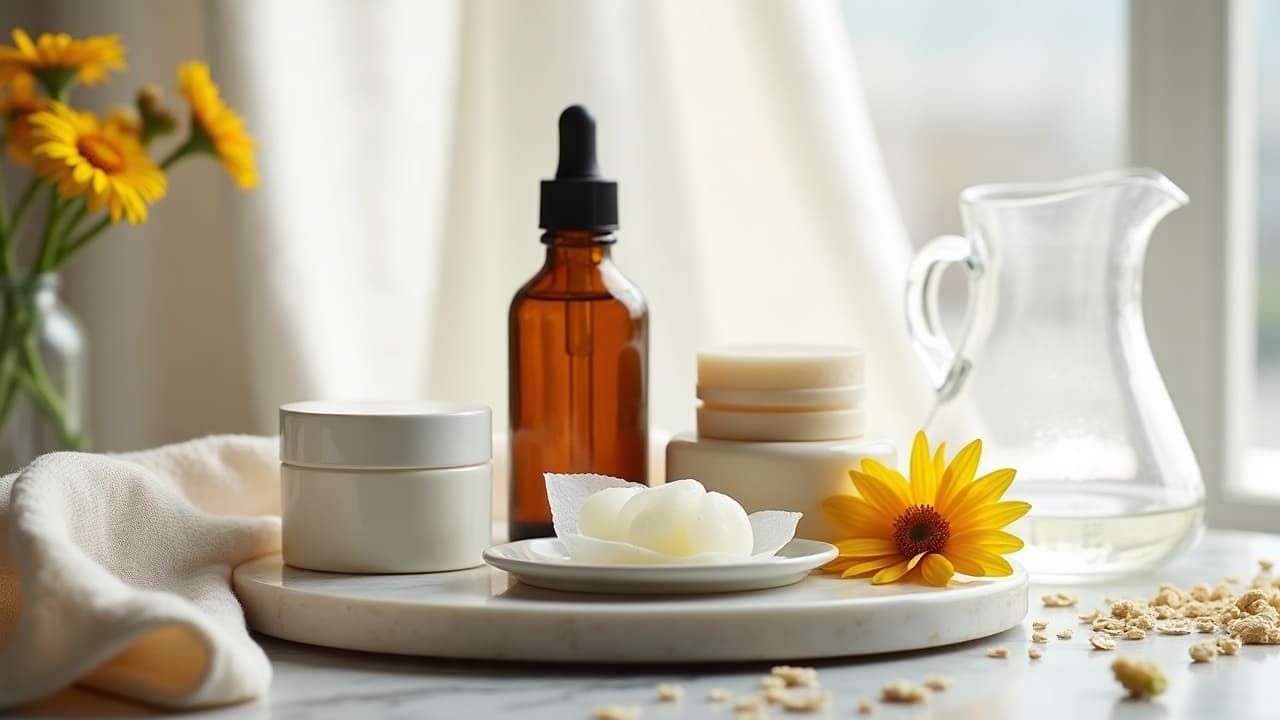
Most great tattoo heals come down to a short ingredient list, used at the right time. A fresh tattoo is a controlled abrasion that prefers moist wound care, gentle cleansing, and fragrance-free formulas. Keep it simple in days 1–14, then level up protection and color preservation for weeks 3–8.
The Healing Goal: Moist, Low-Irritation Care Beats Fancy Claims
Your skin closes faster in a slightly moist environment, not dry and cracking. Major medical sources back this, with petrolatum creating an occlusive seal that limits scab formation and reduces transepidermal water loss. See Mayo Clinic first aid guidance on keeping minor wounds moist for better outcomes Mayo Clinic wound care basics. The Cleveland Clinic also notes petroleum jelly’s role in maintaining moisture that supports efficient re-epithelialization Cleveland Clinic on petroleum jelly and wound moisture.
For tattoos, that translates to a thin film of petrolatum or a panthenol-rich ointment during the first days, then a lighter fragrance-free cream or lotion once flaking starts. Avoid strong botanicals and perfumes early, because patchy irritation can literally eject ink. The American Academy of Dermatology highlights fragrance and preservatives as common triggers for contact dermatitis, which you do not want over new ink AAD on contact dermatitis and skincare.
- Good early-stage occlusives: Vaseline Original, Aquaphor Healing Ointment, CeraVe Healing Ointment (non-sponsored examples). Use a rice-grain amount per hand-sized area, 2–3 times daily.
- Panthenol forward: Bepanthen or La Roche-Posay Cicaplast Baume B5 can soothe and support barrier function without heavy fragrance (non-sponsored examples).
- Budget to boutique, expect $5–$25 for a tube that lasts a full medium tattoo heal.
- If your artist applies a film dressing at the studio, follow their protocol first. Switch to ointment only after removing and washing the area.
Clean, Then Seal: Wash Ingredients That Respect Ink
Your best cleanser in days 1–7 is low-foam, pH-balanced, and fragrance-free. Look for mild surfactants and skip heavy essential oils. Antibacterial washes are usually unnecessary for healthy people, and harsh antiseptics can slow healing by irritating the surface.
- Look for: cocamidopropyl betaine or sodium cocoyl isethionate in gentle concentrations. Syndet bars are fine if truly unscented.
- Avoid early: high alcohol content, menthol, strong tea tree or eucalyptus, and dyes that can sting or stain.
- Artist-tested gentle options: Dove Sensitive Skin Beauty Bar, H2Ocean Blue Green Foam, Dr. Bronner’s Baby Unscented well diluted (non-sponsored examples).
- Technique matters: wash with lukewarm water, clean palms, and pat dry. No washcloths, no loofahs, and definitely no hot water blasts.
If you want to understand why hydration is the anchor of this step, we broke it down in our hydration deep dive. That guide pairs perfectly with this ingredient checklist.
Humectants and Barrier Builders: Glycerin, HA, and Ceramides
Once the surface has closed and flaking starts, you can switch to a lighter moisturizer. Humectants like glycerin and hyaluronic acid pull water into the upper layers, keeping that new epidermis pliable. Ceramides, cholesterol, and fatty acids fortify the lipid matrix so your barrier recovers predictably.
- Label cues: glycerin in the first five ingredients, ceramide NP/AP/EOP, squalane, lightweight shea butter or caprylic/capric triglyceride.
- Reliable picks: CeraVe Daily Moisturizing Lotion, Eucerin Advanced Repair, Bioderma Atoderm Cream, Aveeno Skin Relief Fragrance-Free (non-sponsored examples).
- How to apply: a nickel-sized amount per forearm-sized area, 2–4 times daily as flaking peaks, then taper to comfort.
- Why it works: flexible skin cracks less, so microfissures do not lift pigment. Less itch means less scratching and fewer accidental scabs.
Occlusives and Second-Skin Bandages: When and How to Use Them
Film dressings like Saniderm, Dermalize, or Tegaderm can shield fresh tattoos from friction and contaminants. They create a semi-occlusive environment that keeps plasma from drying into thick scabs. If your artist uses them, the usual window is 24–72 hours, then remove gently under warm water and wash.
- Pros: less friction, cleaner sheets, fewer accidental rubs under clothing. Great for large color work and travel days.
- Cons: adhesive sensitivity for some, fluid buildup if applied too soon or too long. If it stings or blisters, remove and switch to ointment.
- How to remove: pull the film low and slow, parallel to the skin. Do not rip straight up.
- Costs: expect $3–$8 per sheet. For full sleeves or backs, you may need multiple sheets over days 1–3.
- If you forego films, a thin layer of petrolatum plus non-stick gauze for the first night does the job.
Debating second-skin? Healthline’s editorial coverage compares film dressings to traditional wraps with practical pros and cons you can discuss with your artist Healthline’s tattoo aftercare coverage.
Calming Actives That Actually Help, Not Hype
Not all “natural” is gentle, and not all lab-sounding is harsh. A handful of soothing actives are well tolerated on healing skin, especially after the surface has closed. Look for panthenol (B5), allantoin, colloidal oatmeal, bisabolol, or centella asiatica extracts in simple, fragrance-free bases.
- Panthenol and allantoin reduce the feeling of tightness and support barrier function without numbing or tingling.
- Colloidal oatmeal helps with itch control. Aveeno Eczema Therapy is a good template for tolerability (non-sponsored example).
- Centella and bisabolol can calm visible redness. Try La Roche-Posay Cicaplast Baume B5 or Avene Cicalfate+ for a thicker balm texture (non-sponsored examples).
- Skip essential oils early. The AAD notes fragrance is among top irritants, so save that perfumed balm for month two AAD on contact dermatitis and skincare.
Ingredients to Skip in Week 1 to Week 4
Minimal irritation is the rule. Some everyday actives are fine on healed skin but risky on a fresh tattoo. Others are simply unnecessary. When in doubt, ask your artist and keep formulas fragrance-free until after peeling is complete.
- Topical antibiotics like neomycin and bacitracin can trigger contact allergies, and simple petrolatum often works better. If a doctor prescribes them, follow that advice, otherwise skip.
- Retinoids, AHAs/BHAs (glycolic, lactic, salicylic), and benzoyl peroxide can over-exfoliate and bleach fabric. Park them for 3–4 weeks.
- Alcohol-heavy toners and aftershaves dehydrate and sting. That slowdown in barrier repair is not worth any short-term “clean” sensation.
- Strong botanicals and essential oils, including tea tree, eucalyptus, cinnamon, and citrus oils, are frequent irritants.
- Lanolin can be soothing for some, but it is a known allergen for others. Patch test later if you plan to use it long term.
If you want a quick myth check on ointments, soaps, and lotions, see our studio-tested breakdown in aftercare myths vs facts.
Sun Protection Once Closed: Filters, SPF Numbers, and Reapplication
UV light is the biggest long-term threat to saturation. As soon as the surface is fully closed and no longer tender, use broad-spectrum SPF 30+ on any exposed tattoo. The FDA explains that “broad spectrum” means proven UVA and UVB coverage on the label, which is what you want for ink protection FDA broad-spectrum sunscreen rules. The American Academy of Dermatology similarly recommends SPF 30 or higher, water resistance as needed, and generous application AAD sunscreen selection advice.
- Mineral filters: zinc oxide and titanium dioxide are stable and less likely to sting. Try EltaMD UV Pure or Blue Lizard Sensitive (non-sponsored examples).
- Well-formulated chemical filters: avobenzone, octocrylene, bemotrizinol in modern blends protect without heaviness. Try La Roche-Posay Anthelios or Neutrogena Ultra Sheer (non-sponsored examples).
- Use 2 mg/cm² in practice means a shot-glass for exposed limbs. Reapply every 2 hours, sooner with sweat or swimming.
- Daily budget range: $10–$25 for face and body formulas that actually get used.
Match Ingredients to Your Skin Type and Climate
What works in a dry winter loft can feel greasy in a humid studio. Dial your routine to your environment without breaking the core rules of gentle cleanse, moisturize, and protect.
- Oily or acne-prone: favor light lotions with glycerin and niacinamide 2–5% after peeling starts. Keep occlusives thin and targeted to edges or hot spots.
- Dry or eczema-prone: lean on ceramides, shea, and squalane. A thicker B5 balm at night can stop itching that leads to picking.
- Hot and humid: switch to gel creams and blot sweat with clean paper towels. Reapply a sheer SPF that you actually like wearing.
- Cold and windy: increase occlusive layers outdoors, then lighter creams inside. Add a humidifier at night to cut TEWL and morning itch.
- High friction zones (waistbands, ankles): consider a second-skin film for 24–48 hours, then a petrolatum smear before dressing.
A few popular tattoo balms like Hustle Butter, Redemption, or Mad Rabbit can be fine later in healing, as long as they are fragrance-free or lightly scented and patch-tested first (non-sponsored examples). If a balm tingles or smells intense, hold it for month two.
Want your ink to look as good at month eight as it does at week eight? Pair ingredient-smart aftercare with a design you love. Use AI for Tattoo to generate ideas you can actually heal well, then preview placement on your body with our virtual try-on. Create your next piece at AI design studio and test it on skin with the in-browser try-on.
Try AI for Tattoo Free