
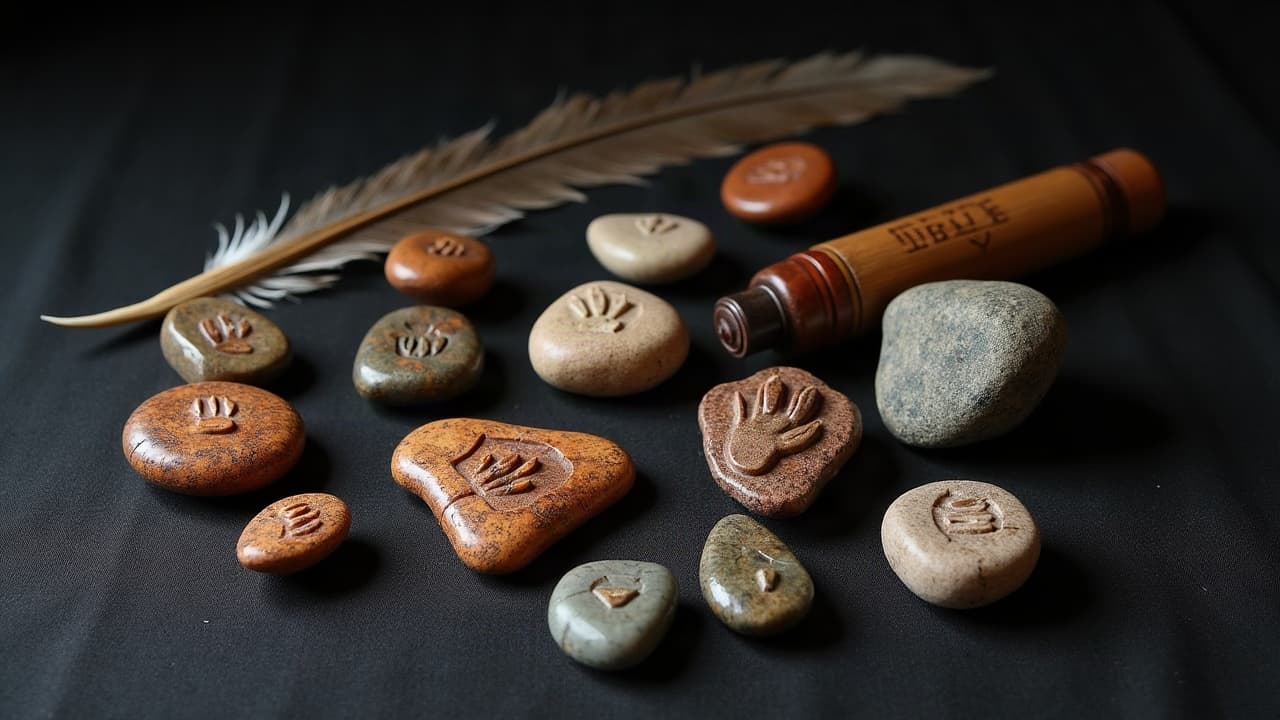
A practical truth most people miss, animal tattoos read like shorthand for belief. In surveys, roughly 32% of Americans report at least one tattoo, and many choose animals because animal symbolism is instantly legible across borders Pew Research Center. The trick is context. The same wolf or snake can signal kinship, danger, or renewal depending on culture.
Why animals carry weight across cultures
Animals populate myths because they share our ecosystems and our anxieties. A lion on a shield, a koi braving current, a swallow guiding sailors, each compresses a full story into an image. If you want a piece that speaks, anchor your choice in a narrative you can explain in one sentence. That clarity keeps the design cohesive and helps your artist steer style and placement.
Start by mapping three angles. One, your personal association, like a childhood encounter or a recovery story. Two, the symbol’s roots across cultures so you avoid missteps. Three, a visual style that supports the meaning, blackwork for severity, irezumi for flowing motion, dotwork for patience and texture.
Predators and protectors, lions, tigers, wolves
Predators often signify protection and social order, not just aggression. A lion shows up in Ethiopian and Hebrew tradition as royal authority, in European heraldry as courage, in Rastafarian iconography as the Lion of Judah. Tigers in East Asia signal raw power and guardianship of the cardinal directions. Wolves bisect neatly, family-first guardians to some, feared outcasts to others.
- Lion, courage and sovereignty, from Ethiopian crowns to British heraldry. Pair with chest or sternum placement to frame the heart, a traditional seat of will in many systems.
- Tiger, strength and warding, Chinese white tiger of the West and Korean mountain spirit. Suits upper arm or back where stripes can flow with muscle movement.
- Wolf, kin loyalty in Plains and Great Lakes storytelling, lone resolve in modern Europe. Consider forearm for visibility if your narrative centers on guidance or pack bonds.
Cultural note, First Nations and specific African clan marks are living signifiers. If a design is tied to a lineage or rite, shift to adjacent imagery, a realistic wolf rather than a clan crest, out of respect and consent. When in doubt, ask the community and your artist to find a respectful route.
Serpents and dragons, cycles, wisdom, and storms
Snakes and dragons carry duality. In Mesoamerica, Quetzalcoatl blends earth and sky, knowledge and wind. In China and Japan, dragons rule rain and prosperity, more benefactor than beast. In Western stories, dragons test virtue. Serpents shed skin, so they read as rebirth, medicine, or danger depending on era and place.
- Chinese or Japanese dragon, prosperity and rain, flowing whiskers and clouds. Work with irezumi motifs and negative space for movement along ribs or sleeves.
- Ouroboros, a serpent eating its tail, continuous cycle. Crisp linework circles the wrist or ankle and reinforces renewal without cultural overreach.
- Nagas and cosmic serpents, guardians in South and Southeast Asia, and Damballa in Haitian Vodou. Approach with care, consult community context, or abstract to universal shedding-and-renewal themes.
Color choices matter. East Asian dragons often pair vermilion or emerald with water and cloud backdrops, while Western dragons read clearly in black and grey to emphasize texture. Your artist can tilt the needle grouping and whip shading to keep scales legible at the size you choose.
Birds as messengers, sovereignty, and thresholds
Birds patrol borders between worlds. Eagles symbolize vision and state power from Roman standards to modern flags, and they hold sacred meaning in many Native communities. Ravens are tricksters and world-makers in the Pacific Northwest, memory and foresight in Norse stories. Owls bring wisdom in Greece yet signal thresholds or taboo in parts of West Africa and Latin America.
Sailor swallows are an instructive example of cross-talk. Historically tied to miles sailed and safe return, the swallow moved from credential to promise, a vow to find home. If you want a maritime link without borrowing a specific rank mark, swallows and albatrosses keep the spirit without claiming service.
Water creatures, persistence, depth, and navigation
Water animals often code for patience and navigation through hardship. Koi are almost universal for perseverance. Turtles mean longevity and steady wisdom in East Asia, and they are central in many Pacific traditions that must be approached with care. Whales read as kinship and wayfinding for Polynesian and Māori communities, while octopuses signal adaptability and intelligence from Greece to Japan.
- Koi, struggle against current to become dragon in folk tales. Scale to half-sleeve for flow, or 5 to 7 inch shin piece to ride the line of motion.
- Turtle, patient earth-bearer, cosmic order. Avoid sacred Polynesian patterns if you lack ties, pivot to realistic shell detail or minimalist silhouette.
- Whale, kinship and route memory. Strong as back or thigh work with negative space waves to keep mass without visual clutter.
- Octopus, intelligence and evasion. Works in blackwork for silhouette strength or watercolor washes to emphasize motion and mood.
Insects and metamorphosis, quiet power
Insects carry big stories in small frames. Butterflies embody transformation across continents, and in Mexico monarchs tie to Day of the Dead arrivals. Bees code for community and industry from Ancient Greece to Manchester’s worker bee. Spiders appear as Anansi’s wit in West African tales and as patient builders elsewhere. Scorpions range from desert guardians to danger warnings in North Africa and the Middle East.
If you want subtlety, insects excel at scale. A 2 to 3 inch bee on the inner biceps says solidarity without shouting. A lattice of spider silk in fine dotwork across the shoulder can hold a private story only you decode.
Ethics, sacred motifs, and when to ask permission
Some marks are not just designs, they are passports. Ta moko, pe’a, malu, and clan crests speak identity, law, and kinship. Copying them without ties can misrepresent you and disrespect living systems. Instead, work with your artist to extract shape language you admire and rebuild it in neutral geometry or realistic reference that honors, not borrows.
- Ask first. If a symbol is tied to ceremony or lineage, seek community guidance or choose a non-ceremonial adjacent motif.
- Avoid sacred placements. Some cultures reserve face, neck, or head spots for rite-bearers. Relocate to chest, arm, or leg to keep meaning without claim.
- Document your intent. A one-line story you can say out loud helps your artist adjust style and placement ethically.
- Study position norms. See our positional meaning guide for how locations change reading.
You can also refresh your history. If lineage is your anchor, pull from verified archives or oral histories before you commit. Our long-view primer on body art, cross-time significance of tattooing, sets useful context.
Style and placement that reinforce the message
Match the visual grammar to the story. Flowing irezumi harmonizes with dragons and koi because curves imply water and wind. High-contrast blackwork sharpens wolves, bears, and eagles. Fine-line realism keeps butterflies airy and owls alert. Handpoke can underline craft and intimacy when you want a talismanic scale.
Placement adds subtext. Chest reads protector, forearm reads pledge, thigh and back take epic scale. In some East Asian pairings, tiger to the right, dragon to the left, balance storm and sky. If you want discreet meaning, inner arm or high rib hides the symbol until invited.
Planning, budget, and care so the meaning lasts
Good symbolism still needs good execution. Gather 5 to 10 references that show pose, texture, and pattern. Clarify size early because legibility lives in millimeters. Expect 1 to 3 sessions for complex animals with scales, fur, or feathers so your artist can stage linework, shading, and color saturation.
- Budget ranges, small animal with linework only, $150-$400. Medium forearm with shading or light color, $400-$900. Half sleeve or large back panel with full palette, $800-$2,000+.
- Aftercare basics improve longevity. Gentle wash, thin ointment film, and sun avoidance reduce complications. See AAD guidance for risks and care American Academy of Dermatology.
- Ink reactions happen, especially to reds. If you have sensitivities, discuss patch tests and pigments upstream. Health info overview here Healthline.
- Tattoo inks are not FDA approved for injection, regulation is evolving. Read the agency’s consumer notes to make informed choices U.S. FDA.
Healing sets the tone for years. Typical healing window 10 to 21 days, and color-heavy pieces demand more shade and moisturizer to protect vibrancy. Use breathable wraps, especially for big color blocks, and a light hand with ointments to avoid suffocation.
Products artists often recommend, Saniderm, Tegaderm, Aquaphor, Hustle Butter, Mad Rabbit (non-sponsored examples). Use thin layers and switch to fragrance-free lotion after the peel. Sunblock becomes a long-term ritual, especially for blues and reds that fade faster.
On meaning durability, clarity beats complexity. If your goal is a symbol that still reads at 20 feet in 20 years, favor strong silhouettes and intentional negative space. Let micro-detail live where eyes come close, shoulder cap or inner forearm.
Ready to see how your story scans on skin, generate a culturally aware animal concept, swap styles like irezumi or blackwork, then preview the scale on your body. Start with Create, pull references in Explore, and test placement with the live Try-On before you book. Your meaning, your map, no guesswork.
Try AI for Tattoo Free