
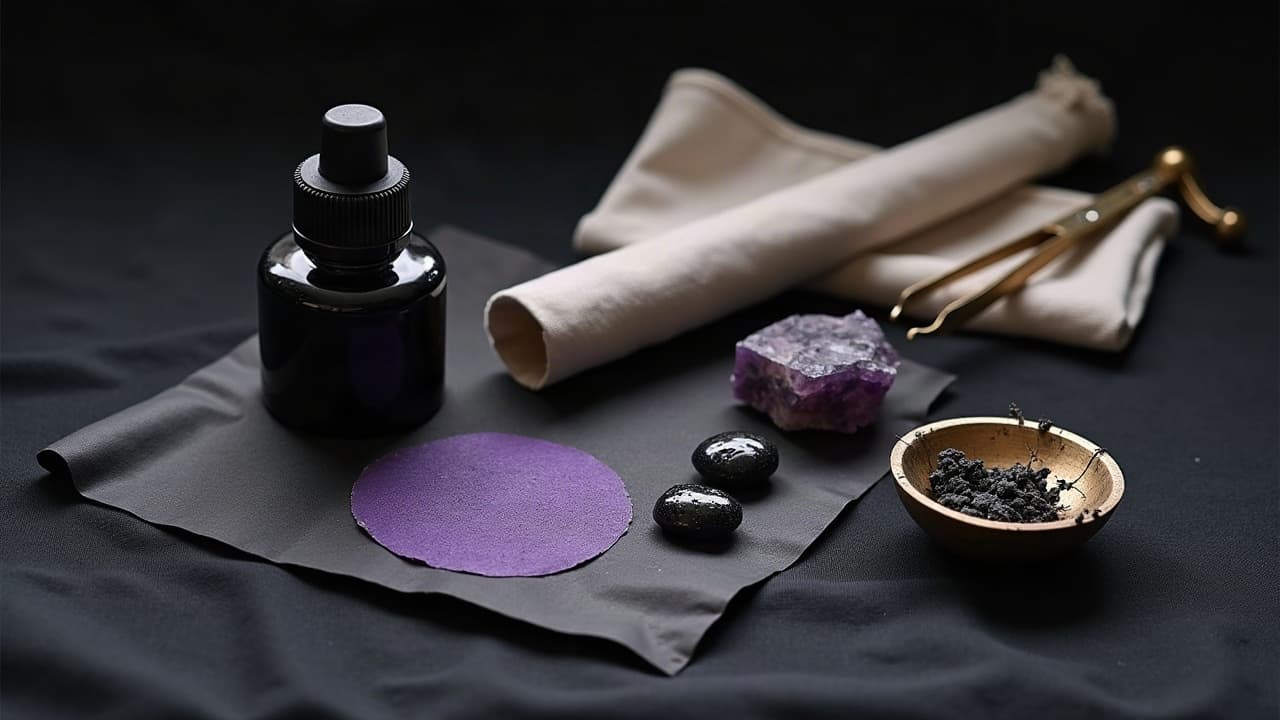
Roughly one third of U.S. adults report at least one tattoo, according to the Pew Research Center. As that number climbs, gem and crystal motifs are surging because they carry clear symbolism, look striking on skin, and adapt to nearly any style. There is no single correct stone, only the one that aligns with your story. Below, I map real meanings, cultural contexts, and the design moves that make mineral motifs read beautifully, not just look pretty.
Why gem and crystal tattoos resonate right now
Crystals give you a built-in language of color, cut, and clarity. They also sit well inside blackwork, fine line, realism, or watercolor. Add that they can nod to identity, faith, or milestones, and you get a design that stays relevant for decades. If you want a symbol that scales from 1-inch micro tattoos to full forearm compositions, stones are reliable anchors.
- They communicate fast. A ruby suggests passion and protection at a glance, while amethyst signals calm and clarity without extra lettering.
- They suit many placements. Faceted shapes fit wrists, ankles, and collarbones, while cabochons flow on thighs, shoulders, and backs.
- They age well. High contrast and clean facet highlights keep legibility as the tattoo softens over 2–4 weeks of healing and beyond.
- They stack. You can add a second stone later to mark a new chapter, creating a personal gem constellation over time.
A short history of stones in body art
People have marked skin and carried stones for protection and status for millennia. While not every culture tattooed with gemstone imagery specifically, many used stones in ritual jewelry whose meanings translate perfectly to modern ink. If you enjoy historical context, pair this with our sleeves history deep dive to see how motifs migrate across time.
- Ancient Egypt linked lapis lazuli with the heavens and protection. That royal blue remains a classic for protective eye and scarab compositions.
- In Mesoamerica and China, jade symbolized virtue and life force. Today, smooth cabochon jade tattoos read as serenity and ethical strength.
- Many Indigenous North American traditions value turquoise for protection and safe travel. Use region-specific research and permission when referencing sacred motifs.
- South Asian navaratna gems align nine stones with celestial bodies. A nine-gem array can honor astrology without using Western zodiac symbols.
- Victorian sentimental jewelry paired garnet, pearls, and lockets to memorialize love. Cameo-style gem tattoos echo that narrative intimacy.
Core symbolism by gemstone and crystal
Meanings vary by culture and personal belief, so treat these as starting points. When in doubt, write one sentence about what the stone means to you and build the design around that sentence. Clarity beats encyclopedic lists on skin.
- Diamond, resilience and clarity. Works well in black-and-gray realism with sharp facet edges and white ink pops.
- Ruby, courage and devotion. Push deep crimson gradients with magenta to black transitions for heat and depth.
- Sapphire, wisdom and loyalty. Great for cool-tone watercolor washes and negative space facets.
- Emerald, growth and balance. Pair leafy filigree or Art Nouveau frames to echo renewal.
- Amethyst, calm and protection. Violet to lavender blends love dotwork halos for a spiritual read.
- Rose quartz, self-compassion. Soft pastel packing with whip shading keeps it tender rather than bubblegum.
- Black tourmaline, grounding and shielding. Use geometric blackwork with angular planes for a protective feel.
- Moonstone or opal, intuition and flux. Iridescent stippling and pearlescent highlights sell the glow.
- Jade, virtue and harmony. Smooth cabochon glare beats hard facets to match cultural references.
- Turquoise, protection and wayfinding. Crazing textures and matrix lines prevent a flat cartoon look.
Color, cut, and composition that read on skin
A convincing gem needs value contrast, a believable light source, and edges that stay readable at three feet. Decide on cabochon vs faceted, then lock in a palette that suits your undertone. Warm skin loves emerald, garnet, citrine. Cool skin loves sapphire, amethyst, aquamarine. Neutral can swing both ways. Always test swatches.
- Plan the light source. Place white ink speculars on the same side of each facet so the brain reads it as a gem, not confetti.
- Build believable depth with gradient packing from saturated hue to near-black. Avoid pure black in the center of transparent stones.
- Edge control matters. Use tight lining around facets and soft whip shading under the stone to “seat” it on skin.
- Frame wisely. Ornamental blackwork, fine-line filigree, or geometric lattices add structure without stealing focus.
- Choose your cut. Round brilliant, oval cabochon, or hex crystal cluster each suggests different personalities.
Cultural respect and when to pause
Some stone uses are sacred or community-specific. If your idea references Indigenous turquoise arrangements, South Asian navaratna orders, or funerary motifs, spend extra time learning. A respectful approach is to collaborate with artists from those cultures and center your personal story, not a costume. For deeper thinking on meaning-building, see our guide to personal symbols.
- Research the origin and ritual use of the stone and arrangement, not just color swatches from Pinterest.
- If it is tied to a living tradition, seek permission or choose a design inspired by values, not sacred layouts.
- Avoid mixing conflicting sacred symbols for aesthetics alone. Ask why each element deserves its place.
- Prefer contextful backgrounds over costume motifs. For example, use a protective prayer in your language beside turquoise, not a generic headdress.
Placement, size, pain, and pricing realities
Gem tattoos can be compact or expansive. The trick is reserving enough space for clean edges and glow. Pain and price scale with surface area and detail. Expect a healing window of 2–4 weeks for color pieces, with mild peeling in week 2. Small stones can be single-session. Complex clusters benefit from two passes so color stays bright.
- Placements by comfort: forearm and calf 3–5/10, outer arm 4–6/10, wrist and ankle 5–7/10, sternum and ribs 8–9/10 on the pain scale.
- Readability vs size: faceted realism needs 2–3 inches minimum. Cabochons and simple crystals hold at 1.5 inches if linework is crisp.
- Budgeting: skilled color realism often runs $150–$300 per hour, so a palm-size gem is $200–$500. Half-sleeve clusters can reach $800–$1,800.
- Longevity: favor higher contrast and thicker lines on high-friction zones like fingers to resist blur.
Technical execution and choosing the right artist
Stone tattoos punish sloppy edges and muddy blends. You want someone with confident color packing, believable specular highlights, and healed photos to prove it. Scroll their portfolio for multiple gems in different skin tones. Ask about inks used, aftercare preferences, and whether they recommend a stencil of the facet map to keep geometry honest. If you use a numbing cream like TKTX, clear it with your artist first since it can change skin feel and sometimes affect saturation.
- Portfolio filter: look for healed gems with crisp edges, not just fresh shininess.
- Process questions: ask about light source planning, line weights, and white ink usage before booking.
- Session plan: color clusters often split best into outline plus major fills, then polish and highlights.
- Materials: clarify ink brands and needle groupings they prefer for facets vs washes.
Aftercare, healing, and allergy notes you should know
Color stones want moisture balance and low friction. Day one, your artist may use a medical adhesive like Saniderm. After removal, light layers of Bepanthen, Aquaphor, or Hustle Butter can help, then transition to a clean, unscented lotion such as Mad Rabbit as peeling starts (non-sponsored examples). Nickel sensitivity is common, and certain pigments can trigger contact reactions, so monitor redness that lasts beyond the normal irritation window. The American Academy of Dermatology notes nickel allergy affects a significant slice of the population, commonly cited between 10–20%, which is relevant for jewelry but reminds us metal sensitivities exist on skin too. See AAD resources at aad.org.
- First 72 hours: keep it clean and lightly moisturized. Avoid soaking, hot tubs, and heavy sweating.
- Week 1–2: expect itching and flaking. Do not pick. Light lotion 2–3 times daily keeps colors bright.
- Watch for reactions: persistent redness, pustules, or spreading warmth need assessment. Cleveland Clinic outlines signs of tattoo reactions and infections to watch.
- Ink safety: the FDA monitors tattoo inks and warns that certain reds can cause issues. Learn more at fda.gov.
- If you have a history of allergies, pre-read our allergic reaction aftercare guide.
Make it personal, not generic
Meaning sticks when your choices are specific. Tie the stone to a date, a promise, a recovery, or a memory. Use local flora, a favorite poem, or a family craft pattern to frame it. If you want spiritual weight without borrowing sacred symbols, write your intention in your own language and hide it in the negative space. Quiet details beat loud clichés.
- Birthstone route: pair your birth month gem with a loved one’s for a subtle family cipher.
- Geology nerd path: use the real crystal habit of quartz, beryl, or tourmaline rather than fantasy shards.
- Life marker: embed coordinates or dates into a facet grid so they are visible only on close look.
- Style stack: merge blackwork lattices under a watercolor stone wash for modern contrast.
- Future-proofing: leave open skin near the stone to add a second chapter later.
Preview the exact gem cut, color palette, and placement before you book. Use AI for Tattoo to generate a crystal design, then try it on virtually in your lighting and on your skin tone. If you need ideas, explore styles and save your short list for your consult.
Try AI for Tattoo Free