
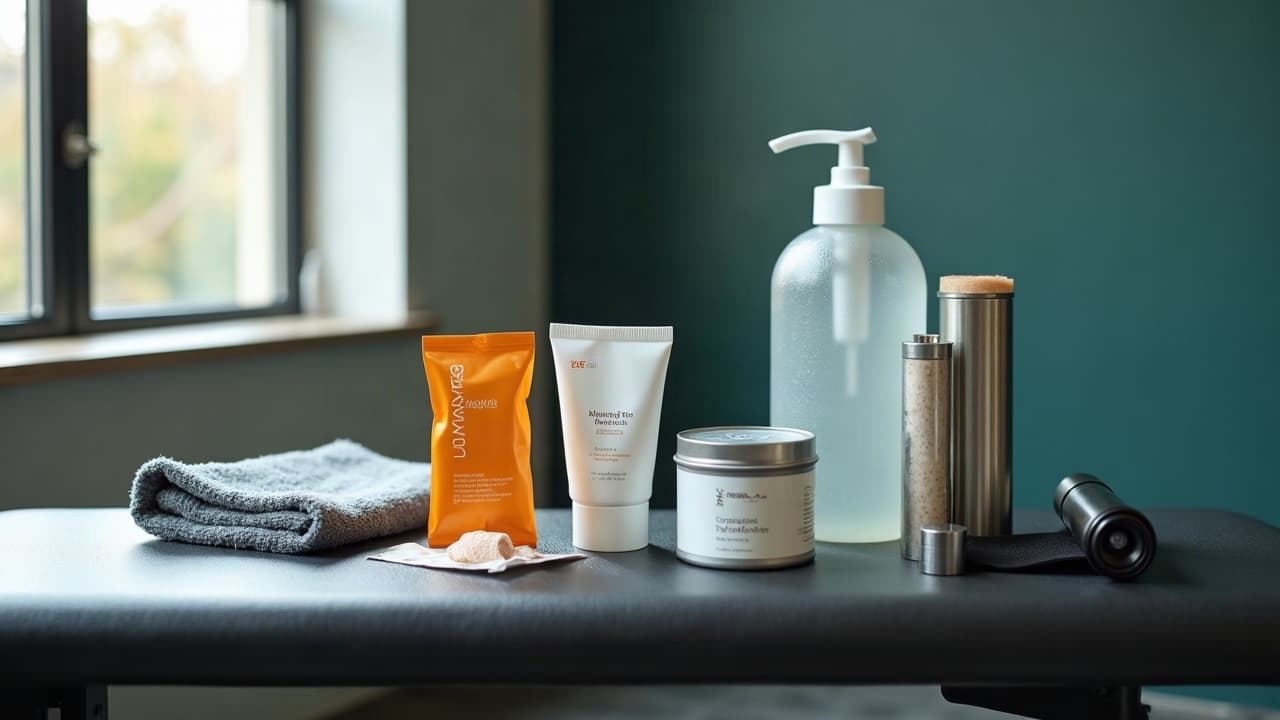
Sweat, friction, and sun are the three fastest ways to wreck a fresh tattoo. The first 72 hours are your high-risk window for infection, over-oozing, and scab lift. Dermatology authorities note most tattoos surface-heal in 10–14 days, with deeper remodeling over 4–6 weeks. Keep training smart during that period and your linework and saturation stay crisp. For general skin healing timelines and infection guidance, see the American Academy of Dermatology and Cleveland Clinic overviews for patients (AAD, Cleveland Clinic).
When To Resume Training After a Tattoo
A fresh tattoo is an open wound. Treat your training like a staged return to sport, scaled by placement, size, and sweat exposure. If your artist applied an occlusive film like Saniderm or Tegaderm, follow their change schedule precisely, especially if you sweat early. Pair this protocol with your base aftercare routine from our skincare essentials guide.
- Small linework on low-friction areas (forearm outer, calf outer): Light cardio only after 48–72 hours, avoid direct rubbing for 7 days, resume normal training by day 10–14 if skin is quiet.
- Medium pieces on moderate-friction zones (upper arm, thigh, shoulder): Rest 72 hours, then machines or low-sweat work. Delay heavy barbells touching the area 7–10 days. Full intensity typically by week 2–3.
- Large or high-movement placements (chest, ribs, armpit fold, knee ditch): Rest 4–5 days, then controlled work that avoids stretch. Expect 2–3 weeks before unrestricted loads and range feel safe.
- Hands, feet, or joints: These churn sweat and rub constantly. Plan 5–7 days off training that stresses the site. Protect carefully for 3 weeks to prevent blowouts and ink loss.
Sweat, Showers, and Hygiene That Protect Ink
Sweat itself is not toxic to ink, but salt plus heat plus friction softens scabs and lifts edges. Keep sessions shorter, cooler, and cleaner until flaking ends. Rinse your tattoo within 30 minutes post-workout using lukewarm water and a fragrance-free wash, then pat dry. Showers are fine, baths are not. Public gym surfaces and towels can harbor bacteria, so treat your tattoo like a surgical site for two weeks. For wound hygiene basics and signs of infection, review CDC care advice and device hygiene recommendations (CDC).
- Wash with a mild, unscented soap, pat dry, then apply a thin layer of Bepanthen, Aquaphor, or Hustle Butter (non-sponsored examples). Too much ointment macerates skin and slows healing.
- Swap sweaty dressings promptly. If using Saniderm, trim and replace when edges lift. Expect to change more often on training days, which is normal.
- Avoid shared equipment contacting the tattoo. Put a clean barrier between benches, straps, and your skin. Pack a personal towel and sanitizer for handles.
- If your tattoo stings above 3–4/10 during training, you are pushing too hard. Back off until the session feels like mild sunburn at most.
Cardio Protocols by Placement
Cardio raises temperature and sweat, so intensity and fabric choice matter. Choose modalities that minimize direct rubbing across the tattooed area. Keep the first week at easy to moderate efforts and cap sessions at 20–30 minutes if the tattoo is still weeping or flaking.
- Fresh leg tattoos: Prefer upright cycling on a trainer with loose shorts, or incline walking. Skip running and rowing 7–10 days to avoid repetitive knee and waistband rub.
- Fresh torso or rib tattoos: Try light stationary biking or an easy elliptical. Avoid rowing and assault bikes for 10–14 days since chest straps and torso flexion shear scabs.
- Fresh arm tattoos: Brisk walking or lower-body erg work is best. If you must run, wear a soft, loose sleeve and keep cadence relaxed to limit swing and fabric friction.
Strength Training, Barbells, and Contact Points
Bar paths, pads, and belts can grind ink right when it is most fragile. For the first 7–10 days, swap high-contact barbell lifts for machines or dumbbells that let you steer clear of the site. If the bar or pad must touch the area, it is too soon. Do not tape directly over a fresh tattoo except with a medical second-skin your artist approves.
- Chest tattoos: Skip bench press and chest-supported rows 10–14 days. Use cable presses and flyes that keep straps and benches off the piece.
- Shoulder or upper arm tattoos: Delay low-bar squats, dips, and heavy carries 7–10 days. Favor leg press, hack squat, and sled with straps placed away from the design.
- Shin or forearm tattoos: Avoid deadlift shins and cleans until flaking ends, usually 10–14 days. Train posterior chain with RDLs using dumbbells and keep the bar path off the area.
Yoga, Stretching, and Mobility Without Microtears
Deep stretching can split a forming scab or crack peel, which opens pathways for bacteria and dilutes pigment. During week one, cap range at 50–70 percent around the tattoo and skip partner-assisted stretching. Delay hot yoga and heated studios for 10–14 days because humidity and heat soften scabs. In flows, choose stable positions that do not torque the skin over the design, especially in elbow, knee, and armpit folds. If you feel a tight sting or pulling across the tattoo during a stretch, that is tissue saying not yet.
Swimming, Sauna, and Sun Exposure Rules
Submerging a fresh tattoo exposes it to microbes and chemicals. Pools, hot tubs, lakes, and oceans are off limits until the surface is fully closed, typically 2–3 weeks. The AAD advises avoiding swimming until healed and shielding tattoos from UV with clothing and high SPF. Public water can carry bacteria that drive tattoo infections, and hot tubs are notorious. For regulatory and safety context on tattoo-related infections, see FDA and CDC resources (FDA, CDC).
- No submersion until flaking has ended and skin looks intact, usually 14+ days. Quick showers only, avoid soaking.
- No sauna or steam room for 10–14 days. Heat plus humidity equals soft scabs and easier pigment loss.
- Once healed, wear UPF sleeves or a long-sleeve for outdoor training. Apply broad-spectrum SPF 30+ to healed ink and reapply every 2 hours when sweating.
Clothing, Tape, and Friction Management
Your gym outfit can make or break a heal. Prioritize loose, breathable layers that glide, not grab. Avoid compressive seams and grippy fabrics directly on the tattoo for 7–10 days. At night or during travel, a medical second-skin film can protect from accidental rub, but replace promptly if sweat accumulates. Do not use kinesiology tape or cohesive wraps over a fresh tattoo.
- Good fabric choices: lightweight cotton, bamboo, or soft technical knits that do not snag. Avoid coarse meshes and stiff denim on fresh ink.
- Protective picks: Saniderm, Tegaderm, Opsite Flexigrid sheets cost about $10–$25 per pack and act as a barrier for short windows (non-sponsored examples).
- After showering, apply a thin moisturizer like Aquaphor, Bepanthen, or Mad Rabbit before dressing. A whisper-thin film reduces sticking without suffocating skin (non-sponsored examples).
- If a sleeve or sock must cover the area, turn it inside out so seams do not track across the tattoo. Reposition straps and belts to new anchor points.
Hydration, Nutrition, and Sleep for Better Heals
Skin repairs faster when the basics are dialed. Aim for 2–3 L/day of water, slightly more in hot gyms. Keep protein at 1.6–2.2 g/kg bodyweight to support collagen and immune function. Vitamin C and zinc from whole foods help, but avoid megadosing. Alcohol and nicotine slow healing and inflame tissue, so limit both, especially the first week. Sleep 7–9 hours where possible. For consumer-friendly nutrition and recovery notes that align with wound care fundamentals, see Healthline's topical overviews (Healthline).
Troubleshooting Red Flags and When To Rest
Some soreness, light weeping, and flaking are normal. What is not normal is rapidly spreading redness, fever, foul odor, or thick yellow-green discharge. If those appear, stop training and contact a clinician. Allergic reactions to pigments or adhesives present as intense itch, hives, or blistering. Trusted medical sources emphasize early evaluation to prevent scarring or systemic infection. Review patient-facing guidance at Cleveland Clinic and the AAD if you are unsure whether a symptom is expected or concerning (Cleveland Clinic, AAD).
- Pause workouts if redness expands after day 3, heat and pain worsen, or you see streaking away from the tattoo.
- See a clinician for fever, chills, or discharge that looks like pus. These signs can escalate quickly if you keep training.
- If a scab tears open, clean gently, apply a thin layer of ointment, and rest the area 24–48 hours to re-seal before resuming light activity.
If you want a tailored day-by-day template, we built flexible routines for different skin types and climates in these aftercare templates. Save them to your phone before your next session.
Planning training around new ink starts before the session. Use AI for Tattoo to mock up placement so you can schedule smarter around bar paths, straps, and sun. Generate concepts in minutes and try them on your body with our virtual tool. Create your next design here: Generate a design or try it on.
Try AI for Tattoo Free