
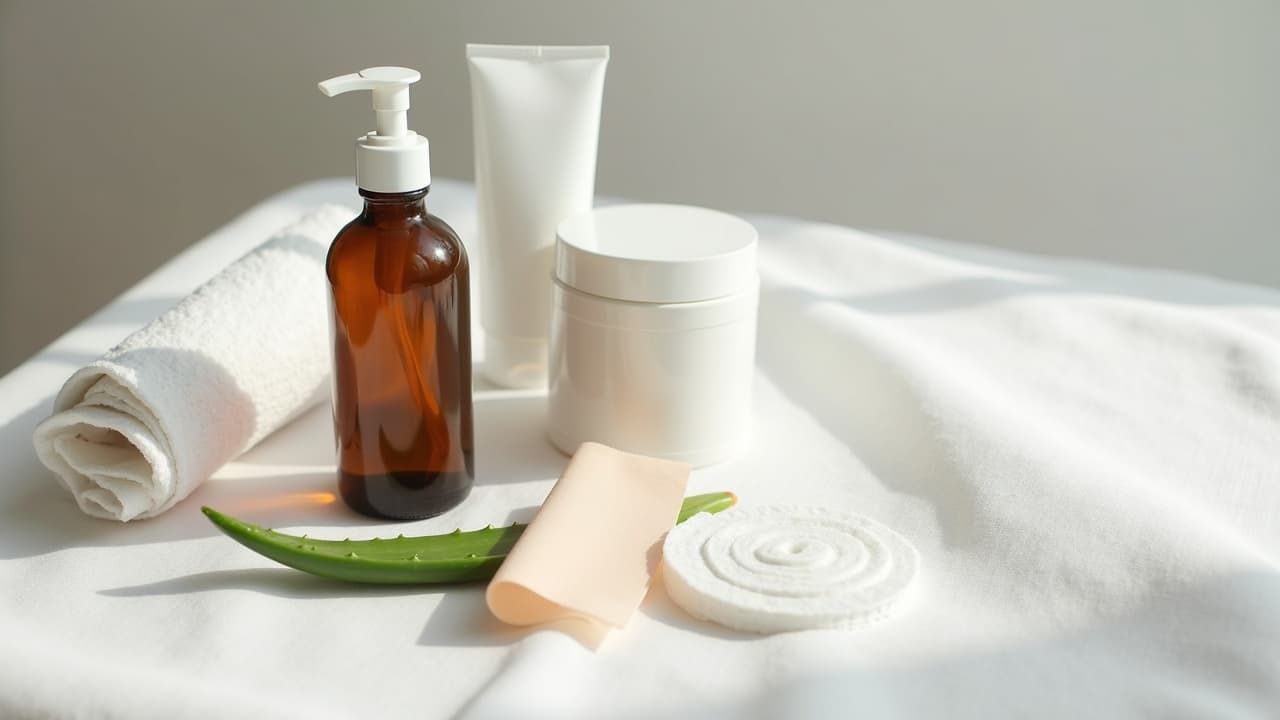
Fresh tattoos heal best when the skin stays slightly moist, not smothered under heavy grease. In the first 72 hours, barrier-friendly products do more for color retention and clean healing than any trick later. Think clean wash, breathable protection, and a thin ointment layer. Most reputable studios follow a medical-style wound care playbook similar to fragrance-free, non-irritating care used in clinics, which aligns with broad Cleveland Clinic guidance. This guide breaks down exactly what to buy, why it works, and what to avoid so your linework and color stay punchy long term.
The First 72 Hours: Dressings, Wash, and a Thin Ointment
Your tattoo leaves the studio wrapped. If your artist used a second skin bandage like Saniderm or Recovery Derm Shield, keep it on as directed, typically 24–72 hours. If you left with plastic wrap, switch to a breathable film or open-air care after the first wash. Wash with a fragrance-free antibacterial wash, pat dry, then apply a rice-grain thin layer of ointment. Heavy layers trap heat and can raise the chance of irritation. The FDA also notes that tattooed skin is vulnerable to infection until a new barrier forms, so treat it gently and keep it clean, not occluded FDA tattoos and permanent makeup.
- Leave the studio bandage on as instructed, often 24–72 hours for film dressings. If it leaks early, wash, dry, and reapply a new sterile film.
- First wash: lukewarm water, fragrance-free cleanser, clean hands, then gentle pat dry with a paper towel. No scrubbing, no loofahs, no hot water.
- Apply a thin ointment layer only where the skin looks matte-dry. If it looks shiny or tacky, you used too much.
- If using second-skin film, replace it if saturated or peeling. Keep edges clean and dry to maintain adhesion.
- Sleep in clean sheets, wear loose cotton, and avoid sweat-heavy workouts that could lift the film or stress the fresh tattoo.
Cleansers That Won’t Strip a Fresh Tattoo
Choose pH-balanced, fragrance-free, sulfate-free cleansers. Alcohol, menthol, and perfume spike stinging and can lead to rashy edges that compromise line crispness. Cleanser should rinse clean, leave no film, and never burn. The American Academy of Dermatology flags fragrance as a top allergen, so unscented is not optional on a wound AAD, dermatology resources.
- Good picks: Cetaphil Gentle Skin Cleanser, CeraVe Hydrating Cleanser, Dove Sensitive Skin Body Wash (non-sponsored examples). All are mild, fragrance-free, and rinse without residue.
- Technique matters: wash 2–3 times daily the first days, always with lukewarm water and clean hands. Pat dry, do not rub.
- Skip: scrubs, microbeads, bar soaps with deodorant additives, essential oil soaps, or high-foam gels that strip lipids.
- If your tap water is hard or you travel often, keep single-use sterile saline on hand for quick, clean rinses between proper washes. See tattoo aftercare for different environments.
Ointments vs Balms: What Actually Helps
Early on, you want occlusive but breathable. Petrolatum ointments work, yet overdoing them suffocates the skin. Dexpanthenol products help epidermal repair. Plant balms can be great, but fragrance is risky on fresh work. Patch allergies to lanolin or botanical oils are more common than people think, and contact dermatitis can prolong healing, something dermatology sources like Healthline and the AAD discuss frequently Healthline, skin health.
- Ointments: Aquaphor Healing Ointment and Bepanthen support barrier recovery. Use a thin layer for the first 3–5 days, then taper. Watch for lanolin sensitivity with Aquaphor.
- Balms: Hustle Butter or Mad Rabbit can be comfortable, but pick the unscented option for fresh tattoos. Fragrance increases irritation risk early.
- Films: Saniderm or Tegaderm create a protective window without daily ointment. Great for active clients who want less handling.
- Budget note: a small tube is enough. Expect $5–20 for ointment or balm that will easily cover a medium piece. (non-sponsored examples)
Moisturizers For Weeks 1 to 4: Keep Color Locked In
Once flaking starts, usually days 3–7, switch from ointment to a fragrance-free lotion. You want humectants like glycerin and hyaluronic acid plus ceramides to rebuild the barrier without shine. Apply 2–3 times daily or whenever the skin looks matte and tight. Do not peel flakes. Let them slough naturally to protect line integrity.
- Solid choices: CeraVe Daily Moisturizing Lotion, Eucerin Advanced Repair, Aveeno Eczema Therapy. All are fragrance-free, ceramide or colloidal oatmeal rich, and sink in quickly. (non-sponsored examples)
- Apply thin, even coats. If your skin stays glossy 10 minutes later, you used too much. Scale back to avoid pore blockage around hair follicles.
- Typical budget: $8–20 for a bottle that lasts the entire healing window. Keep one travel-size in your bag to maintain consistency.
- Working with heavy blacks or bright reds? Some pigments flake more. See tattoo aftercare for different color inks for nuance by pigment.
Sunscreen Is Non-Negotiable Once Healed
UV is the number one long-term tattoo killer. After the surface is fully closed, usually around 4 weeks for uncomplicated pieces, move to broad spectrum SPF 30+ every day on exposed tattoos. Mineral filters, especially zinc oxide 15–20%, scatter light and are gentle on sensitive skin. Chemical filters can work too if fragrance-free. The Mayo Clinic endorses consistent broad spectrum SPF use for skin health, which directly protects tattoos from fade Mayo Clinic, sun protection.
- Use SPF daily on healed tattoos, then reapply every 2 hours outdoors or after swimming or sweating.
- Mineral picks: EltaMD UV Clear SPF 46, Blue Lizard Sensitive SPF 30, La Roche-Posay Anthelios Mineral SPF 50. Choose fragrance-free. (non-sponsored examples)
- For fresh tattoos, use clothing coverage instead. No sunscreen on open or peeling skin.
- If you burn easily, consider UPF sleeves or rash guards for long sessions in sun. Fabric beats reapplication.
Essential Oils and Botanicals: When They Help, When They Hurt
Here is the honest truth: avoid essential oils on fresh tattoos. Even “gentle” oils like lavender or tea tree can sting and trigger dermatitis on disrupted skin. Once fully healed, typically 4–6 weeks, some clients like a light, 1–2% dilution in a neutral carrier for scent or glide. Jojoba and fractionated coconut are common carriers. Patch test first. Allergic reactions to tattoo pigments and topical additives, including botanicals, are documented in dermatology literature like JAMA Dermatology JAMA Dermatology, journal site. When in doubt, keep it simple and fragrance-free until the skin is quiet for at least two weeks.
- Safe timing: not before 4–6 weeks, never on broken skin. Start with 1% dilution and a 48-hour patch test away from the tattoo.
- Skip citrus oils, cinnamon, clove, and mint oils on tattoos. They are frequent irritants.
- If you just want glide and sheen on healed work, plain jojoba or squalane is ideal, unscented, and skin-like.
- Any sting, warmth, or redness that lasts more than an hour means stop immediately and return to a fragrance-free moisturizer.
What To Avoid On Healing Tattoos
Most complications I see in studio come from over-application of occlusives, fragrance, or harsh actives. Keep your routine boring. If it tingles, it is not helping. The FDA lists infections and allergic reactions among the most common tattoo issues, many of which start with poor aftercare or irritants applied too early FDA tattoos and permanent makeup.
- No thick petroleum jelly layers. It suffocates and lifts inked skin edges. A thin ointment is fine the first few days, not a glaze.
- Avoid actives for at least 4 weeks: retinoids, AHAs, BHAs, benzoyl peroxide, strong vitamin C, and alcohol toners.
- No pools, hot tubs, lakes, or ocean for 14 days minimum. Submersion invites bacteria and swells the wound.
- Avoid direct sun on healing tattoos. Cover with clothing. Save SPF 30+ for when the skin is fully closed.
- Skip witch hazel, menthol, camphor, and perfume until you are several weeks healed. These burn and delay barrier recovery.
Build a Smart Aftercare Kit and Budget
You do not need a suitcase of products. A tight kit covers cleansing, protection, moisture, and later, UV. Brands like Bepanthen, Aquaphor, Hustle Butter, Mad Rabbit, and Saniderm are widely used in studios worldwide. Pick unscented versions, buy small first, and upgrade only if your skin asks for it. For a medium forearm piece, total product spend lands around $30–80 depending on what you already have.
- Second-skin bandage sheets, 5–10 count: $12–25. Look for medical-grade adhesives and clear instructions.
- Fragrance-free cleanser, 8–16 oz: $6–12. One bottle will outlast your healing window.
- Ointment or unscented balm, small tube: $5–20. You only need a dab at a time.
- Fragrance-free lotion, 8–16 oz: $8–20. Ceramides, glycerin, or colloidal oatmeal are ideal.
- Broad spectrum SPF 30+, 3–5 oz: $15–30. Mineral formulas are gentler on sensitive or red-prone skin. (non-sponsored examples)
If you are planning your next session and thinking about numbing, patch test any lidocaine cream on unbroken skin first and discuss timing with your artist. Some artists prefer no topicals that could change skin texture before stencil. For the tattoo you already have, keep aftercare clean, consistent, and boring. When products are simple and fragrance-free, your skin focuses on healing, not fighting new irritants. For medical concerns like spreading redness, fever, or pus, contact a clinician promptly. Big-picture advice from trusted sources like Cleveland Clinic and the AAD is to seek professional help if symptoms escalate quickly Cleveland Clinic health resources AAD, dermatology resources.
Ready to see how your design will look on healed skin before you even buy aftercare? Use AI for Tattoo to generate clean linework and rich shading you will want to protect, then create a design and try it on in seconds. If you are comparing coverage or placement, browse studio-ready ideas in our library and test them on your skin tone before booking.
Try AI for Tattoo Free