
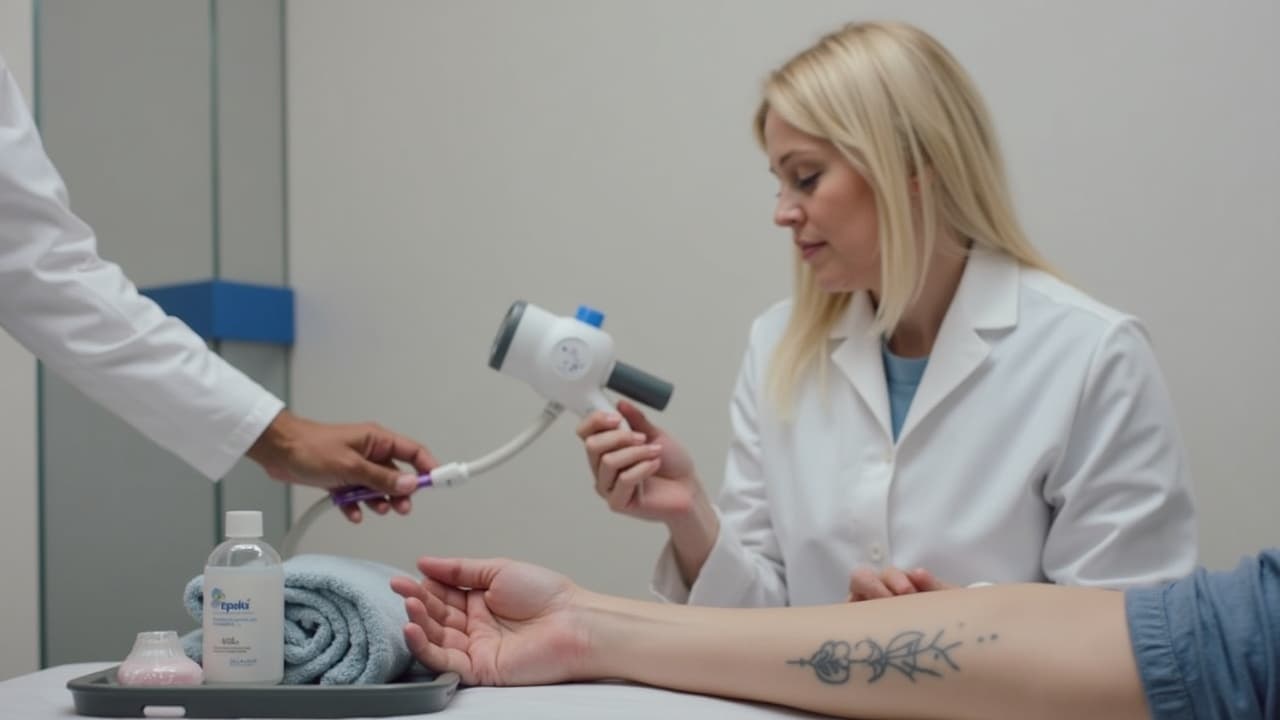
Therapeutic ultrasound is a legit tool in sports rehab, but on fresh tattoos it is untested territory. Most tattoos re-epithelialize in about 10–14 days and the outer layer can take 2–3 weeks to settle, so timing and technique matter more than gadgets. If you are hearing claims like heal 50% faster with ultrasound, slow down and read the fine print.
What We Mean by Ultrasound for Tattoos
When people say ultrasound for tattoo healing, they usually mean low-intensity therapeutic ultrasound used in physical therapy, not diagnostic imaging. PT-grade devices vibrate tissue at 1 MHz or 3 MHz, sometimes with pulsed output, to warm tissues and influence fluid movement. Clinics use it for tendon irritations and muscle tightness, not for cosmetic wounds. You will also hear about phonophoresis or sonophoresis, where ultrasound is used to push topicals deeper. That is a pharmacy technique, not a tattoo industry standard.
Big medical organizations describe ultrasound therapy as a modality that may improve local circulation and tissue extensibility, with mixed evidence depending on the condition. See the overview from Cleveland Clinic on therapeutic ultrasound and device regulation notes from the U.S. FDA on medical devices. Neither positions ultrasound as routine tattoo aftercare.
Claimed Benefits, and What Science Actually Supports
The argument for tattoo ultrasound borrows from rehabilitation: better microcirculation, less edema, and potentially faster collagen organization. The physiologic idea makes sense on paper, but tattoos are not sprained ankles. A tattoo is a controlled injury containing pigments, and any modality that adds heat or mechanical energy could disturb early healing.
Clinical literature shows ultrasound may help some chronic wounds and venous leg ulcers, while results are inconsistent across studies. Government and peer-reviewed hubs like JAMA Dermatology and the FDA maintain caution about broad claims. For tattoos specifically, we do not yet have randomized trials. Bottom line, the potential benefits are theoretical for tattoos, and the evidence gap is real.
- Possible pros: mild swelling reduction, temporary pain relief (1–2/10), and tissue warming that feels soothing in later stages.
- Known unknowns: impact on pigment stability, scab integrity, and granulation tissue in the first 2 weeks.
- Evidence status: limited for tattoos, mixed for wound care in general according to large medical overviews.
The Real Risks on Fresh Ink
Fresh tattoos are open wounds. Adding ultrasound too early risks heat buildup, microcavitation, and shear that can lift edges, soften a fragile scab, or spread pigment laterally. The required coupling gel is another variable. Many gels contain dyes, fragrances, or preservatives that can irritate new tattoos or trap bacteria if the area is not fully sealed.
Infection is the top concern. Ultrasound heads touch multiple bodies in clinics, and even when disinfected, they are not sterile. Gels are often multi-use bottles. On a fresh tattoo, that is a poor match. Learn the early red flags in our infection signs guide and review general warning signs at the American Academy of Dermatology. If you choose to experiment later, do not use on open skin, weeping areas, or active scabs.
- Early risks: ink migration, blowout-like blur, prolonged oozing, and contact dermatitis from gels.
- Sanitation risks: non-sterile transducers, multi-use gel bottles, and poor disinfection between clients.
- Contraindications: over infection, over keloid-prone areas, over implants or pacemakers, and during pregnancy, unless a physician clears it.
When, If Ever, Ultrasound Fits in a Healing Timeline
Most tattoos form a protective layer in 10–14 days, and the outermost layer typically finishes around 2–3 weeks for healthy adults, per consumer health sources like Healthline on tattoo healing. Dermal remodeling continues 6–8 weeks or longer. If you are going to try ultrasound at all, the only reasonable window is after the skin is fully closed, non-tender, and flake-free.
- Days 0–3: No ultrasound, prioritize gentle wash and a light ointment film.
- Days 4–10: No ultrasound, consider a second-skin bandage if used correctly.
- Days 11–21: Maybe safe for some, but still avoid until flakes are gone.
- Weeks 4–8: If completely closed and stable, low-intensity pulsed settings only, short sessions.
Second-skin dressings like Saniderm, Tegaderm, and Derm Shield can replace the early temptation to add a device. If you use films, apply and remove correctly to avoid skin tears. See our second-skin comparison for technique and timing.
Safe Parameters if You Still Plan to Try It
This is not a recommendation to use ultrasound, it is a harm-reduction checklist. Consult a licensed physical therapist or clinician who understands wound physiology. Ask what device they use, whether it is FDA-cleared, and what settings they consider conservative for fully closed superficial tissue.
- Intensity: 0.1–0.5 W/cm², start low. Superficial tattoos respond to 3 MHz better than 1 MHz.
- Mode: Pulsed 20% to limit heat. Avoid continuous mode on new tattoos.
- Time: 3–8 minutes for a small piece, keep the head moving at 2–4 cm/s.
- Pressure: Feather-light contact. Do not press into the tattoo or across edges.
- Coupling: Sterile, single-use gel packets, fragrance-free. Patch test first.
- Skip zones: over joints, bony ridges, or areas with residual flakes.
- Stop if: increased redness >1 hour, throbbing, or tingly itch appears.
Keep realistic goals: at best, you might get mild swelling relief late in healing. If a practitioner promises dramatic pigment pop or half the healing time, get a second opinion and review the FDA’s stance on device claims.
Gear and Gels: What to Use and What to Avoid
Consumer ultrasound wands range $80–$300, often marketed for pain relief or skincare. Many lack clear labeling for intensity accuracy or duty cycle, and few are cleared specifically for wound-related claims. Clinic-grade units start around $1,000+ and live in PT offices for a reason. If you cannot verify specs, skip it.
Select sterile, single-dose ultrasound gel if a session happens near a healing tattoo. Avoid gels with fragrance, colorants, or menthol. Keep go-to tattoo topicals handy for aftercare. Non-sponsored examples: Bepanthen, Aquaphor, Hustle Butter, Mad Rabbit, and second-skin films like Saniderm/Tegaderm/Derm Shield (non-sponsored examples). If irritation flares, wash off gently and revert to a simple ointment layer.
Alternatives That Actually Help Tattoos Heal
Most healing wins are boring and effective. Keep the tattoo clean, lightly moisturized, and protected from friction. Sleep and hydration do more than gadgets. If you want technology, adhesive film dressings applied properly deliver the biggest quality-of-life gain in week one.
- Hygiene: lukewarm wash 1–2x/day, pat dry, apply rice-grain amount of ointment.
- Barrier: second-skin for 3–5 days if your artist recommends it and you can tolerate adhesives.
- Behavior: no swimming 2–3 weeks, no sun, no picking flakes.
- Lifestyle: sleep 7–8 hours, hydrate 2–3 L/day, avoid smoking which slows microcirculation.
- Checks: if redness spreads, pain spikes, or you see pus, read the infection guide and contact a clinician.
For planning large pieces, proper flow and session spacing reduce trauma and speed recovery. Use tools like our sleeve planner to stage work intelligently so your body is not overwhelmed.
Cost, Access, and Red Flags to Watch For
If a studio offers ultrasound as an add-on, expect $30–$120 per short session. In PT clinics, therapeutic ultrasound is often bundled, but a cash visit can run $60–$150. Prices do not equal proof. Ask what outcomes they track and what complications they have seen on tattoos specifically.
- Red flag: claims of FDA-approved for tattoos. Devices may be cleared for therapy, not cosmetic wound care.
- Red flag: no sterile gel or visible disinfection of the ultrasound head.
- Green flag: written aftercare plan, conservative pulsed settings, and willingness to say not today if the tattoo is not fully closed.
Cross-check health advice with reputable sources like the American Academy of Dermatology, Cleveland Clinic, and consumer explainers such as Healthline. Use those to sanity-check promises, and keep perspective: tattoos heal well with simple, consistent care.
Design choices affect healing. Dense fills and full-saturation sessions are harder on skin than airy linework. Use AI for Tattoo to pressure-test your idea before you commit. Generate variations with our create tool, then preview scale and placement with the instant virtual try-on. Lock in a design you love, then heal it the simple way.
Try AI for Tattoo Free