
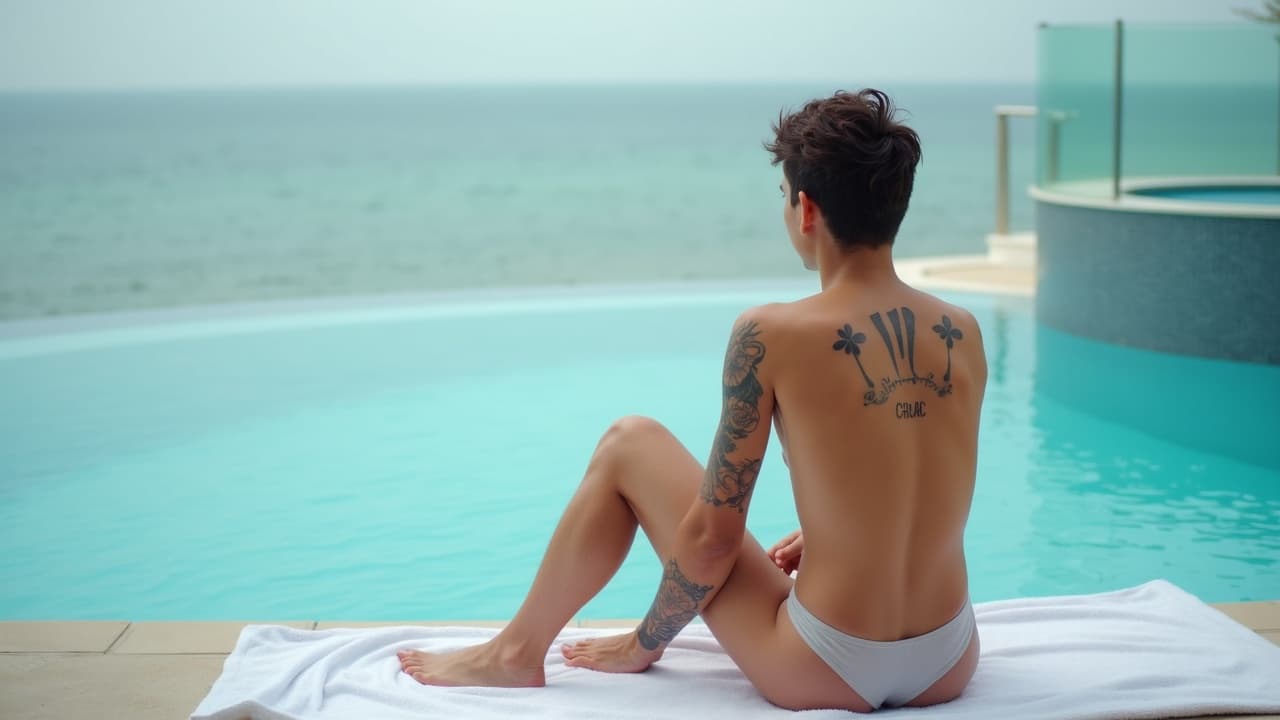
Here is the rule most artists use: do not swim until the tattooed skin has fully re-epithelialized, which usually takes 2–4 weeks, sometimes longer for big, color-packed pieces. Pools and ocean are typically safe at 3–4 weeks, lakes and rivers at 4 or more, and hot tubs at 4–6. That timing does not get shorter just because you used Saniderm or Tegaderm. Submersion before the surface closes invites bacteria, chemical irritation, and ink loss.
How Long To Wait, By Healing Stage and Bandage Method
Your skin’s top layer must rebuild before you put it into shared water. Re-epithelialization is the phase when a fragile new layer seals over the wound. For small linework with light trauma, this can complete around days 10–14. For larger color saturation, hand or foot placements, or if you had heavy irritation, it can take 21 days or more. Even after the top looks closed, the deeper barrier continues maturing for weeks, which is why chlorinated or hot water can still sting.
- Pools, lap or leisure, Wait until fully sealed, no scabs or flakes and no shiny wet-looking patches. Typical window: 3–4 weeks. Add extra time for hands, feet, or ditch areas.
- Ocean, Wait 3–4 weeks, same sealed-skin standard. Salt can irritate fresh microtears, and beaches add sand friction and sun exposure.
- Lakes and rivers, Wait 4 or more weeks. Water quality varies, runoff and wildlife raise bacterial counts compared to pools.
- Hot tubs and spas, Wait 4–6 weeks. Higher heat, higher bacteria risk, and chemicals are more aggressive. Bad combo for a new tattoo.
- Second-skin films, Saniderm, Tegaderm, Derm Shield, These do not shorten any submersion timelines. They help with early healing but are not a green light to swim.
Traditional wrap aftercare versus second-skin films changes the first 3–6 days, not your swim dates. With a classic wrap, you wash, air-dry, and thinly moisturize using Aquaphor, Bepanthen, or a dedicated tattoo balm. With a second-skin film, you keep the sealed layer on per instructions, then switch to light moisturizer once removed. Either way, no soaking until the skin surface is intact. If you are new to aftercare, bookmark our complete aftercare guide for day-by-day care and product tips.
Pool vs Ocean vs Lake vs Hot Tub, Real Risks Compared
All shared water carries some risk, but not equally. Chlorine and bromine help, yet they are not magic shields. The CDC’s Healthy Swimming guidance notes that typical free chlorine levels for pools are 1–3 ppm and for hot tubs 3–10 ppm, and that disinfectants do not kill all germs instantly. Heat and organic load make disinfection struggle, especially in hot tubs. See the overview from CDC Healthy Swimming for context on chlorine, pH, and water illness.
- Chlorinated pools, Properly maintained pools have the lowest microbial load of public options, but chlorine can irritate a fresh tattoo and soften fragile new skin. A sealed epidermis is still mandatory.
- Ocean, Saltwater is not sterile. Warm brackish zones can host Vibrio species. The CDC tracks severe infections from Vibrio vulnificus, especially with open wounds. See CDC Vibrio.
- Lakes and rivers, Variable water quality means higher E. coli, enterococci, and algal toxins after rain or runoff. EPA beach and recreation criteria set safety thresholds but local spikes occur. See EPA recreational water criteria.
- Hot tubs, A perfect storm, heat, high bather load, and chemical byproducts. Pseudomonas folliculitis, hot-tub rash, is well known. Even low-level irritation can delay healing or fade saturation.
Bottom line, if the skin is not fully sealed, any of these waters can deliver microbes straight into a wound. Even if you escape infection, chemicals and heat can lift scabs early and lighten color. If something looks off after a dunk, do not wait. Seek medical advice and inform your artist. The FDA also flags infection and allergic reaction risks with tattoos generally, see the agency’s page on Tattoos and Permanent Makeup.
No, Waterproof Bandages Do Not Make Swimming Safe
Second-skin films, Saniderm, Tegaderm, and similar, are semi-permeable medical dressings. They let oxygen and water vapor pass while blocking liquid water and debris in normal conditions. They are designed for showering, daily life, and protecting a fresh wound from friction. They are not engineered for extended submersion, hydrostatic pressure, heat, or the shear forces of swimming. Water can wick in at edges, adhesives can soften, and microleaks you cannot see are enough to contaminate the wound.
Manufacturers and most studios advise against swimming while wearing them. The film shortens the messy early phase and can speed up re-epithelialization, but it does not seal your tattoo like a dry suit. If you are using films or curious about brand differences, read our second skin bandage breakdown.
Must You Get In The Water? A Realistic Contingency Protocol
If you are a competitive swimmer, lifeguard, or on a long-planned trip, the safest choice is to reschedule the tattoo. If that is impossible, use a damage-control protocol. This does not make it safe, it only reduces risk when you have no other option. Keep sessions brief, protect the wound as best as you can, and clean up immediately after.
- Pre-water prep, Clip surrounding hair, cleanse the tattoo gently with fragrance-free soap, pat dry, and apply a sterile film slightly larger than the tattoo. Smooth edges thoroughly.
- Edge security, If your skin tolerates it, use a medical-grade adhesive barrier like Skin-Tac or Mastisol around the perimeter to reduce edge lift. Test for sensitivity beforehand.
- Layering, For high-motion spots, add a second sterile film layer offset over the first. Do not trap heavy ointment under the film, it can loosen adhesion.
- Time cap, Keep immersion under 10 minutes. Skip hot tubs entirely. Avoid sprint sets or flips that stress adhesion. No rubbing or towel friction during the session.
- Immediate rinse, Step out and rinse the area under running potable water as soon as you are done. Avoid pool showers with shared soap dispensers.
- Wash, Wash hands, then cleanse the tattoo with gentle, fragrance-free soap. Pat dry with a clean paper towel, do not reuse cloth towels.
- Rebandage, If within the first 3–5 days, consider a fresh sterile film. Past that, use a very thin layer of Aquaphor or Bepanthen and switch to light lotion once flaking ends.
- Monitor, For 48–72 hours, check twice daily for increased redness, warmth, pus, red streaks, fever, or worsening pain. If present, contact a clinician. JAMA Dermatology catalogs tattoo-related infections and complications frequently, and early treatment matters.
Remember that any submersion before day 14 is gambling with both your health and the final look. Even if you avoid infection, you can push out pigment and end up with patchy healing that needs a paid touch-up.
Baths vs Showers, Sauna, Steam Rooms, and Beach Sand
Showers are usually fine 24 hours after your appointment, as long as you keep them brief and cool to lukewarm, no direct high-pressure spray on the tattoo. Pat dry gently. Baths are submersion, so treat them like pools. No soaking until you hit that fully sealed skin window, usually 2–4 weeks depending on size and trauma.
- Saunas and steam rooms, Wait at least 2–3 weeks after the tattoo seals. Heat and sweat soften scabs and can reopen microtears, increasing infection risk and color loss.
- Cold plunges, They are still shared water. Wait the same as pools. Rapid vasoconstriction is less the issue than contamination.
- Beach days, Sand is abrasive and gets everywhere. Keep the tattoo covered with clothing, not gauze, until sealed. After healing, protect with a mineral sunscreen SPF 30 or higher.
- Sun exposure, Fresh tattoos sunburn fast. Once healed, use a broad-spectrum mineral sunscreen with strong UVA coverage. Here is our guide to the best sunscreen for healed tattoos.
If You Accidentally Submerged It, Do This Now
Accidents happen. Maybe a wave hit you, you slipped into a pool, or your kid splashed you in a hot tub. Quick action helps. The goal is to reduce contamination, calm inflammation, and keep the surface protected while it finishes sealing.
- Rinse immediately, Use clean running tap water to flush the area for 30–60 seconds. No scrubbing. This dilutes contaminants without mechanical trauma.
- Wash hands, Then gently wash the tattoo with fragrance-free soap. Rinse again and pat dry with a clean paper towel.
- Skip ointment globs, If within days 1–3, a very thin smear of Aquaphor or Bepanthen is fine. Avoid thick layers that trap moisture and heat.
- Re-cover selectively, Early days only, apply a fresh sterile film for 24 hours if your skin tolerates it. Past day 4–5, let it breathe and use a light lotion as needed.
- Watchlist, Redness expanding more than a finger-width daily, increasing heat, swelling, yellow or green discharge, fever 100.4°F or higher, or red streaks heading outward. Seek medical care if you see these.
Special Cases That Need Extra Time
Some situations call for a more conservative clock. When in doubt, wait an extra week. It is cheaper than a course of antibiotics or a heavy-handed touch-up session.
- Immunocompromised clients, autoimmune disease, chemotherapy, transplant meds, or high-dose steroids, double the standard wait and clear plans with your physician.
- Diabetes, especially if poorly controlled, slower wound healing is common. Aim for 4 weeks minimum for pools and ocean, 6 for lakes and hot tubs.
- Large color-packed or heavy black saturation, more trauma equals longer sealing. Plan 4 weeks for pools and ocean and 6 for lakes and hot tubs.
- Hands, fingers, feet, ankles, and ditch areas, movement, shoes, and friction extend healing. Add 1–2 weeks to any timeline.
- Cover-ups and multi-session pieces, repeated trauma resets the clock. Start timelines after the final session fully seals.
Plan Around Vacations and Training, Not Against Them
If you have a beach trip, cruise, meet, or spa weekend booked, work backward. You want the tattoo sealed at least 7 days before first swim. For a medium piece, that means getting tattooed 4–5 weeks before departure. For a sleeve or a dense thigh panel, 6–8 weeks is smarter. If your only available window is right before the trip, consider a small placement you can keep covered and dry or move the appointment to after you return.
Use tools to reduce the chance of regret. Mock up placement and scale before you commit so you are not rearranging your training or vacation twice. Our true-to-size preview helps you pick spots that are easier to protect from water and friction. Get started with our virtual try-on, then set scope and timing with your artist.
Planning a piece around a pool or beach trip? Use AI for Tattoo to generate designs, preview them to scale, and pick a placement you can actually protect. Start now, then book smart.
Try AI for Tattoo Free