
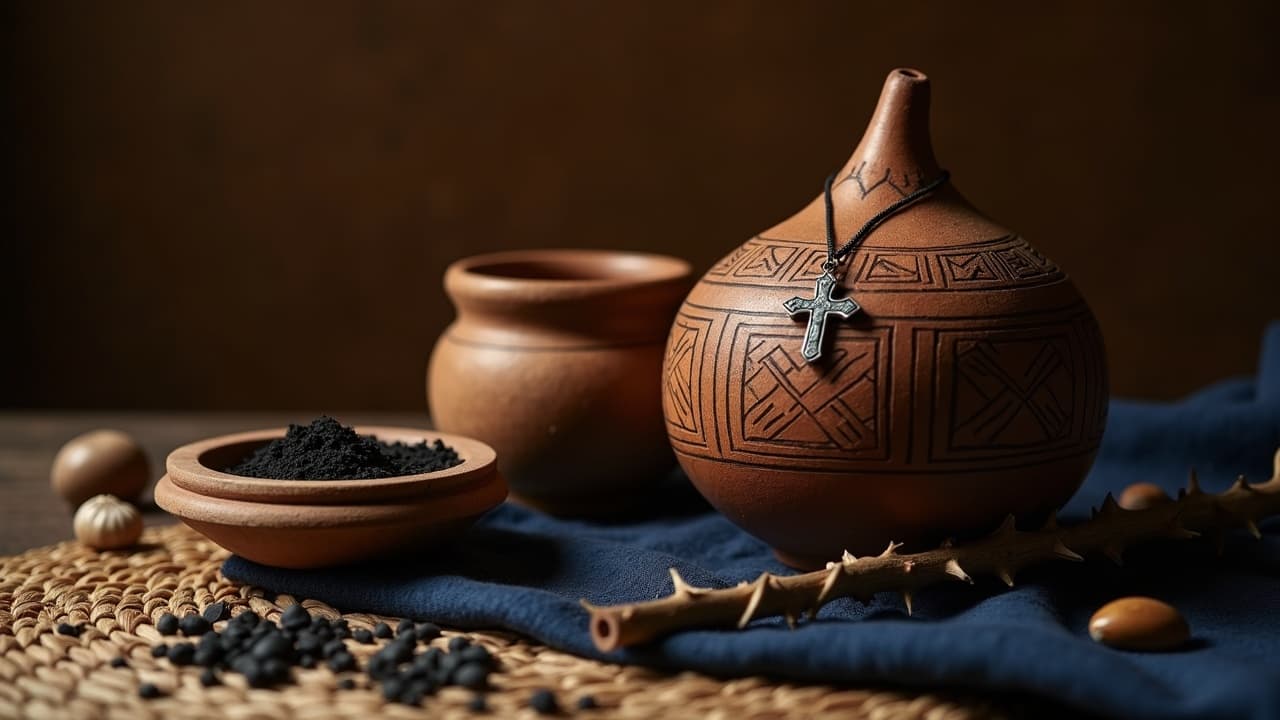
In North Africa, women once wore tiny blue triangles at the lip and brow to signal family, vows, and place. On the Nile, Orthodox Christians quietly marked small wrist crosses to show faith under pressure. Across the Sahel and into the Horn, skin art recorded belonging long before passports. Tattoos in African cultures were never just decoration, they were identity systems, safety charms, courtship signals, and living memory. Today, those marks are being archived, revived, and reinterpreted in studios from Casablanca to Cape Town, often returning to hand poke methods and plant soot inks, always with the same core promise, to put meaning where everyone can see it.
What Tattoos Meant: Identity, Protection, Passage
Across the continent, tattoos and related skin marking carried layered roles. The same dot cluster could be a clan map, a charm against the evil eye, and a private signal between spouses. Meanings were usually taught within the family, and placement mattered as much as the motif. Cheek dots or a chin triangle met the world every day, while thigh or breast motifs spoke to intimacy, fertility, or oaths. These functions were practical, not abstract art theory, and they changed with migration, religion, and law.
- Belonging and lineage, facial or wrist marks acted as clan identifiers and community passports.
- Spiritual protection, geometric amulets at the brow, wrists, or sternum guarded against misfortune or the evil eye.
- Life stages, marks at puberty, marriage, or after childbirth recorded rites of passage and responsibilities.
- Beauty and courtship, delicate lines on the chin or lips signaled readiness to marry or region-specific aesthetics.
- Faith practice, small Coptic and Ethiopian crosses declared religious identity in mixed or contested settings.
How Rituals Happened: Tools, Pigments, Technique
Traditional sessions were intimate and efficient. A respected elder or specialist worked at home or in the courtyard. The tools were simple, yet highly controlled. The artist stretched the skin, pricked in patterns by sight, then rubbed pigment into fresh points. Pain was real but typically manageable, closer to 3 to 6 out of 10 with hand methods, and spread over short sittings. Afterward, a mix of oils and herbal salves calmed swelling. In some areas, singing or prayer accompanied the process, turning a procedure into ceremony.
- Implements, thorn needles, bone or metal points, and later hand-tap sticks for rhythmic dot work.
- Pigments, soot or ash inks mixed with oil, milk, or tree gum for a deep gray-blue cast.
- Methods, hand poke dots for precise geometry, occasional tapping for rows, and rubbing for gum or lip tint.
- Care, plant oils and coverings to limit dust. Modern artists often suggest Saniderm or Bepanthen for hygiene (non-sponsored examples).
North Africa: Amazigh Marks, Nubian Memories, Coptic Crosses
Among Amazigh communities in Morocco, Algeria, and Tunisia, women historically wore fine blue-green triangles, chevrons, and dot strings on the chin, near the mouth, and at the temples. Many motifs echo Tifinagh-inspired geometry or household signs, like a loom or comb, transformed into protective emblems. The ritual often tied to adolescence or marriage, performed by a local specialist who knew which marks fit which lineage. While these practices declined with urbanization and religious debates in the mid to late 20th century, elders still carry them and younger artists study them respectfully.
Farther east, Nubian communities along the Nile preserved small tattoos, typically discreet, with patterns near the hands or arms. In Egypt and Sudan, Coptic Christians often mark a small cross on the inner wrist, a tradition that persists today in churches and small studios. The cross is simple, but its ritual weight is heavy, a visible pledge and a daily anchor. Contemporary studios sometimes render these with hand poke to honor the feel of the older method, while maintaining modern hygiene and documentation.
Sahel and West Africa: Marks of Belonging
In the Sahel, identity marks historically straddled tattooing and scarification. Among Hausa and Fulani groups, gum or inner lip tattooing created a dark, uniform gumline that signaled beauty and maturity. Some facial work used soot pigment in small punctures around the mouth. Tuareg and related Amazigh groups carried geometric signs on the arms and hands, linked to protection and kin. In Yorubaland, facial marks are better known as scarification rather than tattoos, but they share the same logic, quick recognition and family memory.
Not every region emphasized permanent ink. The Sahel also used plant stains and temporary markings for festivals and market days. What unified these practices was context, a known hand did the work, the meaning was clear in-community, and aftercare leaned on clean water, rest, and time. Modern West African studios often reinterpret these motifs in machine or hand poke, placing them on the forearm or sternum so they read clearly in urban life.
Horn and Nile: Crosses, Lines, and Ceremony
In Ethiopia and Eritrea, tiny Orthodox crosses at the wrist, neck, or temple remain common, from gentle dot matrices to single-line outlines. The ritual can be quiet, seated in a church courtyard, or contemporary in a licensed studio, but the gesture is the same, God is near and community is real. In South Sudan and Ethiopia’s southwest, many groups historically leaned to scarification for status and maturity, while selective tattooing appeared on lips or hands with simple geometry.
On the Somali and Swahili coasts, temporary henna work, especially for weddings, brings palms and feet to life with flowing vines and mandalas. While henna is not a tattoo, it sits beside tattoo ritual culturally as a celebratory skin art with its own rules. Natural henna typically stains for 7 to 14 days, a window consistent with mainstream skincare sources like Healthline’s henna guidance. Black henna, which may contain PPD, is risky and widely discouraged by the FDA’s consumer safety advisories.
Central to Southern Africa: Scarification Led, Tattoos Adapted
South of the equator, many Bantu-speaking communities historically emphasized scarification for kinship and maturity, with tattooing less common. Still, small inked signs appeared, often near hands and arms, and plant stains filled ceremonial gaps. Today, Johannesburg, Nairobi, Dar es Salaam, and Cape Town studios are reworking classic dot grids and triangles with minimalist linework or dense hand-poked textures, making heritage readable in new settings like the wrist, sternum, or ribs.
If you are adapting these motifs, document your research and keep record of meanings and placements. Many artists build mood boards and share them with mentors or elders before the needle touches skin. For mapping symbolism across cultures, see our symbols guide and complement it with careful, local sources. When in doubt, keep sacred or closed marks off limits and choose regional but non-restricted patterns.
Health, Aftercare, and Myth-busting
Traditional healers knew to keep wounds clean and covered from dust. Modern hygiene raises the bar, sterile needles, single-use ink caps, and medical-grade wraps. The American Academy of Dermatology notes that allergic reactions and infections can occur with any tattoo, and that people with darker skin can be more prone to keloids. Read their overview at the AAD’s official site. The WHO reminds practitioners that any skin-piercing procedure, including tattooing, requires strict infection control to avoid blood-borne disease transmission. See high-level guidance via the World Health Organization.
- Aftercare basics, wash gently, pat dry, then apply a thin layer of Aquaphor or Hustle Butter for 3 to 5 days, switch to lotion after day 5 (non-sponsored examples).
- Wraps, many artists use Saniderm for 24 to 72 hours, then remove and continue gentle care if the skin tolerates adhesives.
- Henna safety, natural henna stains 7 to 14 days. Avoid black henna with PPD, which the FDA warns can trigger severe reactions.
- Keloid risk, discuss family history. The Cleveland Clinic explains keloids are more common in darker skin types, read their overview at Cleveland Clinic.
- Healing window, most small tattoos settle in 10 to 14 days, full skin remodeling takes weeks. For color-specific care, see our aftercare guide.
Ritual Timing, Pain, and Community Roles
Who did the work mattered. Grandmothers, midwives, and specialist artists held the patterns in memory. Timing followed life, harvest lulls, betrothals, or a pilgrimage. Pain was part of the story but not the point. Hand poke work is usually a steady prickle, often rated around 3 to 6 out of 10, and many communities paired it with songs, prayers, or quiet conversation to carry you through. Small marks could be done in under an hour, larger grids may span sessions, with time to rest and cook or greet visitors in between.
In modern studios, you can recreate that pace. Bring a short playlist of archival music from the region you are referencing, ask your artist to pause for water and photos, and make the session social, not rushed. For broader context on how symbols shift across borders, read our cross-cultural comparison guide.
Respectful Adaptation Today: From Studio to Skin
If you are outside the originating culture, the rule of thumb is simple, choose open motifs, cite your sources, and give back. Many African artists offer consultations to tailor patterns to your story without lifting sacred or closed marks. Expect a consultation fee, and session costs of roughly $50 to $300 depending on size and city. If a mark was historically gendered or tied to a rite you did not experience, consider location or scale changes that keep the spirit without claiming a status you do not hold.
- Work with practitioners who study hand-poked geometry and can explain provenance.
- Avoid sacred or closed motifs, compensate culture-bearers for guidance, and keep notes in your design file.
- Document your design choices and meanings in a brief artist statement to accompany healed photos.
- Preview placements digitally to test visibility and context, then book a consult for technical fit.
Health sources worth bookmarking if you are planning a culturally rooted piece, the American Academy of Dermatology on tattoo complications, Healthline for practical skin-care timelines, the FDA for henna and pigment safety, and the WHO on infection control standards. These are general resources, your artist’s local regulations and studio protocols come first.
Ready to test Amazigh triangles on the wrist or a tiny Coptic cross on the inner arm before you commit? Use AI for Tattoo to generate culturally grounded linework, place it on your skin with our virtual try-on, and adjust scale and flow until it feels right. Start with Create, preview with Try On, and browse regional motifs in Explore.
Try AI for Tattoo Free