
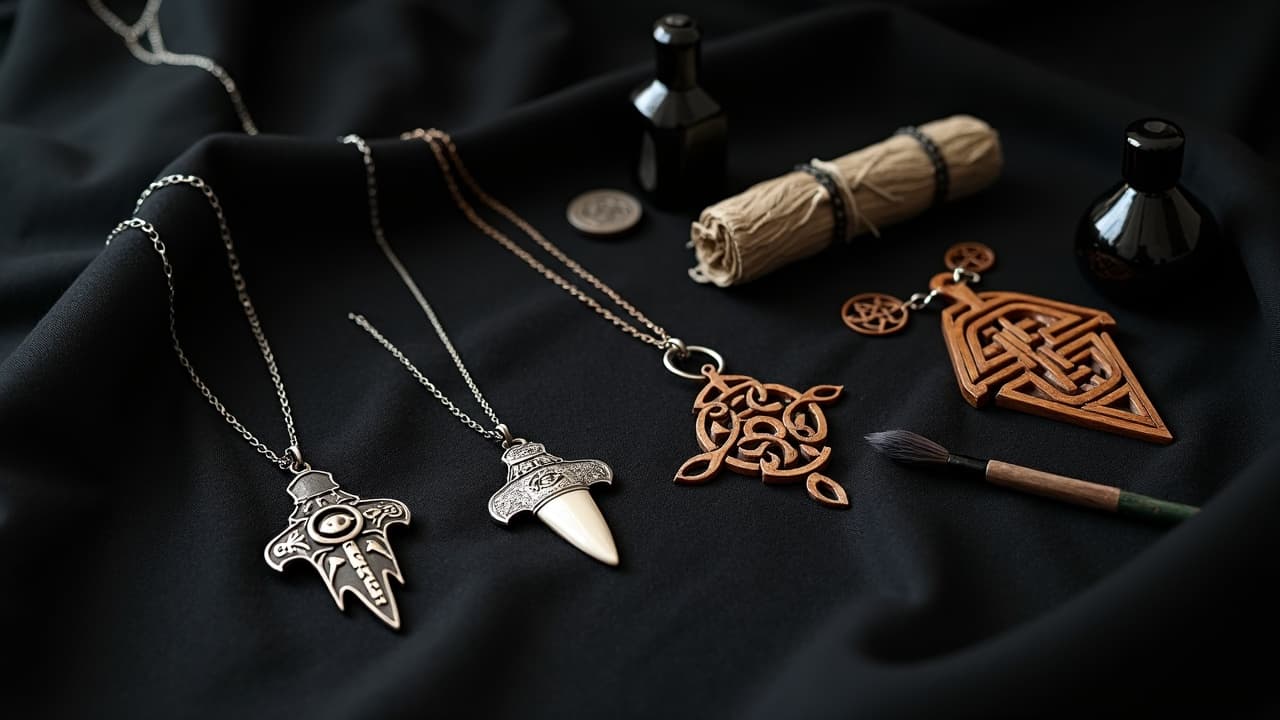
Tattooing is at least 5,300 years old, and across that span people have used ink as a shield, a contract with spirits, and a public warning to harm. Protective motifs are not a niche trend, they are a global pattern documented from Icelandic staves to Thai blessings and Polynesian shark teeth. Museums and ethnographies note that these marks were read instantly by people who knew the code, a kind of wearable amulet you could not lose or forget. That is the mindset to keep if you are considering a protection tattoo today.
How Protection Worked: Amulet, Oath, and Warning
Across cultures, protection tattoos functioned in three overlapping ways. First, as an amulet against misfortune or malice, like an eye that stares back at the world. Second, as an oath or bond with a deity, ancestor, or group, where inked prayers or clan patterns offered spiritual cover. Third, as a warning, broadcasting status, prowess, or sacred taboos that discouraged attack. Ethnographic overviews from institutions like the Smithsonian describe these roles recurring across time. From a materials standpoint, inks and placement also mattered, since a mark on the chest near the heart or on the palms could be charged with special meaning. If you want authenticity in a modern piece, match the symbol, the placement, and its ritual backstory, not just the graphic.
Mediterranean to Middle East: Hamsa, Nazar, and Script
In North Africa and the Levant, protection often meant pushing back the evil eye. You will see the Hamsa (a stylized palm with an eye), the Nazar (blue eye), and protective verses in Arabic, Hebrew, or Coptic. Among Amazigh communities, geometric face and hand tattoos historically blended beauty with apotropaic intent, while Coptic pilgrims used crosses to mark faith and safety on the road. If you wear these today, research the living cultures behind them and, when possible, consult artists from those communities. Matching tone and placement matters: palms, wrists, and neck were common because they were visible and confrontational, a sign that the wearer was not undefended.
- Hamsa: an open hand with an eye, read as a watchful talisman that wards envy. Common on the inner wrist or sternum for visibility and central protection.
- Nazar: concentric blue eye used to deflect the evil eye. Works well as a small fine line stamp near the collarbone or behind the ear.
- Protective script: short Quranic verses, Hebrew phrases, or Coptic crosses, often on the forearm for constant sight. If you do not speak the language, verify the text with a native reader.
- Berber-inspired geometrics: triangles, dots, and comb motifs historically placed on hands and cheeks. Avoid copying sacred placement without consent, opt for respectful adaptation.
Nordic and Celtic Wards: Staves, Knots, and Shields
Icelandic staves like the Vegvísir (wayfinder) and Ægishjálmur (helm of awe) are among the most requested modern protective sigils. They come from early modern grimoires, not Viking Age stones, so keep expectations honest. Celts used interlace knots and zoomorphic patterns as continuous lines of protection, symbolizing unbroken bonds. A St. Benedict cross is a later Christian talisman tied to exorcistic prayers. Style cues matter here: dark blackwork, low shading, and symmetrical centering read correctly to most eyes. Place staves on the chest or between the shoulder blades for directional protection, and knots around the wrist or ankle like an unending bracelet.
South and Southeast Asia: Om, Mantra, and Sak Yant
In Hindu and Buddhist contexts, protective tattoos often involve seed syllables and mantras. The Om and Buddhist bīja characters are understood as living sound, a portable prayer. In Thailand and Cambodia, Sak Yant is a lineage tattoo practice that pairs sacred geometry and Pali text with a monk or ajarn’s blessing. Well known designs include Gao Yord (nine spires for universal protection), Paed Tidt (eight directions), and Hanuman (heroic fearlessness). Ritual is not decoration here. The ceremony, taboos, and offerings are part of the protection. At Wat Bang Phra near Bangkok, expect a donation in the $100–$300 range, pain 6–8/10, and 30 to 90 minutes depending on complexity.
- Gao Yord: nine spires linked to nine Buddhas, covering all directions and obstacles. Often placed at the upper back centerline.
- Paed Tidt: compass-like circles with Pali around each point, worn to protect while traveling. Upper arm or shoulder cap fits well.
- Hanuman: monkey general for courage and invincibility. Dynamic on the ribcage or thigh, with movement lines.
- Om or mantra script: requires correct orthography. Choose black ink and crisp linework to keep sacred text legible over time.
Polynesia and the Pacific: Teeth, Waves, and Genealogy
From Samoa’s tatau to Marquesan patterns and Māori kōwhaiwhai and koru, Pacific tattooing is a living language where protection is woven into ancestry. Motifs like niho mano (shark teeth), spearheads, ocean waves, and guardian animals state resilience, safe passage, and collective identity. Traditional work by masters such as the Sulu'ape family is done with hand tapping, pain 7–9/10, and a healing 14–21 days window. If this is not your whakapapa, commission a piece that honors your own story rather than copying rank-specific layouts. For a primer on meanings and respectful approaches, see our Polynesian symbolism guide and broader context in our tribal culture overview.
- Niho mano: triangular teeth for protection at sea and tenacity. Strong as a band around the forearm or calf.
- Enata or tiki figures: human forms for ancestors watching. Place near the sternum or spine for guardianship.
- Koru: unfurling fern for renewal that protects growth. Clean dotwork or fine line keeps it modern without losing meaning.
- Spearheads and waves: paired as travel wards. A stacked blackwork panel on the thigh or ribs reads traditional yet contemporary.
Africa and the Indigenous Americas: Lineage and Defense
Across North Africa, Amazigh women historically wore facial and hand tattoos that served as both adornment and protection, often tied to marriage and fertility rites. In Egypt and Sudan, Coptic and Nubian crosses signal belonging and divine cover. In the Arctic, Inuit kakiniit include lines and dots believed to ensure safe passage through life stages and the spirit world, taught today by cultural bearers reviving traditional methods. In Mesoamerica, Maya and Mexica-Aztec warriors marked rank, gods, and war powers on skin, a fusion of intimidation and blessing. For deeper timelines and motifs, see our history guide to Maya, Aztec, and Iron Age tattoos. When referencing living traditions, commission with consent and prioritize your own ancestry to avoid unearned claims.
Christian, Folk, and Esoteric Protections
Protection is not only pre-Christian. Psalm 91, St. Michael iconography, and the St. Benedict Medal are widely worn shields in tattoo form. In folk magic, the pentacle is a protective star when upright, while planetary seals and Solomonic talismans promise jurisdiction over specific harms. These designs are text-heavy and symbol-dense, so legibility in black ink, correct orientation, and balanced negative space are non negotiable. If you are blending systems, keep one visual grammar in charge to avoid a muddled sign that fails both spiritually and aesthetically.
Modern Takes: From Mental Health to Medical ID
Contemporary protective tattoos also guard the self in practical ways. The semicolon has become a mark of survival and solidarity in mental health communities, a reminder to continue the sentence. Medical alert tattoos can flag diabetes, epilepsy, or medication allergies, sometimes paired with a QR code for emergency info. These are not legally standardized everywhere, so carry a physical ID as backup. For skin safety across all designs, medical sources like the American Academy of Dermatology and the FDA outline infection risks, allergic reactions to pigments, and hygiene questions, while journals such as JAMA Dermatology track complication data. If you want ritual protection without cultural borrowing, consider abstract shields, geometric grids, or family crest elements that tell your own story cleanly.
Design and Placement Strategy for Protective Motifs
A good protection tattoo reads at a glance and ages gracefully. For most symbols, crisp blackwork or dotwork holds meaning better than color. Pair the graphic with a placement that matches its job, for example a sternum piece guarding the heart, a nape sigil watching your back, or a palm mark confronting what comes at you. Budget realistically. Small, single-symbol pieces often run $100–$400, take 1–2 hours, and heal in 10–14 days. Larger cultural panels can be multi-session commitments. Keep aftercare simple and non-scented. Film wraps like Saniderm, and balms such as Bepanthen, Aquaphor, or Hustle Butter (non-sponsored examples) help protect the fresh barrier while it closes. For skin-care fundamentals, clinical overviews from the Cleveland Clinic are a reliable reference, and the FDA maintains updates on pigment safety advisories. When in doubt, test with a wearable stencil or a temporary transfer before you commit.
- Match symbol to job: wayfinding marks like Vegvísir on the chest or upper back for direction, eyes on the wrist for vigilance.
- Keep lines bold: protective signs must read from 6–8 feet away. Avoid micro-text that will blur within 2–3 years.
- Avoid sacred rank patterns you have not earned. Ask culture-bearers for custom adaptations that honor intent without false claims.
- Test composition: use a paper stencil or digital mockup to see proportion and flow before committing to needle time.
Respect, Safety, and Sourcing
Two practical rules. First, align with living cultures, not just Pinterest boards. If a design carries rank or ritual, commission a custom piece from someone authorized to make it. Some traditions, like Sak Yant, involve vows that you must honor. Second, take skin health seriously. Tattoo reactions are uncommon but real, and red pigments are a frequent irritant according to dermatology sources like the American Academy of Dermatology. Keep your artist’s sterilization standards high, monitor healing for the first 72 hours, and avoid sun and submersion for 2–3 weeks. For further reading on technique and symbolism flows, browse our library and culture pieces like our tribal culture overview. UNESCO’s Intangible Cultural Heritage archive is also a worthwhile stop to understand which practices are preserved and who holds them today.
Ready to see how a Hamsa, Vegvísir, or Sak Yant geometry sits on your chest or wrist? Use AI for Tattoo to design variants fast, then preview them on your body with our virtual try-on. Generate a respectful concept in minutes at Create and check scale and flow in Try On before you book time.
Try AI for Tattoo Free