
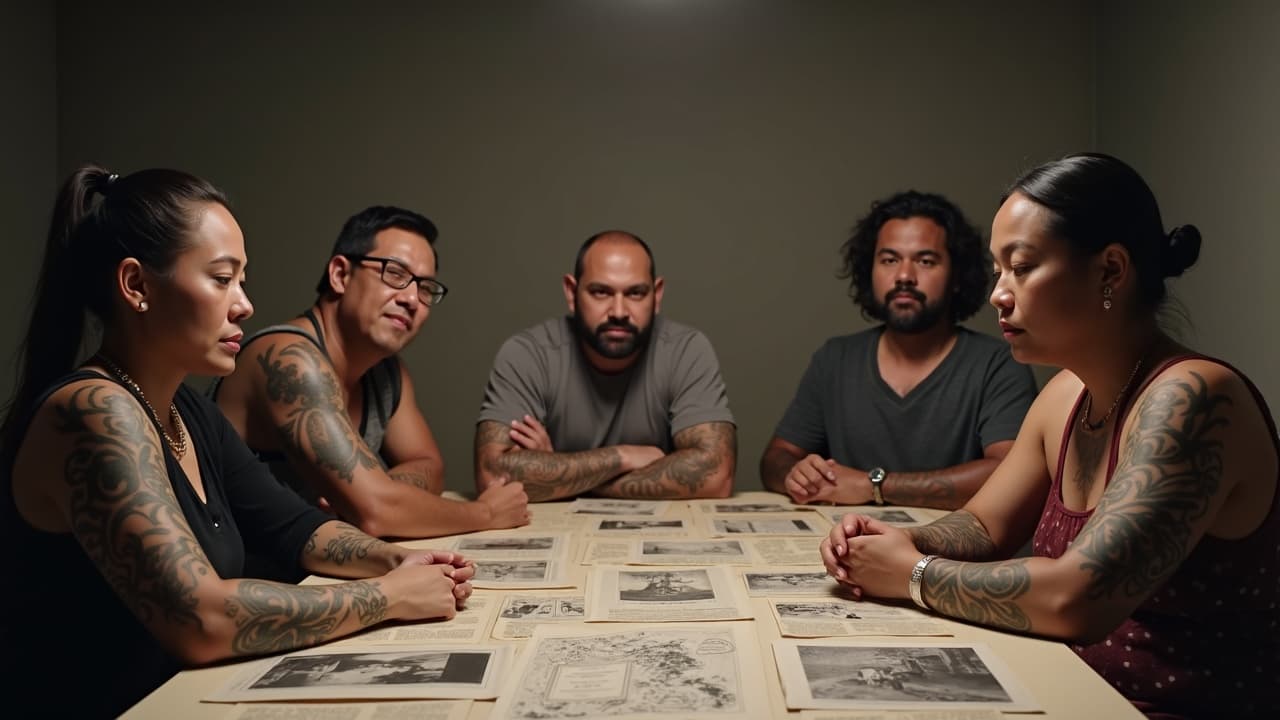
Nearly 32 percent of U.S. adults report having at least one tattoo, and a visible share choose bold black patterns marketed as “tribal.” The problem is that “tribal” flattens dozens of distinct traditions with their own languages, protocols, and cosmologies. Pacific tatau, Filipino batok, Inuit skin stitching, Berber motifs, and Yoruba scarification evolved independently with different rules. If you care about cultural significance of tattoos, naming the lineage and intent matters as much as picking a design. This guide gives you a practical, artist-level map of tribal tattoo history, interprets common tattoo meanings, and shows how to commission modern interpretations that honor the source instead of remixing it beyond recognition.
What We Mean By “Tribal” Today
In studios, “tribal” often means heavy black lines, repeats, and negative space that hug the body’s curves. Historically, those lines are not generic graphics, they are genealogies, achievements, prayers, and maps of identity. Pacific tatau and Māori tā moko are living practices with protocols, while pan-Polynesian flash from the 1990s is a commercial shorthand. The safest starting point is to identify the exact tradition your eye keeps returning to, then choose between a cultural piece with rules or a culture-neutral design that borrows its geometry without claiming its status. If you are considering Māori influence, read our moko vs kirituhi guide. Kirituhi is often the ethical path for non-Māori, because it carries aesthetic flow without whakapapa claims. Across lineages, three elements repeat, each with different meanings by culture: line weight, repetition of motifs, and the choreography of negative space that lets the piece breathe.
Lineages: Polynesia, Micronesia, and the Pacific
Pacific tattooing is some of the oldest continuous body art on earth. Samoan pe'a and malu, Tahitian tatau, Hawaiian kakau, and Marquesan motifs use repeating patterns that track ancestry, rites of passage, or protection at sea. Placement is not aesthetic first, it is meaning first. A pe'a is a life commitment, not a sleeve you collect in pieces. In French Polynesia, Marquesan cross, enata, niho mano (shark teeth), and spearheads are read together with spacing that sets tempo like music. In Samoa, the pe'a is applied with hand-tap, and the ceremony binds the wearer to service and community. These systems translate poorly to Pinterest mashups because their grammar is relational, not decorative. If you want a modern, ethical Polynesian-inspired piece, commission a culture-neutral custom from a practitioner trained to separate protected elements from open patterns.
- Marquesan cross, often read as balance or centrality, shifts meaning by placement and neighbors, not as a single logo.
- Niho mano, stylized shark teeth, can mark protection or connection to ocean work, typically set in rhythmic bands.
- Spearheads and chevrons, read as courage or journey, gain meaning through direction and how they wrap joints.
- Enata, human figures, can denote people, ancestors, or social roles, contextualized by spacing and repetition.
Africa and the Americas, Scarification and Symbols
Not all “tribal” is ink. Many West African and Central African traditions are scarification or cicatrization. The patterns are tactile archives, signaling age sets, resilience, beauty standards, and kin ties. Yoruba facial marks historically indexed hometown and lineage, with pattern systems taught within families. In North Africa, Amazigh (Berber) hand and face marks sit at the edge of tattooing and pigment marking, often invoking protection or fertility. Across the Atlantic, Indigenous nations of the Arctic practiced skin stitching and hand-poked linework long before coil machines existed. Inuit kakiniit on hands and face carry clan, work, and cosmology. In Mesoamerica and the Andes, body marking tied warriors and ritual practitioners to gods and seasons. Modern studio translations should acknowledge when a source medium was scar, stitch, or soot, not just assume thick black ink lines. Sometimes the respectful choice is inspiration from pattern logic rather than literal lifts.
Southeast Asia, India, and the Hand-Tap Traditions
Across the Philippines, batok patterns vary by ethnolinguistic group. Kalinga chest and arm bands historically tracked head-taking status or life roles, and today many artists rebuild practice through consent, heritage checks, and community projects. In Borneo, Iban motifs like bunga terung (eggplant flower) and crab or scorpion patterns mark journeys and protection. In Thailand and Cambodia, sak yant uses sacred geometry and Pali scripts applied by ajarns or monks under rules about behavior. In Northeast India and Myanmar, Naga and Chin women’s facial and body markings historically coded tribe and life stage. Technique matters too. Hand tap and hand poke create different texture and healing pace than rotary machines. If you want a hand-tapped piece, book an artist trained in that method, accept that sessions are slower, and expect a different pain profile than fast machine fills.
- Sak yant etiquette includes pre- and post-conduct vows, so discuss boundaries and meaning with a respected ajarn or trained studio translator.
- Batok revivals often prioritize cultural returnees, so non-Filipino clients should request culture-neutral designs inspired by pattern grammar, not title-bearing marks.
- Borneo bunga terung traditionally begins a journey, usually placed on shoulders, with companion motifs earned over time.
- Hand tap cadence yields softer edges and unique dot patterns at close range, which changes how negative space reads.
Meanings in Motifs: Reading Lines, Repeats, and Negative Space
Think of traditional pattern systems like languages. A single glyph means little without syntax, neighbors, and directionality. In Polynesian grammars, motif scale, tilt, and the way bands stack over bone landmarks carry meaning. In sak yant, grid rules and mantras interlock. In batok, spacing between bands can name roles as much as the icons. When we build a culture-neutral piece, we preserve the design logic even as we remove restricted marks. That means honoring wrap-around flow over deltoid heads and calves, choosing line weights that look carved, and using resting fields of skin so the eye does not blur. Pure black absorbs light, so plan negative space as deliberately as ink. Ask your artist to show a map of motif families and explain why each was chosen. A good brief is not “cool tribal,” it is a two-page PDF with references, intent, and placement photos taken straight and neutral.
- Decide early if your piece is a band, panel, or body map. Each has different wrap and growth paths.
- Set a limited motif family, usually 3–5, to avoid pastiche and to keep rhythm legible from 2 meters.
- Use deliberate voids. A 5–10 mm gap can be more powerful than another row of chevrons.
- Preview scale on-body with a stencil test or our true-to-size try-on guide.
Ethics, Permission, and Cultural Context
Some designs are earned or inherited, not purchased. A Māori tā moko that marks whakapapa is not appropriate for non-Māori. A Samoan pe'a is a lifetime responsibility to aiga and service. Sak yant may involve vows you are expected to honor long after the photo. When in doubt, ask the community-facing artists who specialize in that lineage what is open. Many will offer kirituhi, culture-neutral Polynesian, or geometric pieces that honor flow without claiming status. Budget for consults. Expect $100–$300 for deep design work and $150–$250 per hour for execution in major cities. Ethical artists often decline requests that cross lines. That is a feature, not a glitch. If a design feels too easy to get, it might be generic flash missing its backbone. Read our safety and ethics piece to understand consent, appropriation risks, and how collaboration protects both sides.
Modern Interpretations That Respect Origins
The best contemporary work pairs heritage-informed geometry with modern constraints like job visibility and layering with future tattoos. You can keep the bold black ethos and body mapping without copying protected marks. Think of movement along fascia lines, orthogonal breaks at joints, and contrast that reads in low light. Blackwork lets you scale from a forearm panel to a rib-to-hip map over time. If you already wear color tattoos, a matte black panel can be the negative backdrop that makes color pop. For non-lineage pieces, we often prototype in Procreate, then print at 100 percent for wrap tests and tweaks before stencil.
- Use culture-neutral chevrons, teeth, and waves arranged in new sequences that respect flow but avoid restricted icons.
- Consider dotwork gradients inside bands to soften transitions instead of borrowing sacred scripts.
- Carve around scars or moles to keep skin health first, a best practice supported by the American Academy of Dermatology.
- Test placements with AI for Tattoo’s virtual try-on to evaluate read at distance.
- Blend with fine-line micro-motifs on the inner limb so office visibility is low while the outer limb carries bold mass.
Placement, Pain, Aftercare, and Longevity Basics
Large black fills heal differently than a small fineline. Expect a pain range of 4–7/10 for outer limbs and 7–9/10 for ribs, knees, and hips because of nerve density and stretch. Hand-tap reads as a rolling sting that some rate lower, but sessions are longer. Big blocks of black can ooze more and need extra blotting the first 24–48 hours. We prefer breathable second-skin for big panels, changed once in 24 hours, then removed and switched to a thin balm for another 7–10 days. Always keep sun off new work. UV is the enemy of black saturation, so a stable of high UVA sunscreens matters long term. For product planning, artists often recommend Saniderm or Tegaderm, then Aquaphor, Hustle Butter, or Bepanthen, and later Mad Rabbit SPF for healed pieces (non-sponsored examples). Avoid numbing unless medically necessary. If you must, test TKTX on a small patch and ask your artist, since some formulas affect skin texture and stencil hold.
Complication rates are low when studios are clean and clients follow aftercare. Infections and allergic reactions can occur with any tattoo, including blackwork. For risk context and warning signs like spreading redness, heat, and fever, review the Cleveland Clinic’s tattoo care guidance. If you react to adhesives or pigments, see a dermatologist. The FDA does not pre-approve inks, and recalls do happen, so work with artists who source pigments transparently and log batch numbers. Black ink can include carbon black or iron oxides. Some reactions are reported in medical literature and consumer summaries, which is why sun protection and gradual sessions are wise. Health resources like Healthline and the American Academy of Dermatology cover common reactions and when to seek care. Remember, bold black lasts, but only if you respect healing windows and commit to annual SPF.
Commissioning: Brief, Budget, and Proofing
Your brief is the blueprint. Gather 6–10 references labeled by lineage, circle what you love and annotate what is off limits. Photograph your body in good light, square to camera, with relaxed posture. State your goals in one line, for example, “culture-neutral blackwork sleeve that reads Polynesian in flow, not in restricted marks.” Then add constraints, like coverage limits and clothing exposure. Budget realistically. Expect $1,500–$4,000 for a half sleeve in major markets, more for hand-tap or multi-session wraps. Ask for a line map, then a shaded pass. Request a 1:1 print test on paper and a stencil preview. Good artists will push back to keep coherence. If a studio says yes to everything, that is a red flag. Keep communication tight, written, and respectful. After session one, schedule a short touch-up 6–10 weeks later to catch holidays in the black. That small extra day often adds 10–15 percent more lifespan to your saturation.
Ready to translate intent into lines that fit your body cleanly? Use AI for Tattoo to generate culture-neutral blackwork motifs, then use our virtual try-on to test scale and wrap before you book. Want a head start on ethics and safety language for your brief? Skim our artist-collaboration guide, then open /save and export your mockups to bring to consult.
Try AI for Tattoo Free