
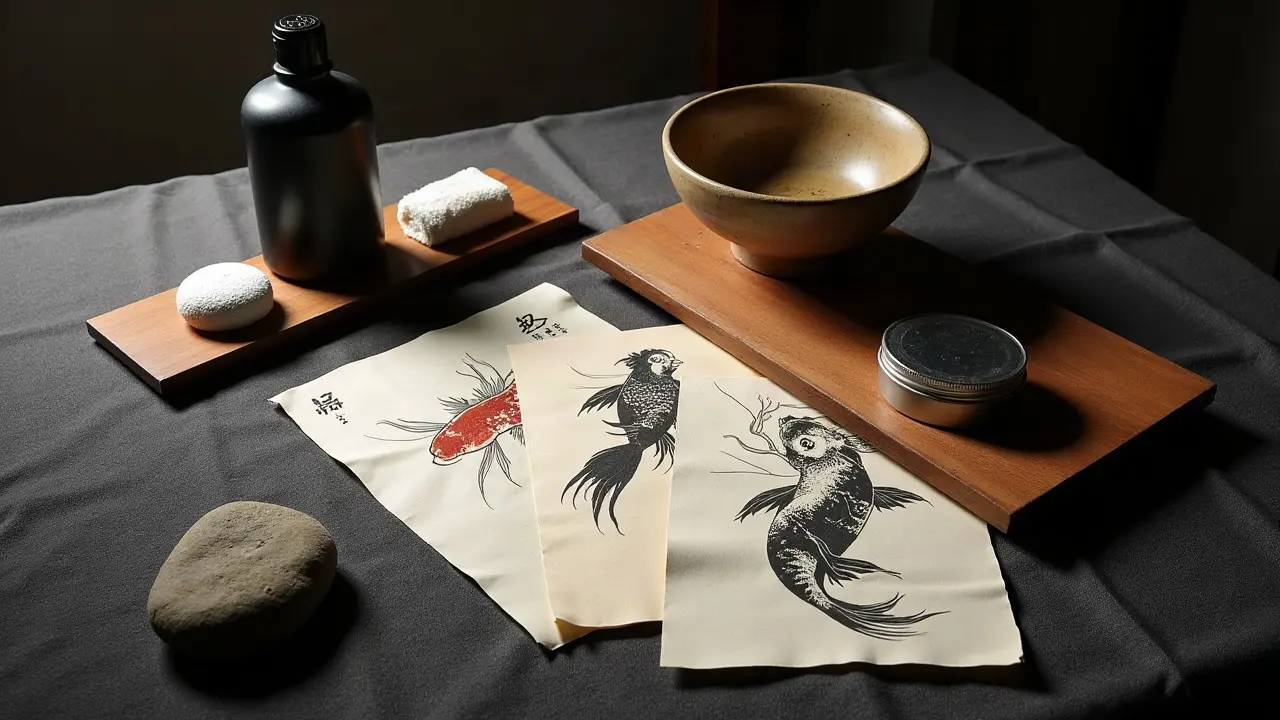
About one in three U.S. adults wears at least one tattoo, and many say it represents a turning point, not a phase. That tracks with what artists see daily, clients using ink as a recovery milestone after illness, grief, or major change. Research and clinical practice echo this shift, with reconstructive and paramedical tattooing now part of post‑surgery care in some settings Pew Research Center, Cleveland Clinic. When done thoughtfully, a design becomes more than art, it becomes a tool for resilience you carry everywhere.
Resilience, now visible: how tattoos mark recovery
Tattoos have always been autobiographical, but the narrative today is often about survival and personal growth. Clients come in after chemo, a breakup, a career reset, or a sobriety milestone and ask for a piece that honors the work they did. The most common note I write on the consent form is not a design request, it is a sentence that starts with “because.” Because I finished treatment. Because I left. Because I’m still here.
An artist’s job in these moments is part technician, part editor. We translate chaotic feelings into clear symbols, pick placements that feel protective or brave, and pace sessions so the body is not overwhelmed. Expect to hear me ask about triggers, energy levels, and downtime before we even discuss color. The goal is a tattoo that reads beautifully at arm’s length and still holds up on the days when you need a reminder close to the skin.
Lineages of strength, from tatau to irezumi
Resilience in tattooing is not new, it is inherited. Polynesian tatau rites mark endurance and belonging, with the Samoan pe’a and malu historically tied to community responsibility. Japanese irezumi has long coded redemption and perseverance, motifs like koi swimming upstream or bodhisattvas embodying compassion through adversity. Māori tā moko inscribes identity, lineage, and commitment, a living record of who you are becoming. These practices remind us that ink can be both a trial and a vow.
- If your design borrows from a living tradition, learn the context first, then ask permission where appropriate. Start with our cross‑cultural ink guide.
- Consider motifs that honor values, not costumes. A koi against current, a mountain path, or weave patterns can signal resilience without copying sacred marks.
- Talk to artists who are culture‑bearers for the style you love. Many keep waitlists and request a consult first, often $50–$100 credited to the booking.
- Read about globalization and identity in tattooing to avoid shortcuts that age poorly. See our globalization and identity piece.
Turning scars into stories: coverups and paramedical work
Coverups and scar‑inclusive designs are some of the most technical, and emotionally charged, pieces we do. Post‑surgical scars typically need 12–18 months to mature before tattooing. Hypertrophic or keloid‑prone skin needs extra caution, since raised scars can continue to change. The American Academy of Dermatology advises anyone with a history of keloids to consult a dermatologist before getting tattooed American Academy of Dermatology.
Techniques we reach for include single‑needle detail to diffuse texture, stippling to break up shine, whip shading to feather edges, and color packing where saturation must outperform old ink. For areola reconstruction, many specialists use 3D areola micropigmentation, a paramedical technique that relies on neutralized undertones and soft-focus highlights to create depth. The Cleveland Clinic recognizes areola tattooing as a finishing step in breast reconstruction for many patients Cleveland Clinic.
- Timing rule of thumb: wait 12–18 months after major surgery, 6–12 months after minor injuries, and ensure your surgeon signs off before tattooing.
- Average pricing for complex coverups lands around $300–$600 per hour in major cities, with full projects running $1,500–$4,000+ over multiple sessions.
- Expect a longer healing window of 3–4 weeks on scarred tissue. Keep aftercare squeaky clean and be prepared for extra touch‑ups.
- Ink safety matters. The FDA cautions that tattoo inks are not approved for injection and reactions occur, though they are uncommon. Buy artists’ pigments from reputable suppliers U.S. FDA.
Symbols that carry you through hard seasons
Symbols are shortcuts your future self can read at a glance. Pick ones that map to your reality, not just trend boards. I often ask clients to write three sentences they want the tattoo to say back to them on a bleak day, then we reverse‑engineer the visual language.
- Phoenix for renewal after devastation, feathers and ash textures make great cover for uneven skin.
- Semicolon for surviving mental health crises and choosing to continue, often paired with script or negative space.
- Lotus for growth from mud, works in fine line or watercolor styles to soften surgical planes.
- Anchors for stability during recovery or sobriety, can sit near wrist 3–4/10 pain or ankle 5–6/10.
- Kintsugi motifs for healing with visibility, gold‑ink effects are simulated with ochre and white highlights.
- Dates, coordinates, or morse code to quietly honor anniversaries, treatment completion, or locations that changed you.
Placement, pain, and pacing for a resilient session
When resilience is the brief, comfort is part of the design. If you are rebuilding stamina, we start with lower‑pain zones like the outer forearm or calf, typically 3–4/10 for most clients. Upper ribs and sternum are 8–9/10, so I only book them once you are sleeping well and eating regularly. Healing also varies, ribs move with every breath so plan for 2–4 weeks of extra tenderness.
- Session length, start modest. 2–3 hours is plenty if you are recovering from fatigue or are new to tattoos.
- Breaks, every 45–60 minutes for hydration and sugar. It keeps adrenaline steady and reduces shaking.
- Numbing, consider 5 percent lidocaine creams like TKTX used correctly, patch test first and follow label directions (non‑sponsored examples).
- If unexpected pain spikes happen, see our troubleshooting guide and talk to your artist before white‑knuckling it.
Aftercare when the tattoo is part of healing
Aftercare is where resilience becomes routine. You do not need a pharmacy’s worth of products, you need consistency. Derm‑approved basics work well: a second‑skin bandage for the first 24–72 hours, then a thin layer of fragrance‑free ointment until peeling begins. Both Cleveland Clinic and Healthline emphasize gentle washing, light moisturizers, and sun avoidance during the first month Cleveland Clinic, Healthline.
- Clean, wash hands, then the tattoo with lukewarm water and a fragrance‑free soap twice daily.
- Cover, use Saniderm or Tegaderm for the first 24–72 hours, change if there is a leak or itch becomes intense.
- Moisturize, switch to a thin film of Bepanthen, Aquaphor, or Hustle Butter until flaking ends, then to a light lotion like Mad Rabbit (non‑sponsored examples).
- Move smart, reduce heavy sweat and stretching the first 7–10 days. If you train, read our aftercare for exercise.
- Watchouts, redness after 48 hours, fever, or pus means call your artist, then a clinician. The AAD notes allergic reactions can occur, especially to red pigments American Academy of Dermatology.
Designing with intention, from sketchbook to skin
A strong resilience piece reads like a well‑edited memoir. We build scale, contrast, and rhythm so the eye knows where to land. Techniques like negative space, soft black and grey, and limited palettes keep emotional work from looking overcrowded. If you are covering a long chapter of life, consider a modular approach, small chapters that can connect later into a larger composition.
- Prep prompts before a consult. If you are using AI concepting, see our prompt personalization tips.
- Think in verbs, not nouns. Climb, endure, mend, breathe. Your artist can translate those into textures and flow.
- Collect textures, not just images. Cracked ceramic, ripples, bark grain, meteor trails all map to resilience without obvious symbolism.
- If it matters, it belongs. Medical devices, treatment dates, or lines from a discharge note can be woven subtly into a design.
Budgets, timelines, and expectations that reduce stress
Good planning keeps a meaningful tattoo from becoming another source of anxiety. In most metro studios, expect $200–$300 deposits, hourly rates of $150–$350, and multi‑session pieces booked 4–12 weeks apart for healing. If you are recovering physically, longer timelines often make the work better, your skin and nervous system thank you for it.
- Ask for an all‑in estimate, linework, shading, color, and touch‑ups. A clear scope prevents surprise invoices.
- Budget per milestone. If the project totals $2,000, split it into $250–$500 chunks across months that align with your energy.
- Schedule around life. Avoid sessions near anniversaries that carry weight or right before intense work sprints or travel.
- Keep paperwork. Consent forms, pigment brands, batch numbers. The FDA notes documentation helps if a reaction must be traced U.S. FDA.
Respect, consent, and cultural context
Resilience is also about relationships, how you treat the cultures and people who make your ink possible. Ask artists about their boundaries, photography rules, and what they need from you in the chair. If a design draws from living traditions, acknowledge the source and compensate appropriately. That is not performative, it is consent in action. It makes your tattoo feel cleaner, and it reads better across a lifetime.
Safety travel tip, if you are flying for a resilience piece, check your destination’s regulations. Tattoo ink oversight varies widely and some countries restrict pigments that are common elsewhere. When in doubt, consult public resources from the FDA, the AAD, or your regional health agency. For general background on tattoo safety and allergic reactions, both Mayo Clinic and Healthline offer plain‑language primers Mayo Clinic, Healthline.
Ready to sketch the next chapter on your terms? Use AI for Tattoo to generate a resilient concept that actually fits your body, then try it on before you book. Start in the creator to test scale, placement, and contrast, send the mockups to your artist, and walk into your session clear on what you want. Build a design at Create and preview it on skin with Try‑On. You can also browse motifs aligned to recovery in Explore and compare interpretations across styles in Styles.
Try AI for Tattoo Free