
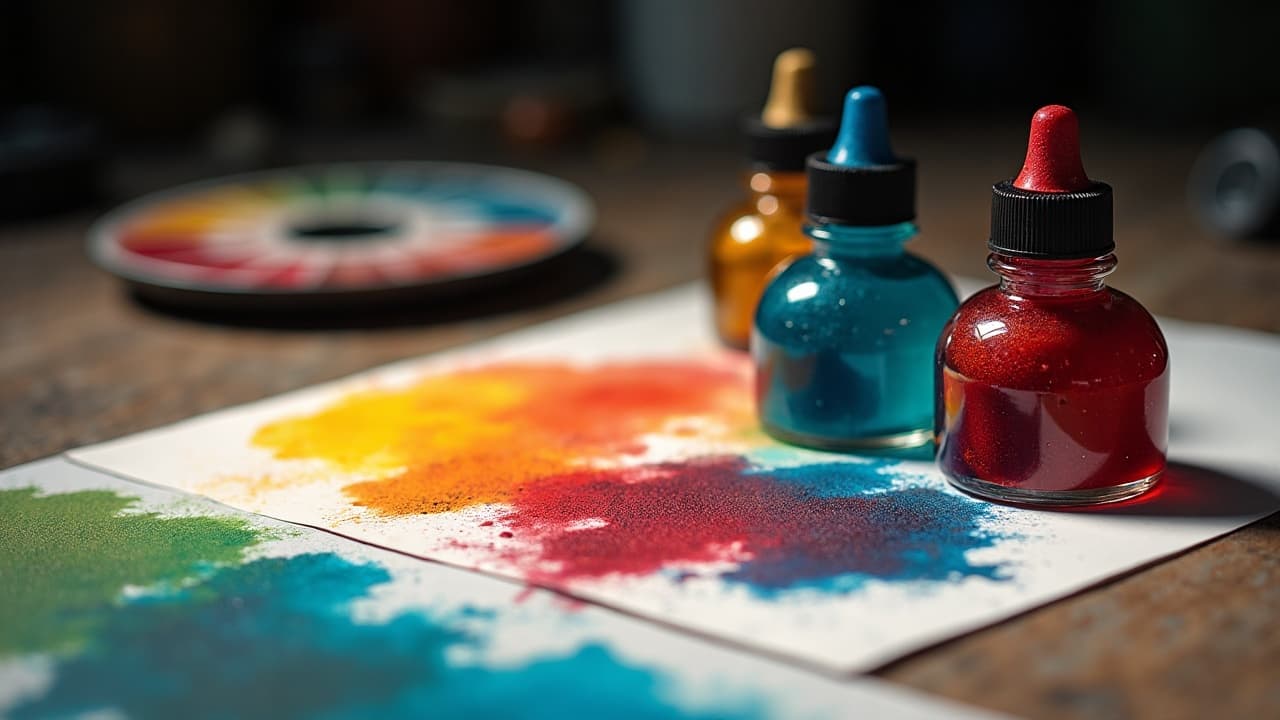
Most healed color tattoos look 15–30 percent darker and warmer than they do on paper or screen. Skin is a living filter with melanin and blood tone, so every hue bends a little after healing. If you plan color like paint on canvas, you get surprises. If you plan color for skin, you get clarity that lasts.
Skin Isn’t Paper, How Color Behaves Under the Epidermis
Ink heals under a translucent layer of skin, so hue, value, and chroma shift. Melanin filters cool light, hemoglobin adds warmth, and the stratum corneum softens edges. Expect lower apparent saturation, a slight warm bias, and a value drop on most tones. This is why black ink anchors and clean negative space are non‑negotiable in colorful work. Sun is the biggest enemy of color longevity. UV breaks down pigments, especially yellows and some reds. The American Academy of Dermatology recommends SPF 30+ daily on tattoos to slow fading and photoaging, a simple habit that adds years of clarity (AAD). For healing and basic wound care timelines, the Cleveland Clinic and Mayo Clinic echo the same message, gentle cleansing, moisturize, and protect from sun and water while the barrier recovers (Cleveland Clinic, Mayo Clinic).
- Skin adds a warm filter, so cool hues like teal or violet may heal slightly muted unless pushed brighter and lighter in the stencil.
- Expect a value shift 1–2 steps darker on heal, so stage highlights higher than you want them to finish.
- Use rich black linework and shadow mapping for readability. Color sits between these anchors, not instead of them.
The Color Wheel, But For Skin, Combinations That Read Clean
Traditional theory still works, you just plan for skin’s filter and viewing distance. Complementary pairs give snap, analogous palettes flow, split‑complementary feels modern without looking noisy, and triadic pops if you organize values. Lock your dominant hue, choose a support hue, then pick a neutral to control space, usually muted olive, warm gray, or desaturated plum.
- Complementary hits: teal with orange, cobalt with warm ochre, magenta with leaf green. Push the light side one value up to survive the heal.
- Analogous flow: blue‑teal‑green for aquatic pieces, red‑vermillion‑orange for neo‑traditional florals. Keep black shading cool to avoid mud.
- Split‑complementary balance: violet vs yellow‑green and yellow‑orange, a favorite for portraits with rosy skin tones.
- Triadic pop: red‑blue‑yellow works when you assign clear roles, one dominant, one accent, one neutralized in shadows.
Value and Contrast Beat Hue, Make It Read From 6 Feet
If a tattoo reads in grayscale, it will read in color. Plan a three‑value map first, light, mid, dark, then place hue inside that structure. Use black linework 5–9 RL for edges that survive time, then build cool shadows and warm lights to separate planes. Saturation is spice, not structure. Where color areas touch, orchestrate edge contrast: hard (line), soft (feathered), or lost (value‑matched) edges. In thick skin or high‑movement zones, favor higher contrast and bigger shapes. Detailed low‑contrast color will blur faster.
- Anchor with pure carbon black in liners and selective shadows for at‑a‑glance clarity.
- Reserve highest chroma for focal points, mute background color with a touch of complement to push depth.
- Use negative space deliberately, see our negative space guide for layout tactics that age well.
Warm vs Cool on Real Skin, Matching Undertones and Fitzpatrick Types
Two clients can have the same Fitzpatrick level and totally different undertones. Look at veins and surrounding skin, greenish cast can read olive, bluish can read cool, golden can read warm. On Fitzpatrick I–II, pastels can work if you protect them, on III–IV, aim for medium chroma with clear shadows, on V–VI, prioritize value separation with saturated hues and bold highlights. Do a quick swatch test with marker or digital try‑on to preview. Then shift hues to avoid fighting the undertone, for cool, push teal and blue‑violet, for warm, lean emerald and magenta over straight primary red. The AAD’s sun advice applies to every tone, consistent SPF retains hue across the board (American Academy of Dermatology).
- Type I–II: light value jumps, pastel accents with firm black line. Avoid chalky titanium white overuse which can turn gray.
- Type III–IV: mid‑tone dominance, strong complements, keep yellows slightly warmer so they do not disappear on heal.
- Type V–VI: high saturation, bold highlight placements, and strategic negative space for luminosity, cyan, magenta, and orange read strongly.
Saturation, Needles, and the Heal, Technique That Preserves Chroma
Color that lasts is not just palette, it is packing technique and aftercare. Use curved magnums to lay buttery fills with less trauma. Work slow hand‑speed and tight circles or pendulum passes to seat pigment evenly. Overworking chews the epidermis, which means blowouts and chalky heals. The healing window is 14–28 days, with the first 72 hours crucial. Wash with mild soap twice daily, pat dry, then a thin layer of fragrance‑free ointment. Films like Saniderm can help many clients by reducing friction and contamination. Trusted aftercare standbys include Bepanthen, Aquaphor, Hustle Butter, and Mad Rabbit (non‑sponsored examples). For film or ointment choice, listen to your artist and check sources like Healthline for practical do’s and don’ts (Healthline).
- Run low voltage for color packing to reduce trauma, seat pigment deeper and more evenly.
- Favor C‑mags for blends, switch to bugpin mags for glassy transitions in small portraits.
- Keep layers thin, two passes at most, let skin rest. Overworking costs saturation on heal.
Pigment Chemistry, Why Some Hues Win the Long Game
Carbon black is the most lightfast workhorse in tattooing, it outlasts most organics. Titanium dioxide in whites is opaque but can blur detail if overused. Azo reds and certain yellows are vibrant but more UV sensitive. Blues and greens based on phthalocyanines tend to be stable when properly packed. Allergic reactions occur, and red pigments lead the list historically. The FDA tracks tattoo ink safety and has issued alerts on contaminated inks and recalls. If you have a history of dye reactions, discuss a patch test and pigment choices with your artist, and review current guidance from the U.S. Food and Drug Administration (FDA). For a clinical overview of tattoo complications and sun care standards, dermatology organizations like the AAD are solid references (AAD).
- Best for longevity: carbon black, phthalo blue, phthalo green, iron oxides for earth tones.
- Use white sparingly to pop edges and catchlights. Too much white turns milky over time.
- Be cautious with neon‑leaning mixes, they can mute quickly without aggressive sun protection.
Placement, Scale, and Budget, Designing for Real Life Wear
High‑movement and high‑friction zones dull color faster. Hands, fingers, feet, inner elbows, and armpits challenge even perfect technique. Sun‑blasted areas like forearms and neck require SPF discipline. If you want peach and yellow to sing, consider a forearm inner panel versus the top of your hand. Scale matters more with color. Small tattoos with four hues quickly become soup. Aim for big shapes and limited palettes when you go under 2–3 inches. Shop rates vary widely, expect $150–$300 per hour in many cities, and complex color work takes time.
- Pick 2–3 main hues plus neutrals for minis. Save triadic fireworks for pieces 4 inches+.
- Back of shoulder, outer thigh, and calf hold saturation well with moderate sun and friction.
- Hands and fingers need more frequent touch‑ups, budget an extra session every 1–3 years.
Preview Before You Commit, Mockups and AI Palette Testing
You can see color interactions on your actual skin tone before a needle touches you. Snap a photo in neutral light and build a test palette. Use a gray card or white paper in frame so color is honest, not phone‑boosted. Try muted background washes behind saturated focal color to check readability at distance. If you are crafting the brief for an artist, tighten your ask with references and a clear palette. Our prompt guide breaks down how to give specific, visual instructions that translate to skin, see our AI tattoo prompt guide. When you are ready to see it on you, use AI for Tattoo’s virtual try‑on to preview different palettes on your arm or leg with consistent lighting.
- Test complementary vs analogous palettes side by side on a photo of your placement.
- Narrow to one dominant hue and one accent, then decide your neutral shadow family.
- Use AI for Tattoo Try‑On to check read at arm’s length and in grayscale.
Care and Maintenance, Keeping Color Crisp for Years
Good aftercare preserves saturation you paid for. Keep it clean, thinly moisturized, and covered per your artist’s plan for the first 3–5 days. Avoid submerging and heavy sweating during the initial 2 weeks. Persistent itch can derail heals, see our comparison of relief options in this itch relief guide. Long term, treat your tattoo like a nice print in a sunny room, protect it. Daily SPF 30–50 on exposed areas, and reapply every 2 hours outdoors. Fragrance‑free lotions keep skin flexible so micro‑cracks do not chalk your highlights. Expect touch‑ups every 3–7 years for high‑chroma pieces, sooner for hands. Sources like Cleveland Clinic and AAD consistently highlight sun control as the highest ROI habit for tattoo longevity (Cleveland Clinic, AAD).
- Sunscreens that play well with tattoos, La Roche‑Posay Anthelios Melt‑In Milk SPF 60, Neutrogena Ultra Sheer SPF 55, Supergoop! Play SPF 50 (non‑sponsored examples).
- Healing products artists trust, Saniderm, Bepanthen, Aquaphor, Hustle Butter, Mad Rabbit (non‑sponsored examples).
- Read our aftercare hygiene checklist to avoid pitfalls, see our aftercare guide.
Ready to see how your palette reads on your skin, before you book? Generate custom concepts with AI for Tattoo, pick complementary or analogous schemes, then preview placements with the Try‑On. Start a design now at Create and check it on your body with Try‑On.
Try AI for Tattoo Free