
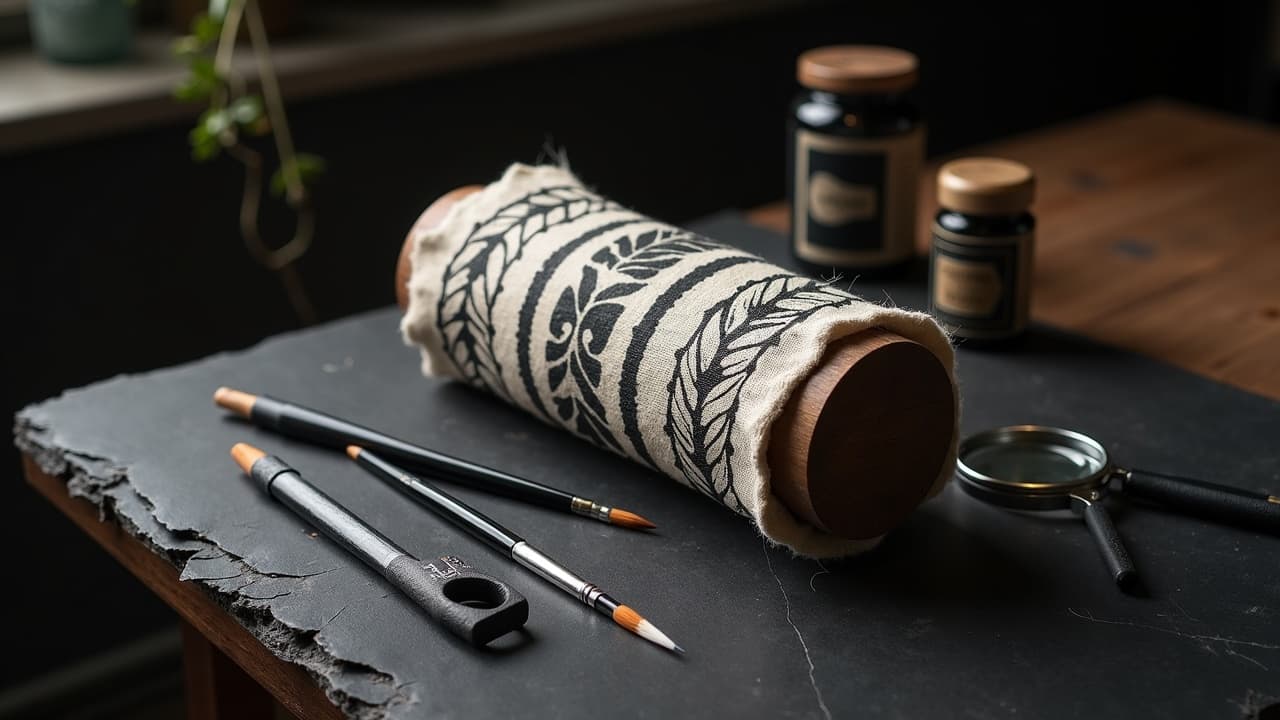
Great forearm tattoos succeed twice, quick read from six feet, rich detail at six inches. The forearm is a cylindrical, high‑motion canvas that punishes flat compositions, yet it gives huge payoff when you design for flow, contrast, and landmarks. Below is a practical, studio‑tested playbook for forearm tattoo design. Think line weight hierarchy, negative space, and seam management that respects wrist and elbow creases. Mix that with contrast values that hold from across a room, and you get ink that flatters the arm whether it is relaxed, pronated, or fully flexed.
Map the cylinder first, then design for flow
Treat the forearm like a column with soft edges, not a flat page. Your design should have a primary flow line that rides the arm’s long axis, typically from the wrist toward the inner elbow. If you sketch on paper, preview a wrap angle of roughly 60–120 degrees so the piece presents cleanly from the most common viewing angles when the arm is down at your side. Remember the show planes. The outer forearm is your billboard, it faces the world when your palm is in. The inner forearm reads more intimately, better for script, portraiture, or motifs you want for yourself. Use the ulnar edge as a natural border. It can hold a background fade or geometric seam that hides rotation. A quick flow test I use in studio: place your rough on the arm, then rotate the wrist slowly. If the focal point drifts off to the blind side, re‑anchor it by curving stems, banners, or waves back toward the show plane. You are sculpting around a cylinder, so let big lines arc gently rather than chopping straight across.
- Identify the show plane by asking the client to hang their arm naturally, then mark a center ribbon where the focal will sit cleanly without twisting out of view.
- Curve major elements along the arm’s length, not around it. Vertical or diagonal flow beats horizontal bars that disconnect at the seam.
- Use the ulnar ridge for soft fades, clouds, scales, or stipple so the visual seam feels intentional and low contrast.
- Avoid hard shapes that straddle the wrist crease. Finish them above it, then echo shapes subtly below to maintain continuity without crossing a flex line.
Build a line weight hierarchy that survives distance
Lines collapse at distance, so your hierarchy needs anchor lines, supporting lines, and micro‑detail. Think three clear tiers. Heavier anchors lock silhouettes and major overlaps. Medium lines describe forms and textures. Fine lines create depth but should never carry the composition. Contain delicate filigree or hair‑thin script inside heavier frames so the piece still reads when you are across the room. Keep risky micro‑lines away from thin, mobile skin near the wrist where blowouts and blur are more likely over time. For background on blowouts and needle depth basics, see Healthline’s overview. If you are blending dotwork, stagger dot density rather than stacking tiny lines at the seam. Dots soften rotations and make cylindrical contours feel natural instead of segmented.
- Anchor the silhouette with bold lines or packed shading around focal edges, then taper to medium lines on secondary elements.
- Reserve ultra‑fine lines for interior textures and micro‑details, never for the primary outline or lettering backbone.
- Where the arm curves away, fade line weight and increase negative space to avoid visual clutter on the far side.
- If using geometric patterns, thicken outer boundaries by 10–20 percent so hexes or mandalas still read from 6–10 feet.
- Keep micro‑line clusters at least 5–10 mm from the wrist crease to limit blur and reduce movement stress.
Control contrast, color, and skin tone interaction
Contrast is your engine. Aim for a 60–40 light‑to‑dark mass balance, with a single high‑contrast focal. Surround the focal with negative space so it snaps even as the arm rotates. If you plan a lot of mid‑tones, push a small zone of true black to ground the palette. Color must respect skin tone. On medium to deep skin, saturated warms and deep cools outperform desaturated pastels. White ink is a highlight, not a paint, so use it sparingly for micro pops. For harmony tricks that keep palettes from muddying as they curve, see the harmony of color and shape in tattoo design. UV is the biggest fade driver, especially for reds, yellows, and light blues. Long term, daily broad‑spectrum SPF 30+ is your best clarity insurance, confirmed by the American Academy of Dermatology. Ink composition and pigment behavior vary, so review general safety notes from the FDA on tattoo inks.
Placement landmarks and seam management
Forearms bend, twist, and rub, so design around hotspots. Leave a 5–10 mm buffer above the wrist crease to reduce blur and friction. Keep fine gradients off the inner elbow ditch unless you accept extra retouch risk. If you must cross a crease, do it with low‑detail backgrounds, not micro‑text or filigree. Hide the seam on the shadow side, often the ulnar ridge or deep inner forearm. Do not center a symmetrical shape directly over that seam unless you are ready to split it intentionally and mirror elements on each side.
- Place the focal 1–2 cm proximal to the wrist so it sits on flatter terrain and stays in the show plane.
- Use soft textures, clouds, smoke, or dot fades to bridge around the inner seam where viewers rarely look straight on.
- Treat the elbow ditch as a negative‑space hinge or reserve it for low‑frequency shading instead of tiny linework.
- Align script so its baseline follows the arm’s length, not a circle around it, for better readability.
- Test orientation. Wearer‑facing makes sense for personal mottos, world‑facing suits icons meant to communicate outward.
Tell a story on a short runway
Forearms are shorter than thighs or backs, but you can still craft visual storytelling. Use a single bold subject with supporting micro‑scenes tucked into leaves, smoke, or pattern pockets. Think koi head as the focal with small pebbles and ripples resolving toward the elbow, or a snake head near the wrist with the body tapering along the ulna. For narrative sequences, work in stacked vignettes that climb the arm. Keep each panel’s dominant angle consistent with the primary flow line, then bridge panels with textures that survive rotation, like scales or stipple. Your audience will rarely see the full wrap at once, so ensure each partial view holds meaning. If you are building toward a half sleeve, reserve negative space where future panels can dock. For composition planning at sleeve scale, bookmark our first sleeve guide.
Style-specific tricks that shine on forearms
Different styles exploit the cylinder differently. Use tactics that enhance curvature and resist motion blur. Below are shop‑floor patterns that consistently work on forearms.
- Japanese and neo‑traditional: Run a dominant S‑curve through the subject, reserve large negative clouds for the seam, and anchor with true blacks behind the focal.
- Geometric and mandala: Center smaller rosettes off the seam, expand with thicker boundary rings, and let pattern density decay toward the far side.
- Blackwork and dotwork: Use heavy silhouettes and gradient stipple to model the cylinder. Avoid micro‑dots near the wrist crease where rub accelerates softening.
- Realism: Prioritize a single hero angle. Hard‑edge cast shadows and a compressed value range keep the subject readable as the forearm turns.
- Script: Bury thin terminals inside a bolder backbone. Follow the arm’s length with subtle arc to avoid accordion effects when flexing.
- Watercolor and abstract: Contain blooms with a dark anchor so the form does not wash away at distance. Let drips run along, not around, the arm.
Scale, budget, pain, and timing realities
Right‑sized designs beat over‑ambition. On most arms, a strong focal spans 10–18 cm long and reads at 3–6 feet. A single‑session forearm piece typically runs $200–$800 depending on artist, color, and complexity. Expect 1.5–5 hours per session, realism often needing more. Pain is manageable for most. The outer forearm usually lands around 3–5/10, the inner forearm near 5–7/10, and the wrist crease can spike higher. Surface healing often takes 10–14 days, then deeper settling over 4–6 weeks. Basic skin physiology and healing timelines are outlined by the Cleveland Clinic. If you plan to connect into a half sleeve, discuss panel borders and background textures now. It saves cover‑ups later and locks a coherent flow. For prompt and reference building that artists actually like, see our AI prompt guidelines for detailed realism.
Prep, stencil, and aftercare that protect clarity
Good execution starts before the machine turns on. Clean shave, stretch, and a durable stencil keep proportion honest as the arm flexes. Many studios rely on Stencil Stuff, Electrum Stencil Primer, and Spirit Green paper for high‑hold transfers (non‑sponsored examples). For glide and reduced redness, artists often use Hustle Butter during sessions (non‑sponsored example). Aftercare protects contrast. Clean gently with fragrance‑free soap, moisturize lightly, and avoid gym friction and tight cuffs for the first 3–5 days. If your artist suggests a barrier film, brands like Saniderm can reduce early irritation when used as directed (non‑sponsored example). For ointments and lotions, common picks include Aquaphor, Bepanthen, and Mad Rabbit sunscreen for healed ink (non‑sponsored examples). The AAD’s sun protection basics reiterate daily SPF as non‑negotiable for color longevity. Quick safety context on pigments and reactions is available via the FDA’s tattoo resources.
Ready to see how your design wraps your own arm before committing ink? Use AI for Tattoo to generate concepts and virtually try them on. Start with a flow‑mapped prompt, preview the wrap, then fine‑tune line weight and contrast until it passes the two‑read test. Build your mockups now in Create and check fit instantly in Try‑On.
Try AI for Tattoo Free