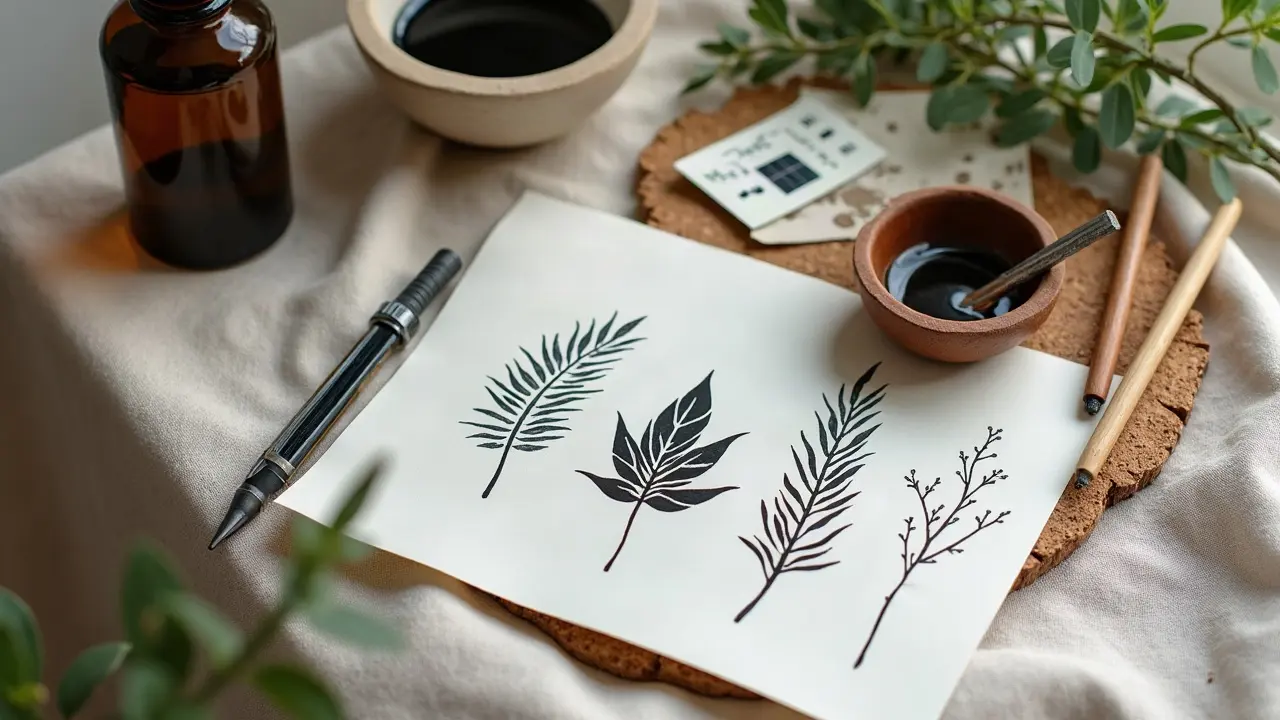
Tattooing has a footprint, from pigment chemistry and single-use plastics to the compute time behind concept art. The upside, thoughtful AI tattoo prompts and a few material swaps can trim waste, lower risk, and keep results premium. Tattoos are widespread, with roughly 30 percent of adults in the U.S. wearing at least one according to Pew Research Center, so even small changes scale. Below is a studio-tested playbook for writing eco-conscious prompts, choosing safer supplies, and keeping ethics tight without compromising style.
Build sustainability into your prompt from the first line
Sustainability starts in the brief, not the supply cabinet. Clear constraints reduce iteration churn, ink coverage, and session length. Specify visual economy, and your generator will trend there. Pair that with a reference board that already leans minimal, so you are not wrestling a maximalist model into using less pigment. If you want to tighten your iteration loop, bookmark our advanced prompt iteration guide.
- Name a limited palette: “black and one accent color only” or “grayscale only, no white ink highlights.”
- Call out negative space as a design element: “use skin breaks to define petals, 40-60 percent open space.”
- Fix line weights: “single-needle feel, primary lines 0.25-0.35 mm, minimal fill.”
- Set scale and placement: “forearm, 7-9 cm, fits between veins, wraps minimally around.”
- Prefer pattern efficiency: “repeatable motif, low fill density, dot shading not solid bombing.”
- Limit session count: “design completes in one 2-4 hour session, no second pass required.”
- Avoid fragile effects: “no watercolor wash, no UV ink accents, skip fully saturated white.”
Materials that matter: inks, carriers, and cartridges
Ink sustainability lives in two buckets, chemistry and provenance. In the U.S., tattoo inks do not undergo FDA premarket approval, and pigments may contain metals or preservatives that trigger reactions, so artists must vet suppliers and Safety Data Sheets carefully. See the FDA’s overview on tattoos and inks for regulatory context. Also remember vegan inks remove animal-derived components but are not automatically hypoallergenic. The American Academy of Dermatology notes that allergic and granulomatous reactions can occur with various pigments, especially reds.
- Ink picks: World Famous Limitless (REACH-forward lines), Eternal Ink Neutral Gray set, Solid Ink Mario’s Black, Allegory Blak, Dynamic Triple Black (non-sponsored examples).
- Carrier focus: choose glycerin or water-based carriers when possible, avoid unnecessary isopropyl-heavy mixes unless needed for technique.
- Hardware choices: use stainless steel grips and tips when your workflow allows, reduce single-use plastic by buying cartridges in bulk with paper or cardboard packaging.
- Gloves and wipes: switch to powder-free nitrile and cellulose-based wipes, skip fragrance-heavy cleaners that add VOCs.
REACH-compliant claims matter for EU work and are a useful heuristic anywhere. Ask for Certificates of Analysis and batch traceability. Build this transparency into your pre-session packet so clients see you are choosing inks for skin safety and footprint, not just flow.
Ethical sourcing in motifs, references, and datasets
Sustainability is also about people. Do not feed your generator prompt lines that target a living artist’s signature style, and be careful with Indigenous or sacred motifs. If a client wants Polynesian or Haida work, collaborate with culture-bearers or direct them to specialists, and get documented permission for elements with protected meaning. For general composition strength without copying, see our design narrative structure techniques.
In your prompt, say “woodcut textures” or “art nouveau line flow” instead of naming an individual. Reference public-domain archives or your own sketches. Credit your sources in the client packet. Ethical prompting keeps legal risk low and respects communities whose visual languages were often extracted without consent.
Cut the compute: energy-wise iteration habits
Every extra batch or upscale has a carbon cost. Treat your AI workflow like a stencil test, not a slot machine. Start small, lock variables, and only scale what you plan to keep. In practice, good prompt hygiene can reduce variation churn by 30-50 percent, saving both time and electricity.
- Draft at 512 px previews, only upscale finalists.
- Use seed locking to A/B one parameter at a time.
- Batch 2-4 images, not 8-16, then prune hard.
- Set restrained contrast/CFG 5-6 for Stable Diffusion so results are consistent.
- Write a one-paragraph brief, then a compact prompt + negative prompt pair.
- Archive rejects quickly, avoid hoarding near-duplicates that confuse later edits.
When possible, run on efficient local GPUs during off-peak hours or choose a cloud provider that publishes renewable energy mix. Small habits compound just like they do in the studio sink.
Placement, size, and technique that reduce waste
Sustainable design is geometry meeting biology. Blackwork and dotwork use less pigment mass than full color bombs, age predictably, and often need fewer touchups. Negative space is not just aesthetic, it is literal no-ink territory that shortens sessions. On small pieces, avoid heavy white ink or dense color blending that invites more passes and more wipes. If a client wants color, limit it to one accent hue surrounded by breathable line.
- Prefer single-needle or 3RL line frameworks with stipple shading.
- Keep designs in the 7-12 cm zone for one-pass realism alternatives.
- Place tattoos where skin is stable, like outer forearm or calf, to reduce early rework.
- Write the prompt for modular motifs so expansion does not require re-laying old areas.
Outline the expected pass count in your prompt and in the consult. One clean pass and a brief polish beats multiple saturations that burn through consumables and skin tolerance.
Aftercare with a lighter footprint
Good healing reduces rework, which is the greenest win you can bank. Go fragrance-free, simple, and sized right. The American Academy of Dermatology’s tattoo care basics emphasize gentle cleansing and moisturizers, which you can meet with lower-impact options. Infection risk exists with any tattoo, and medical issues should be handled promptly per clinical advice, as highlighted by the Cleveland Clinic.
- Second-skin films for 3-5 days reduce gauze and ointment use, then switch to a light balm.
- Choose balms in aluminum tins or paper sticks, unscented and petrolatum-free if skin allows.
- Use mild liquid soap in a refillable pump, lukewarm water, clean hands only.
- Recommend small tubes to avoid expired leftovers, which waste product and money.
Client sensitivities vary, so test small and watch for redness, itch, or blistering. For deeper ink chemistry and skin-type differences, see our guide to tattoo aftercare for different inks and materials and, for sensitive clients, aftercare for allergic, sensitive, and reactive skin.
Studio operations: cleaning, sharps, and compliance
Green habits cannot bypass safety law. Dispose of sharps and contaminated waste per your local rules and manufacturer instructions. The U.S. EPA maintains resources on medical waste management and safer cleaners, which are a smart baseline for any shop. See the EPA’s guidance on waste and safer choice products.
Practical trims that add up: buy disinfectants in concentrates that meet your broad-spectrum needs, then dilute per label to reduce plastic. Choose reusable stainless steel where workflow and health codes permit, run the autoclave with full loads only, and install faucet aerators. A small change like switching to LED task lights cuts heat and electricity during long sessions.
Client communication and transparent pricing
Clients care about their skin and their footprint. Tell them what inks you use, link the SDS/COA, and explain why you favor black and a single accent on smaller pieces. Be upfront that some sustainable choices, like higher-quality films or REACH-forward inks, can add $20-40 to a session. Most clients respect clear tradeoffs when they see the long-term benefits for their skin and the planet.
On the art side, document licensing and references, and include your AI settings for major drafts. That transparency builds trust and helps returning clients understand why your designs age clean with fewer touchups.
Sample eco-conscious AI tattoo prompts you can copy
- “Minimalist alpine wildflower, blackwork with stipple shading, no white ink, 8 cm outer forearm, 40 percent negative space, one-pass line emphasis, reference vintage botanical engraving, not tied to a living artist.”
- “Art nouveau snake and iris, grayscale only, thin-thick line rhythm, dot gradient shadows, no full fill areas, fits 7x10 cm on calf, one session 2-3 hours, wrap under 20 degrees.”
- “Geometric armband, repeating triangular tessellation, single-needle vibe, no color, uses skin tone as mid-tone, edges softly dotted, requires minimal wipes, designed for easy future extension.”
- “Micro portrait silhouette, limited palette black plus muted teal accent, no heavy saturation, 512 px draft for approval, seed locked for consistency, ethical references from public-domain photo sets.”
- “Ocean conservation icon set, line-only glyphs, negative space driven, no UV ink, one pass linework, compact 5-6 cm wrist placements, batch 2-4 variations for client selection.”
Ready to test a leaner brief before you ever set up a station? Generate concepts with AI for Tattoo, iterate with constraints that save ink, then preview placement with our realistic try-on. Start a clean, efficient workflow on create and browse fresh ideas on explore.
Try AI for Tattoo Free