
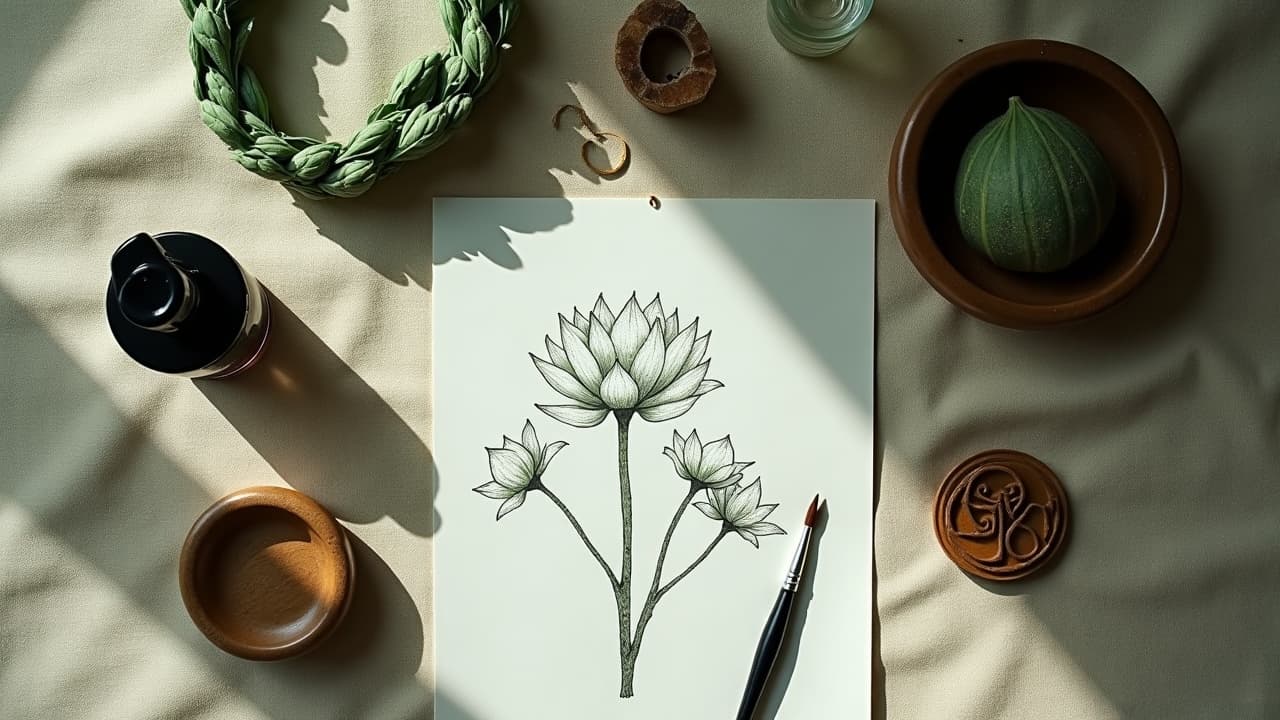
Mythical plant tattoos tend to age better than busy narrative scenes, because organic lines, negative space, and recognizable leaf geometry still read clearly as edges soften over time. Roots, vines, and petals give you natural flow and built‑in symbolism, which means you can communicate a whole legend with a few smart shapes. If you want meaning without clutter, plants with lore are a reliable canvas.
What Counts as a Mythical Plant Tattoo, Exactly?
Think of two layers: the real botanical form, and the story attached to it. A lotus exists in nature, but its cultural hyperlink to rebirth turns a flower into narrative. The Yggdrasil world tree, the wish‑fulfilling Kalpavriksha, the protective rowan, the seductive mandrake, even Homer’s moly herb, all carry meanings that travel well onto skin. Your job is to compress that story into a readable icon with movement.
Design starts with silhouette. Plants translate into strong silhouettes when you avoid cramped details and emphasize stem direction, leaf lobes, or petal count. Use negative space to separate clusters, and let one or two hero shapes carry the message. For embedded storytelling, hide small artifacts, like a serpent among roots for underworld myths or a disk behind a crown of leaves for a sun motif. If you want to preview composition options quickly, see our take on tattoo visual storytelling and nature‑based layout in composition in nature.
Symbolic Meanings Across Cultures You Can Wear
Meanings vary by region, but a few threads repeat: life, protection, wisdom, immortality. Instead of cramming every element into one forearm, pick a core myth then tune leaves, fruit, and background to match it. Below are dependable anchors artists use when clients want clear storytelling at a glance.
- Lotus, linked to rebirth and clarity in South and East Asian traditions, works best with high-contrast petal spacing. Float it on gentle water ripples to signal emergence without overcrowding the bloom.
- Yggdrasil, the Norse world tree connecting realms, favors branching symmetry and root sprawl. Add a discreet sun or moon disc to cue cosmic scale without needing deities or creatures.
- Rowan, sacred in Celtic folklore for protection, shows well as a slim trunk with red berries. A woven saltire charm hidden in the twigs reinforces warding symbolism without shouting.
- Mandrake, European lore’s shrieking root, shines in illustrative or etching styles. Twist humanoid root forms with tiny leaves and a labeled tag, like a period botanical plate.
- Laurel, victory and poetic mastery under Apollo, reads instantly as a wreath. Keep leaf pairs consistent in size to avoid visual stutter when it wraps wrists or collars.
- Olive, peace and endurance tied to Athena, uses long slender leaves that lie beautifully along forearms. A tiny amphora or olive press icon can nod to origin without clutter.
- Ceiba, the Mesoamerican world tree, suggests axis mundi when rendered as a straight-trunked giant. Frame it with stepped motifs to hint at pyramidal architecture.
- Peach or peach blossom, linked to immortality in Taoist lore, benefits from soft gradients. Use gentle pink-orange transitions and one fallen petal to signal time and renewal.
Treat meanings as guides, not handcuffs. If a client blends symbols, decide which story is primary, then let secondary motifs show up as textures or charms. That hierarchy keeps the tattoo legible from 3–6 feet while rewarding close inspection.
Composing Flow: From Roots to Crown
Plants want to move. Give stems a line of action that follows the limb’s direction so the piece feels planted rather than pasted. For forearms and calves, a gentle S‑curve usually wins. On backs and ribcages, large crowns and root masses can balance diagonals so the piece breathes when the body turns.
- Sketch five silhouettes at thumbnail scale before touching detail. If the silhouette doesn’t read mythical at 1 inch, detail won’t save it at 10 inches.
- Lock in a light-to-dark plan. Use stippling or hatching for midtones so leaves don’t melt into a flat gray on year two.
- Reserve negative space halos around berries, fruit, or sacred blooms. That air is what keeps lore icons visible from across a room.
- Use overlaps strategically. One foreground leaf crossing the stem tells depth quickly without full realism.
- Anchor with a base. Roots, rocks, or water give mythical plants a believable home so floating parts don’t feel sticker-like.
- Plan micro-charms, like a tiny runic mark, pottery shard, or knot, at joints where lines converge. Hide story in structure, not as add-ons.
Style Translations: Blackwork, Etching, Neo‑Trad, and Watercolor
Mythic flora flex across styles. Blackwork carries authority and ages predictably, perfect for world trees and laurel wreaths. Etching or engraving‑style linework sells medieval herbals like mandrake. Neo‑traditional gives you bold outlines and sculpted leaves for peaches, olives, and ivy with theatrical color. Watercolor washes fit lotus and cherry traditions where softness is part of the message.
For gold halos and divine accents, pure metallic inks don’t shine on skin like jewelry. Fake the gleam with warm ochres, tight specular highlights, and crisp edge control. For bark, stack whip shading over long hatches so it stays textured but not muddy. When clients want micro-real petals, keep the margins clean, because micro‑realism can blur on high‑motion areas by year three.
Color, Ink Choices, and Long‑Term Readability
Botanical myths often need restrained palettes. Black line with two accent hues is a safe ceiling for small to mid pieces. Black holds longest, greens are stable in modern formulations, and whites fade fastest. Reds can be more reactive for some clients, so patch testing and conservative coverage are smart when berries or blossoms are central. The U.S. FDA notes pigments and practices are not standardized globally, and reactions can occur over time, so informed choices matter FDA tattoo information. The American Academy of Dermatology offers broad guidance on tattoo risks and care, useful when discussing pigment sensitivities AAD guidance.
Healing shapes color, too. Top‑layer healing is typically 14–28 days, with full settling at around 6–8 weeks. Gentle aftercare keeps edges crisp. Light, unscented ointments or transparent bandages can help early on. Brand examples include Aquaphor, Bepanthen, Saniderm, Hustle Butter, and Mad Rabbit (non-sponsored examples). For general safety and hygiene points your artist should follow, see our tattoo safety guidelines and medical overviews from Mayo Clinic and Cleveland Clinic Mayo Clinic overview Cleveland Clinic advice.
Placement, Pain, Scale, and Budget
Match myth to terrain. World trees need vertical real estate. Wreaths want ovals and circles. Berries and blossoms make tidy micro‑clusters around bony landmarks. Pain and pricing often track with coverage, time, and anatomical sensitivity.
- Forearm columns for Yggdrasil or bamboo-like trunks, pain 3–5/10, $300–$800 for 6–9 inches depending on detail and shading.
- Upper back world tree with roots to mid‑back, pain 4–6/10, $1000–$3000 across 1–2 sessions at 4–8 hours each.
- Ribcage vine or laurel sweep, pain 7–9/10, $600–$1500 depending on wrap and breathing breaks.
- Wrist or ankle laurel ring, pain 4–6/10, $200–$500 for clean small loops that heal fast with motion.
- Collarbone olive branch, pain 5–7/10, $400–$900, keep leaf counts even to avoid stutter across the clavicle.
- Calf mandrake or moly plate, pain 3–5/10, $500–$1200, etching lines hold well on this stable canvas.
If you want a full myth garden, map it as a two‑year plan. Add a main trunk first, then graft berries, flowers, or charms during follow‑ups so spacing stays intentional across the limb.
Research, Authenticity, and Respect
Cultural plants are living symbols. Before inking a ceiba or kalpavriksha, read an actual myth summary, not just a Pinterest caption. Prioritize sources from within the culture and clarify with your client what elements feel celebratory versus extractive. If a plant is tied to closed practices, consider parallel motifs that convey the same value without specific sacred markings. Our piece on tattoo ceremonies and cultural practices outlines respectful approaches that still produce striking art.
When clients blend sources, I set guardrails. One tradition can lead the composition, the other can inform textures, borders, or small artifacts. That way the main plant remains culturally legible, not a mashup that says nothing clearly.
From Prompt to Stencil: Working Smart With Tools
A tight prompt saves hours. Specify plant, era, and rendering rules: “Rowan protection sprig, Celtic knot border, blackwork, stippled midtones, negative space berries, oval wrist wrap”. Generate thumbnails, then trace the best silhouette by hand so you own the line quality. If you use digital aids, our guide to AI tattoo prompt visualization shows how to steer references without losing authorship.
Once you have a winner, build a clean stencil with leaf counts locked and root paths decided. Mark light sources on the stencil. During transfer, follow the client’s muscle lines so the plant “grows” with them. Do a dry wrap test pose to confirm that berries don’t land in creases and wreath ties don’t sit on flex lines.
Aftercare and Aging: Keeping Myth Readable
The first month is preservation. Use a thin layer of a gentle ointment or a breathable film and keep it clean. The American Academy of Dermatology suggests avoiding submersion, dirty environments, and picking, all of which blur edges as scabs lift AAD aftercare basics. Healthline also highlights fragrance‑free moisturizers and sun avoidance early on, which matters more for thin watercolor work Healthline tattoo aftercare.
- Moisturize lightly 2–3 times daily, reduce as flaking ends. Over‑greasing can soften scabs and lift pigment in delicate petal gradients.
- Avoid sun for 4–6 weeks, then commit to broad‑spectrum SPF 30+. Faded greens and pinks are the first to complain about skipped sunscreen.
- Keep showers brief and lukewarm the first week. Long hot soaks bloat edges and can cloud whip shading in bark or veins.
- Hands off. Scratching or peeling stretches lines, especially on ankles, wrists, and ribcages where skin is thin or mobile.
- Book a color pop or tidy pass at 6–12 months if needed. Small hits on berries or halos can revive contrast without reworking the whole piece.
If redness, swelling, or rash persists or worsens, consult a clinician. Mayo Clinic and Cleveland Clinic both provide plain‑language overviews of infection signs and allergic responses, and when to get help Mayo Clinic skin reactions Cleveland Clinic skin health.
Ready to see how your myth grows on your body, not just on paper? Generate variants in minutes with AI for Tattoo, then use the real‑scale virtual try‑on to test flow, wrap, and readability before you book. When the silhouette sings on your skin, the meaning lands for life.
Try AI for Tattoo Free