
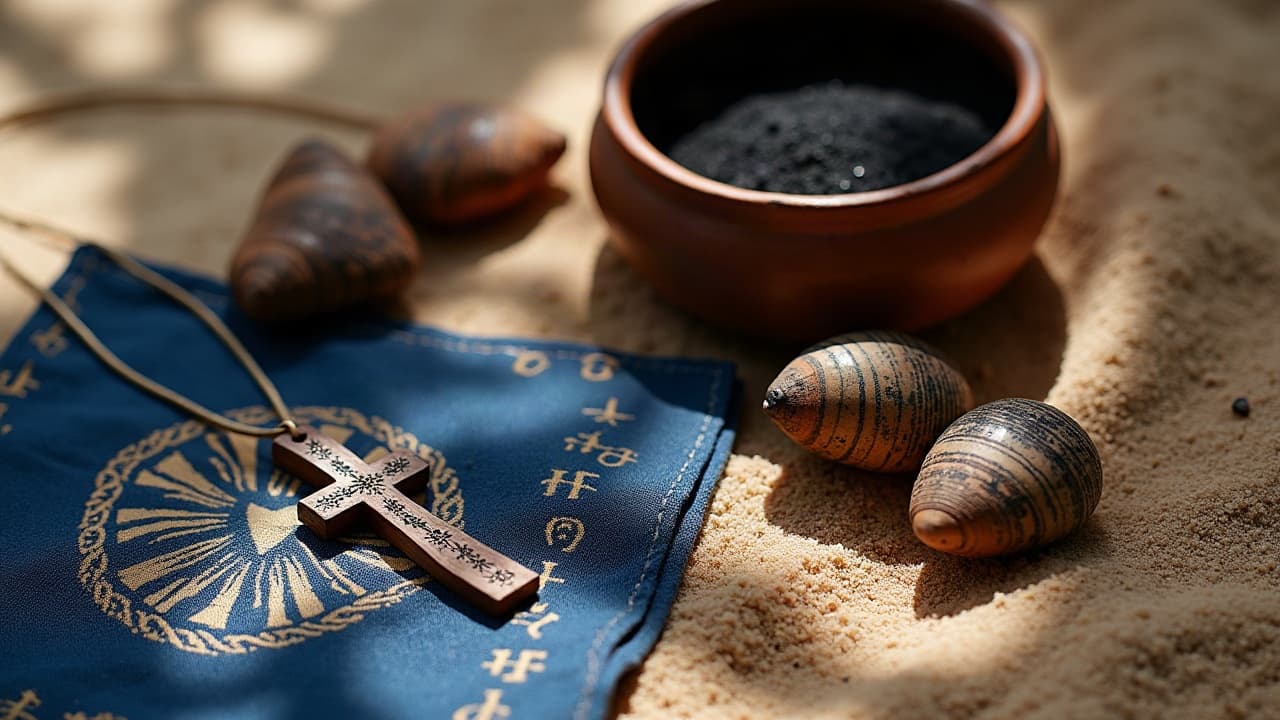
The oldest known figurative tattoos are African, inked on Predynastic Egyptian mummies about 5,000 years ago, a timeline confirmed by the British Museum. That age-old continuity matters, because across the continent, body marking has long been a language of identity, protection, and belonging. Today, artists and wearers are reinterpreting those codes, balancing reverence for African traditions with contemporary technique.
Tattooing, Scarification, and Henna, know the difference
Before talking symbolism, get the vocabulary right. In many African communities, permanent body marks historically included both tattooing and scarification. Tattooing deposits pigment below the epidermis, while scarification raises patterned scars made by controlled cutting. North African henna is different still, a temporary plant dye worn for weddings and rites, not a tattoo. Modern parlance often blurs these, but cultural meanings depend on the method.
- Tattooing methods historically included hand-poked punctures with thorns or needles, pigmented with soot, ash, or indigo mixed in oil or water. Many contemporary studios now use single-needle machines for precision.
- Scarification signaled clan, courage, or life stage in parts of West, Central, and East Africa. It is not inked, so when adapting motifs, understand whether the source practice was tattoo or scarification.
- Henna, common in Morocco, Algeria, Tunisia, and along the Swahili coast, is non-permanent and ceremonial. Translating henna geometry into tattoos can shift meaning, so research context first.
- Health note, any invasive marking can transmit infection if done poorly. The American Academy of Dermatology (AAD) advises sterile technique and aftercare to reduce infection and allergy risks. See the AAD for medical basics.
Amazigh and Tuareg marks, protection, lineage, and geography
Across the Maghreb, Amazigh, also called Berber, women historically wore weshm facial and hand tattoos. Motifs like triangles, lozenges, and palm-like fronds carried layered meanings, from fertility to tribal lineage to warding the evil eye. Among the Tuareg, the Agadez cross maps directions and safe passage, a talismanic geometry that many modern wearers place on the sternum or pendant-like on the chest or forearm.
These marks declined under religious and political pressures in the 20th century, yet they remain powerful cultural signifiers in family photos and elders’ portraits across Morocco, Algeria, and Niger. Documentation and interviews, such as reporting by the BBC, underscore that for many families, the tattoos were both adornment and address, a public record of who you were and where you belonged.
Coptic and Nubian crosses along the Nile
In Egypt and Ethiopia, Christian communities have worn Coptic cross tattoos for centuries. On the wrist, inner forearm, or even forehead, the cross functioned as a permanent marker of faith, often enabling entry to certain churches and signaling community in times of persecution. In Nubian regions along the Nile, crosses and small dot clusters marked affiliation and pilgrimage routes.
Contemporary interpretations keep the latticework geometry but update scale and placement. A fine line Coptic cross at pain 3–4/10 on the inner forearm heals quickly, while a bolder cross over bony wrist points may feel closer to pain 6–7/10. Health sources like Healthline offer general guidance on placement sensitivity and healing basics for first-time wearers.
Adinkra and Nsibidi, West African symbols in modern ink
Adinkra symbols from the Akan of Ghana and Côte d’Ivoire were historically stamped on cloth and architecture, not skin. Nsibidi, a graphic system from southeastern Nigeria, encoded law, love, and lineage in signs penned on objects and bodies, sometimes in non-permanent mediums. Today, both systems are popular in tattooing, provided the wearer approaches them with context and consent when community ties are involved.
- Gye Nyame, supremacy of God, a compact emblem that reads strongly in blackwork at 3 to 5 centimeters, commonly centered on the chest or inner bicep.
- Sankofa, go back and get it, often the heart-bird form. Many clients pair it with names, dates, or coordinates referencing family migration.
- Duafe, wooden comb symbol of care and femininity. Works well as fine line with negative space, or as a bold fill on the forearm.
- Nsibidi love and unity glyphs, frequently composed as small clusters. Clarify meaning with your artist, because Nsibidi contains private symbols restricted to initiated societies.
If you adapt Adinkra or Nsibidi, choose a placement aligned with the original medium’s visibility. Cloth stamps read from a short distance, which is why 5–8 cm designs on the upper arm or sternum carry that same legibility. For composition tips that maintain breathing room, see our guide to negative space.
Central and East African body marks, from scarification to ink
Many communities in the Sahel, Sudan, South Sudan, and the Great Lakes region historically practiced scarification, not pigment tattooing. The raised patterns, seen among groups like the Nuba, Dinka, and Karo, signaled age sets, bravery, or beauty. Translating those relief patterns into flat ink is a design choice, not a one-to-one cultural practice, so clarity about the shift is essential.
If you plan a tattoo inspired by scarification, explain that intent to your artist. We often suggest dotwork and linework bands that read like relief at a glance. Keep scale generous, since micro-lines can blur. Always separate inspiration from representation in your captioning and personal narrative, crediting the community whose aesthetics you are referencing.
Modern African tattoo studios and styles
From Johannesburg to Nairobi, Accra to Dakar, contemporary studios are building a tattoo language that freely mixes geometric blackwork, hand-poked micro-symbols, and illustrative realism. Expect clean line weights, matte blacks that honor textile roots, and compositions that respect negative space. I see many clients choose upper arm bands echoing cloth borders, or chest medallions inspired by jewelry like Tuareg crosses.
Budget for quality. In major African cities and diaspora hubs, a 5 to 8 centimeter symbol may run $150–$300, a forearm band $350–$700, and a chest medallion $600–$1,200, depending on artist reputation and detail. Research carefully, then use our artist quality checklist to vet portfolios, healed photos, and studio hygiene before you book.
Health, skin science, and aftercare for traditional motifs
All bodies deserve safe ink. The World Health Organization (WHO) warns that unsafe tattooing increases risks for blood-borne infections. Always verify sterile needles, sealed inks, and single-use barriers, and review local regulations. The U.S. FDA also cautions that tattoo pigments can trigger allergies and granulomas, especially reds. If you have a history of reactions, discuss patch testing with your artist or clinician. See WHO and FDA for safety overviews.
Plan for a healing window of 2–4 weeks. Many artists use a Saniderm-style bandage for 3–5 days, then switch to thin moisturizers 2 to 3 times daily. Gentle wash, pat dry, no picking. For product types that perform consistently, think Bepanthen, Aquaphor, Hustle Butter, or Mad Rabbit, and consider a light numbing cream like TKTX only with pro guidance (non-sponsored examples). For a deeper routine, see our skincare prep guide and our aftercare healing timeline.
Keloid risk is real for some. The AAD notes that people with a personal or family tendency to form keloids should avoid high-tension or high-friction placements. Biceps, outer forearm, and calf often fare better than chest center for those at risk. When in doubt, start small, observe your healing, then scale up. The AAD offers guidance on scar-prone skin and tattoos.
Respectful adoption, working with meaning and consent
Cultural representation is not a design buffet. If you wear a symbol without ties to the community, do the homework, credit the source, and engage respectfully. Many symbols are public and widely taught, while others, especially some Nsibidi signs or initiation marks, are restricted or sacred. When questions linger, consult community members, scholars, or artists rooted in that heritage.
- Start with open sources. Museum collections and academic articles are reliable for core meanings. Cross-check with community-led resources and oral histories.
- Clarify your connection. Family lineage, lived experience, or mentorship carry weight. If you simply admire the look, say so, and avoid restricted or initiatory symbols.
- Co-design with your artist. Ask for context notes in your stencil packet, so future viewers understand the chosen tribal meanings and placement choices.
- Credit matters. In your post or caption, name the specific community or region, not a vague “tribal.” This keeps cultural representations accurate and respectful.
- Support the culture. Commission African or diaspora artists, purchase books and textiles, and cite your sources. It is appreciation when your money, time, and words flow back.
If you are new to tattooing, review safe-practice basics in our first tattoo safety guide. Good symbolism deserves good technique and clean healing.
Ready to visualize an Amazigh cross, an Adinkra cluster, or a Coptic wrist mark to scale on your own skin tone and placement? Use AI for Tattoo to generate culturally grounded references with notes, then try them on in augmented reality. Explore styles in our library, refine the line weight, and preview legibility before you book. Start with Create, test placements with Try On, and browse motifs in Explore.
Try AI for Tattoo Free